


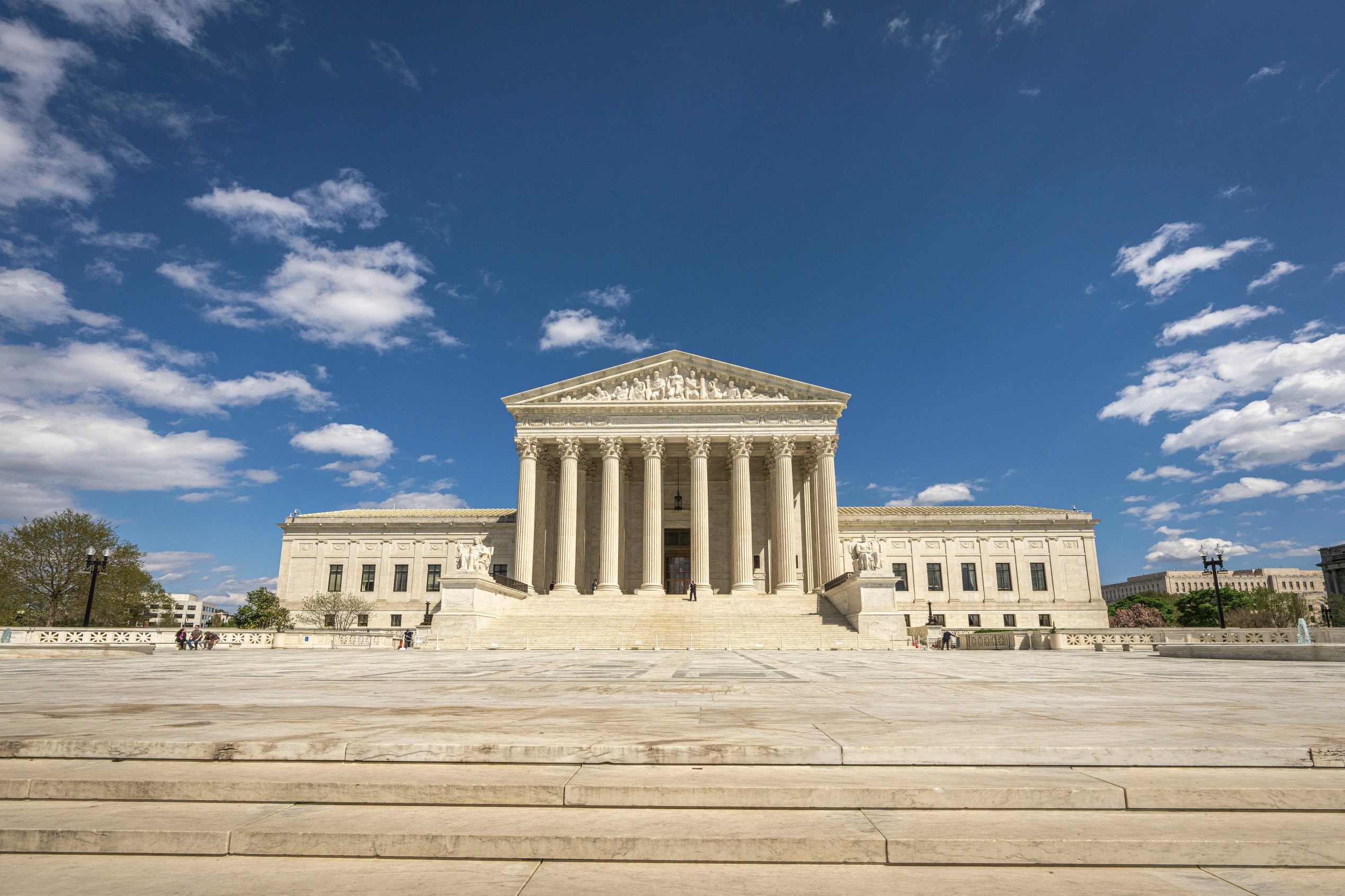
The Supreme Court of the United States is back in its favorite genre: a high-stakes clash where two American values walk into the room and only one gets the final word. This time, it’s a deceptively simple question with very real consequences—can preschools that turn away children of same-sex couples still receive state funding? Short answer: the Court just agreed to figure that out. Long answer: it’s complicated, political, and very much about whose version of “freedom” gets to define the rules.
RELATED: The White House Correspondents’ Dinner Just Got a Whole Lot Gayer
A Preschool Seat—and a Constitutional Showdown
At the center is a Colorado law tied to a universal preschool program. Public money is on the table, but there’s a condition: if you take the funding, you don’t discriminate. That includes discrimination based on sexual orientation and gender identity. Two Catholic parishes and a family pushed back, arguing that being required to accept children of same-sex couples conflicts with their religious beliefs—and that forcing compliance violates the First Amendment.
RELATED: Asylum Isn’t Just Paperwork Anymore—It’s a Full-On Gay Acting Class
They pointed directly to Obergefell v. Hodges, the landmark ruling that legalized same-sex marriage nationwide, reminding the Court: “This court promised in Obergefell that religious groups would be protected when they dissent from secular orthodoxies about marriage and sexuality… The free exercise clause simply cannot do that important work – which this court has described as ‘at the heart of our pluralistic society’ — if it can be so easily evaded.”
That’s not just legal language—that’s a preview of the argument: equality shouldn’t erase religious dissent. Of course, LGBTQ families would argue the flip side: religious belief shouldn’t be a workaround for discrimination, especially when taxpayer money is involved.
The Supreme Court and the Legal Loophole Everyone’s Fighting Over
This case doesn’t exist in a vacuum. It’s circling a 1990 precedent—Employment Division v. Smith—which basically says that laws can affect religious practices as long as they apply broadly to everyone. That precedent has annoyed just about everyone at some point, and now the religious groups in this case want it gone.
Their argument hinges on exceptions: Colorado’s preschool program allows certain preferences—like prioritizing low-income children or children with disabilities—and they say those carve-outs mean the law isn’t truly “generally applicable,” which could open the door for religious exemptions. Lower courts weren’t convinced and rejected that argument outright, but now the Supreme Court—fresh off several rulings favoring religious interests—gets the final say, and with a 6–3 conservative majority, no one is pretending this is a coin toss.
Meanwhile, Another Case Quietly Disappears
While the Court took on the preschool fight, it declined to hear a separate case involving parental rights and gender identity in schools. A Massachusetts couple argued their child’s school began recognizing the student as genderqueer—using a new name and allowing access to multiple bathrooms—without informing them, objecting on “moral and scientific reasons.”
The Court passed, but not before brushing up against the same themes in a different case, where it signaled support for religious parents seeking exemptions tied to LGBTQ-related school content, writing: “We conclude that the parents who seek religious exemptions are likely to succeed on the merits of their Free Exercise Clause claim.” Translation: even when the Court says “no” to a case, it sometimes still says quite a lot.
The Kid at the Center of It All
Lost in the legal theory is a very real person. In court documents, a student identified as “B.F.” explained their identity to teachers in a message that feels disarmingly direct: “I am telling you this because I feel like I can trust you… A list of pronouns you can use are: she/her he/him they/them fae/ faerae/aer ve/ver xe/xem ze/zir. I have added a link so you can look at how to say them. Please only use the ones I have listed and not the other ones. I do not like them.”

The school complied, citing state protections against gender identity discrimination and acknowledging a reality educators increasingly face: some students aren’t ready—or don’t feel safe—looping their parents into these conversations. That tension—between safety, identity, and parental control—isn’t going anywhere, and the Court just chose not to tackle it this time.
So What Happens Next?
The preschool case will likely be argued in the fall, with a decision expected next year, and depending on how broadly the Court rules, the outcome could stretch far beyond early education. If the justices side with the religious groups, it could expand the ability of institutions to claim exemptions from anti-discrimination laws—not just in schools, but potentially in other areas where public funding and private belief intersect.
If they don’t, it reinforces a simpler idea: if you take public money, you play by public rules. For gay couples, this isn’t abstract—it’s about whether your kid can be turned away from a preschool that your taxes help fund. For religious institutions, it’s about whether participating in public programs comes at the cost of their beliefs, and for everyone else watching, it’s another reminder that in the U.S., “freedom” is rarely a solo act—it’s a negotiation, and this time, the Court is writing the terms.
Source: CNN