

The 2026 FIFA World Cup hasn’t even kicked off yet, and one of the tournament’s biggest conversations already involves Pride flags, LGBTQ+ visibility, and what fans may or may not be allowed to bring into stadiums.
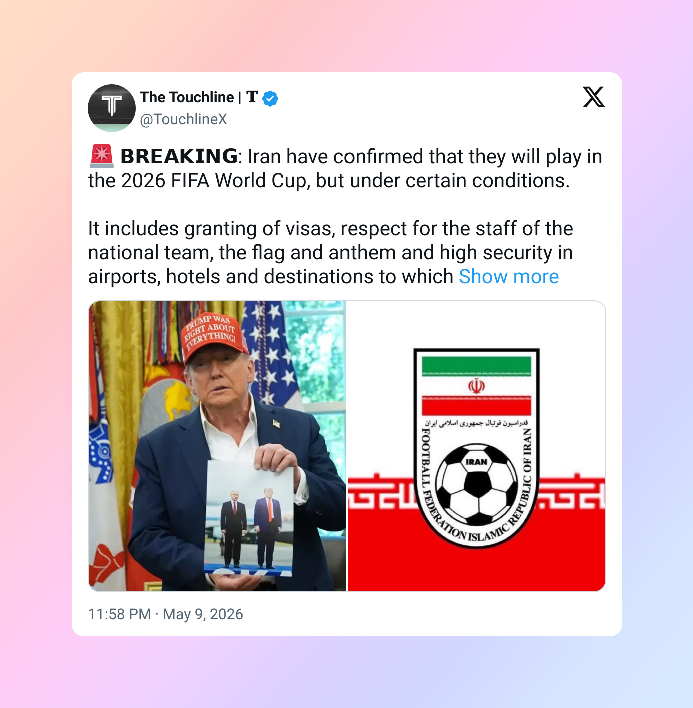
According to reporting from Outsports, Iran’s football federation has reportedly asked FIFA for several assurances tied to its participation in the tournament. One request in particular is drawing major attention: Iranian officials allegedly want stadiums limited to officially recognized national flags during their matches.
That may sound technical at first, but many fans immediately noticed what it could potentially affect.
Specifically, rainbow Pride flags.
Why Seattle’s Match Has Become a Talking Point
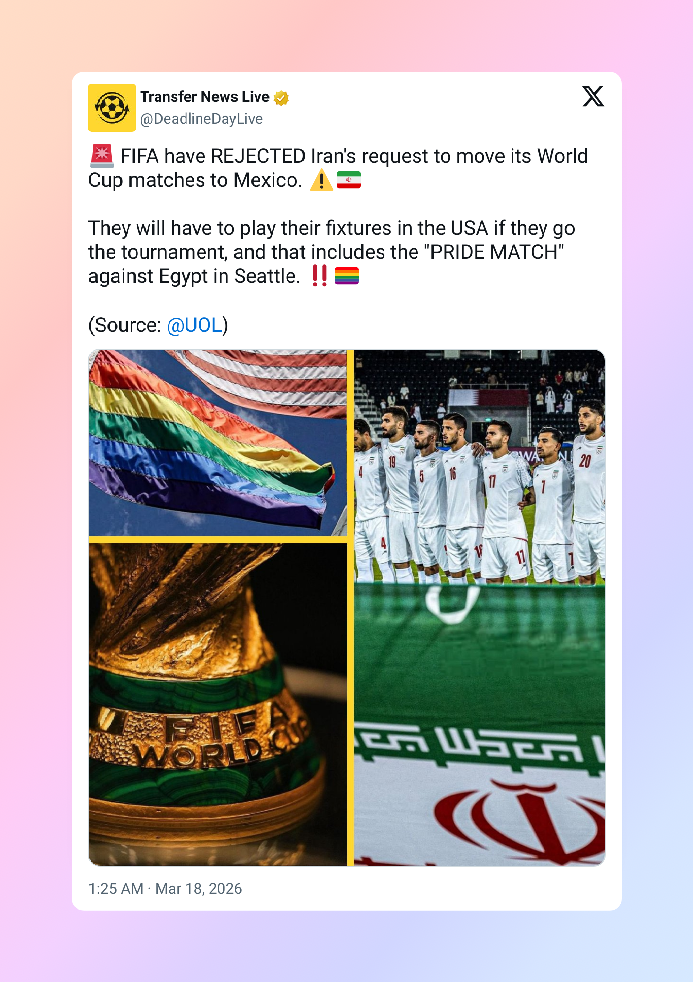
The concern centers around Iran’s June 26 match against Egypt in Seattle, which local organizers have promoted as a designated “Pride Match.”
Seattle’s World Cup planning has heavily emphasized inclusivity and LGBTQ+ representation. Pride-themed public artwork has already appeared throughout the city, and organizers even created an official Pride Match scarf tied to the event.
That makes the reported request especially sensitive because many supporters are now wondering whether rainbow symbols could become part of a larger political dispute surrounding the match.
At this point, there has been no announcement banning Pride flags or Pride-themed merchandise from the stadium.
Still, the conversation alone has created uneasiness among some LGBTQ+ football fans who remember similar controversies during the 2022 World Cup in Qatar.
RELATED: Gen Z Commentator’s Viral Takedown of Trump’s FIFA Peace Prize
FIFA Has Stayed Quiet So Far
One reason the situation keeps gaining attention is because FIFA has not publicly clarified how it plans to handle the issue.
The organization now faces an uncomfortable balancing act between accommodating participating nations while also upholding its own public commitments surrounding inclusion and freedom of expression.
A human rights framework released by FIFA in 2024 specifically referenced the importance of protecting peaceful assembly and free expression during tournament events. LGBTQ+ communities were also identified in the document as groups potentially vulnerable to discrimination or exclusion.
That language has become increasingly relevant as fans question whether symbols like Pride flags fall under those protections.
Meanwhile, Seattle organizers continue moving forward with their planned celebrations and messaging around inclusion. Pride-inspired visuals remain visible throughout parts of the city as preparations continue for the summer tournament.
RELATED: Best VPN for Travel: 7 Tested Options for Privacy, Speed, and Access
The Debate Goes Beyond Pride Flags
Some online discussions suggest Iran’s concerns may not focus solely on LGBTQ+ symbols.
Political banners connected to Iranian protest movements, including the slogan “Woman, Life, Freedom,” have also become part of fan conversations. Others have pointed to the historic Lion and Sun flag, often associated with opposition movements outside Iran, as another possible source of tension, according to Outsports.
Still, Pride flags remain at the center of the broader public discussion because of the symbolic importance attached to Seattle’s designated Pride Match.
And for many LGBTQ+ fans, visibility matters just as much as the match itself.
The 2026 World Cup is being promoted as a modern, inclusive global event hosted across the United States, Canada, and Mexico. That is why many supporters are paying close attention to how FIFA responds in the coming weeks.
Because whether or not any restrictions are ultimately introduced, the conversation has already highlighted how sports, politics, identity, and visibility continue colliding on one of the world’s biggest stages.