

If you haven’t watched Heated Rivalry yet, there’s a strong chance it’s already sitting somewhere on your “to watch” list—recommended by friends, clipped endlessly on TikTok, or discussed with breathless enthusiasm online. The series delivers exactly what viewers were promised: passion, rivalry, emotional depth, and very attractive men who spend a lot of time kissing, touching, and circling each other like magnets.
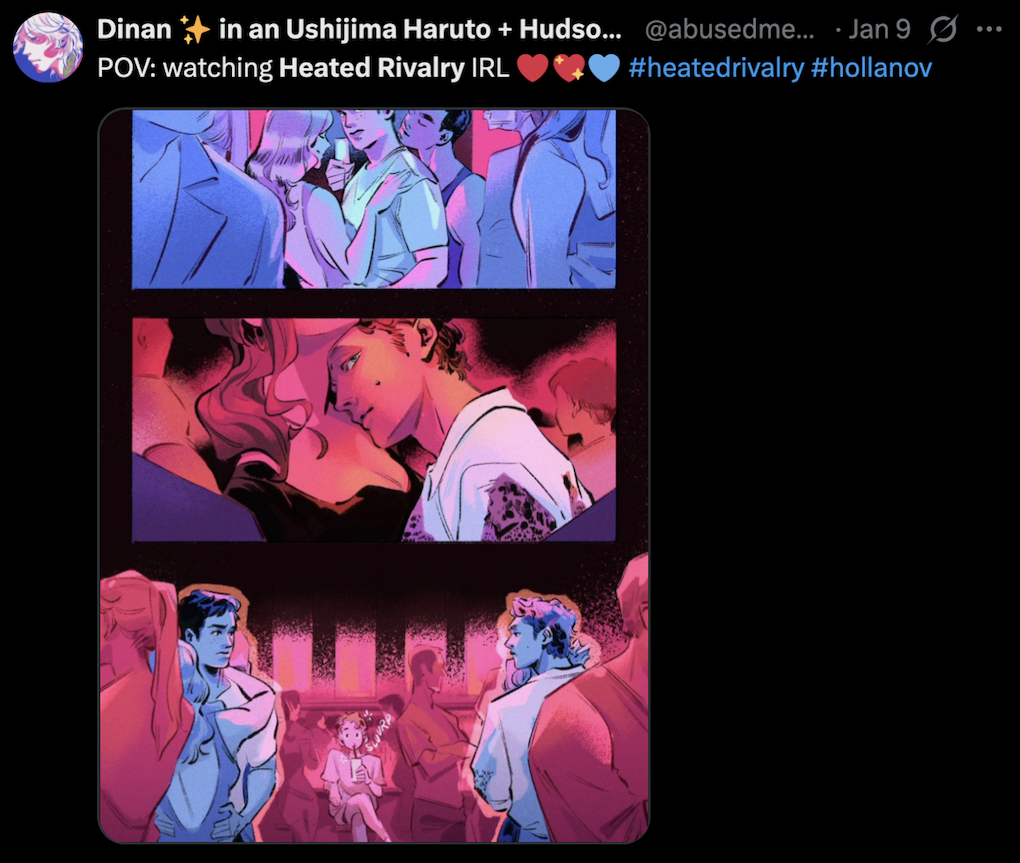
So when queer history TikTok accounts like Yester Queers and creator @saltymarge raised a deceptively simple question—“Who is Heated Rivalry for?”—it opened the door to a much bigger conversation about queer storytelling, fandom, and women’s role as consumers of M/M romance.
A Show That Clearly Works
Let’s be clear: Heated Rivalry resonates strongly with gay audiences. It’s dramatic, messy, tender, and unapologetically horny. The chemistry between Shane and Ilya isn’t teased—it’s delivered, repeatedly. That alone sets it apart from earlier queer television that often avoided intimacy or treated it as something tragic, dangerous, or fleeting.
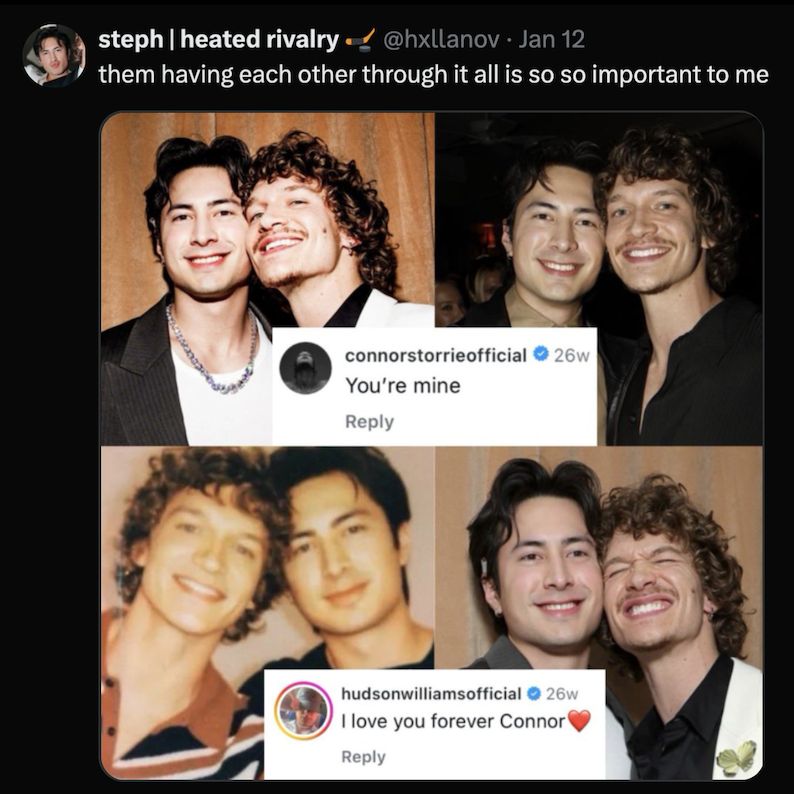
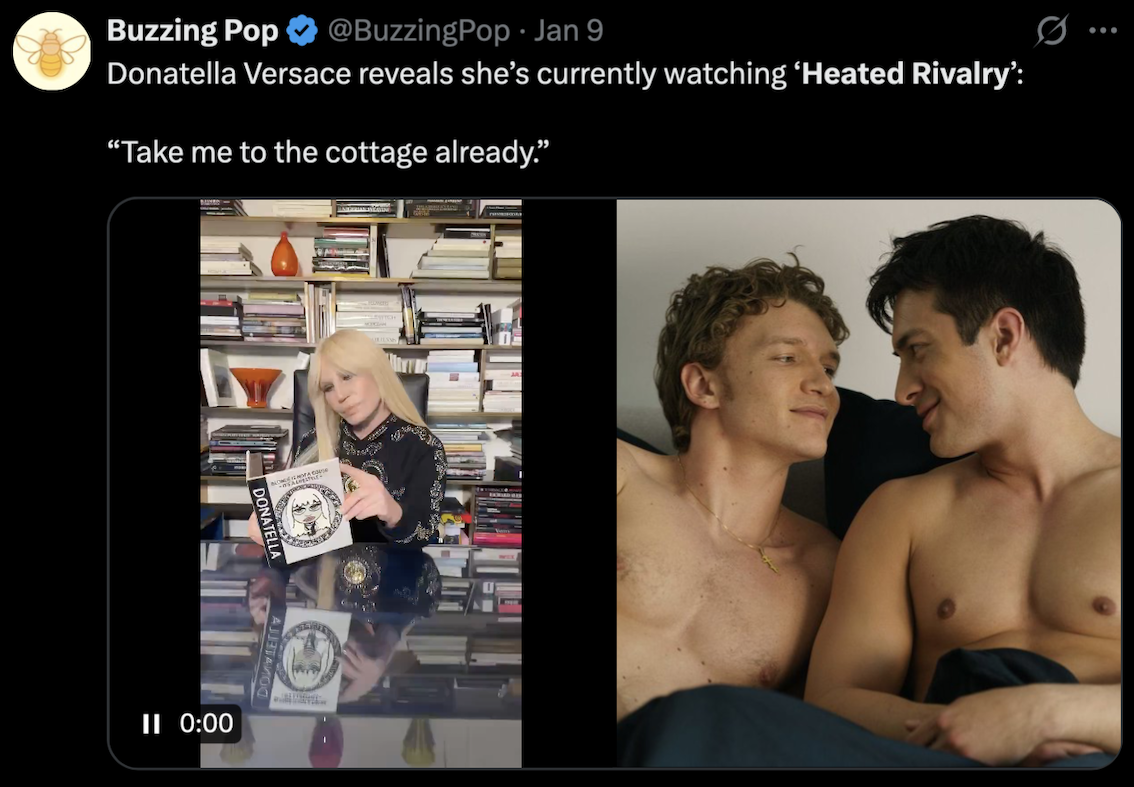
But something else happened along the way. Women didn’t just watch the show—they showed up in force. Online discourse, fan edits, and enthusiastic commentary made it clear that women weren’t passive viewers. They were deeply invested.
Was It Written With Women in Mind?
According to @saltymarge, the idea that Heated Rivalry appeals strongly to women isn’t accidental. They argue that stories like this are often developed with women as the primary audience—particularly straight women who have long consumed M/M romance in books, fan fiction, and now streaming television.
Queer historian Amanda from Yester Queers adds important context: this phenomenon isn’t new. For more than half a century, male/male romance has frequently been written by women, for women. One of the earliest documented slash fiction works—a lengthy Kirk/Spock story from the 1960s—was written by a woman, predating even the Stonewall uprising.
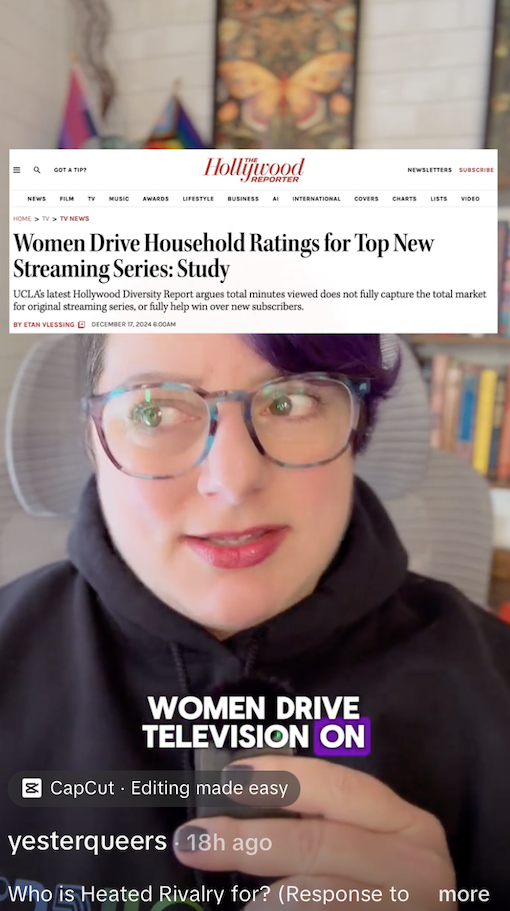
@yesterqueers Who is Heated Rivalry for? (Response to @saltymarge). Go watch @bydonmartin’s original video on his page, and for deeper dives into the history and culture of fandom follow @oldmythos and @fangirljeanne. NOTE: I will block anyone I catch going to OP’s page to harass her. That’s not what we do on this side of TT. #queerhistory #heatedrivalry #slashfic
From that perspective, it’s not controversial to say that Heated Rivalry fits into a long-standing tradition of women engaging with queer male narratives.
Where the Tension Begins
The issue, as Amanda pointed out, isn’t women watching queer stories. The concern is what happens when fandom behavior spills into real life.
They note that some women in the Heated Rivalry fandom blur the line between admiration and objectification—projecting fantasies onto real queer men and treating them as extensions of fictional characters. Amanda argues that this has tangible consequences, particularly for the actors involved, who are routinely sexualized, reduced to body parts, or stripped of personal boundaries online.
This concern echoes a broader reality many queer men recognize: being welcomed in theory, but consumed as spectacle in practice.
Business, Platforms, and Perspective
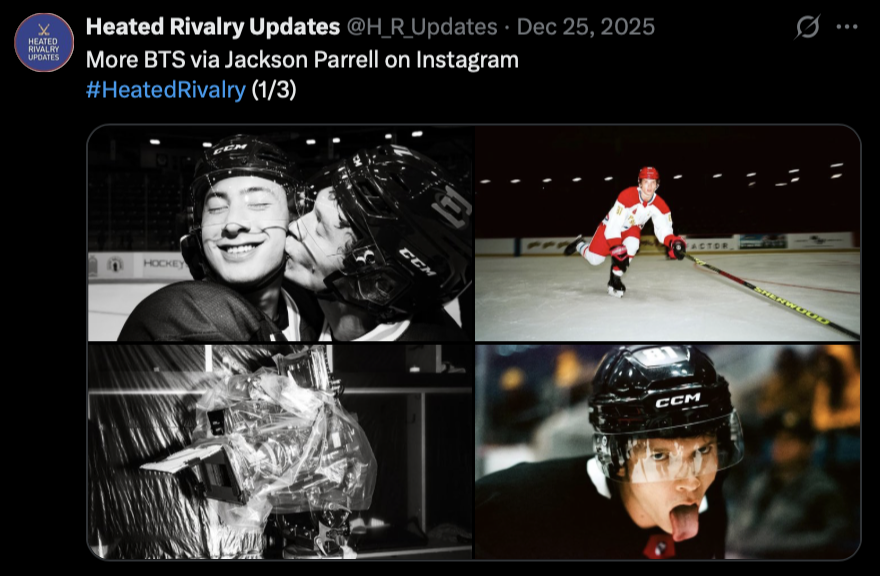
Amanda also offers a practical industry explanation. Television and streaming platforms historically skew toward women viewers, while theatrical releases tend to lean male. That doesn’t make Heated Rivalry deceptive—it makes it strategic. Business decisions often follow audience data.
At the same time, the show’s creator, Jacob Tierney, is a gay man. That matters. It means many creative choices—especially around intimacy, emotional pacing, and relationship dynamics—come from lived experience rather than voyeurism. The result is a series that feels grounded, even when it’s indulgent.
RELATED: When That Gay Hockey Show Took Off, It Helped Its Author in an Amazing Way
The Power of a Happy Ending
One of the most quietly radical things Heated Rivalry does is allow its characters joy. Queer audiences are accustomed to loss, separation, or ambiguity. This series chooses satisfaction instead. That alone centers it more firmly within queer storytelling traditions, even as its audience expands beyond them.
When Appreciation Crosses a Line
A viral TikTok from @theprincessandthepoppers recently underscored the stakes of this conversation. Working at a gay bar, the creator described encountering women who openly admitted they were there to watch men make out—explicitly referencing Heated Rivalry as inspiration. The response was firm but fair: gay men are not props, and queer spaces are not live reenactments of TV fantasies.
@theprincessandthepoppers It was going so well smh #heatedrivalry #hockey
Gay spaces have long been safe spaces for women, and that remains true. But respect has to be mutual.
Listening Is the Takeaway
The most important conclusion comes straight from Amanda: when queer people express discomfort, it’s an opportunity to listen—not to defend intentions, but to understand impact.
Heated Rivalry can be sexy, joyful, and widely loved by women and still prompt necessary conversations about boundaries, fandom, and respect. Both things can exist at once.
And maybe that’s the real legacy of the show—not just who it turns on, but who it invites to think a little deeper.
Bwhahaha “women not passive viewers”
yet from what I’ve encountered, those who have reheated the series end to end 6+ times and also have read the books still managed to completely misinterpret Rose’s words and actions.
If that’s not a symptom of passive viewing then I dunno what is