

Meta has found itself at the center of another controversy involving LGBTQ+ nightlife after a San Francisco queer bar temporarily lost access to its Instagram and Facebook accounts. It is the latest in a series of account suspensions that have left queer venues asking a simple question: why does this keep happening?

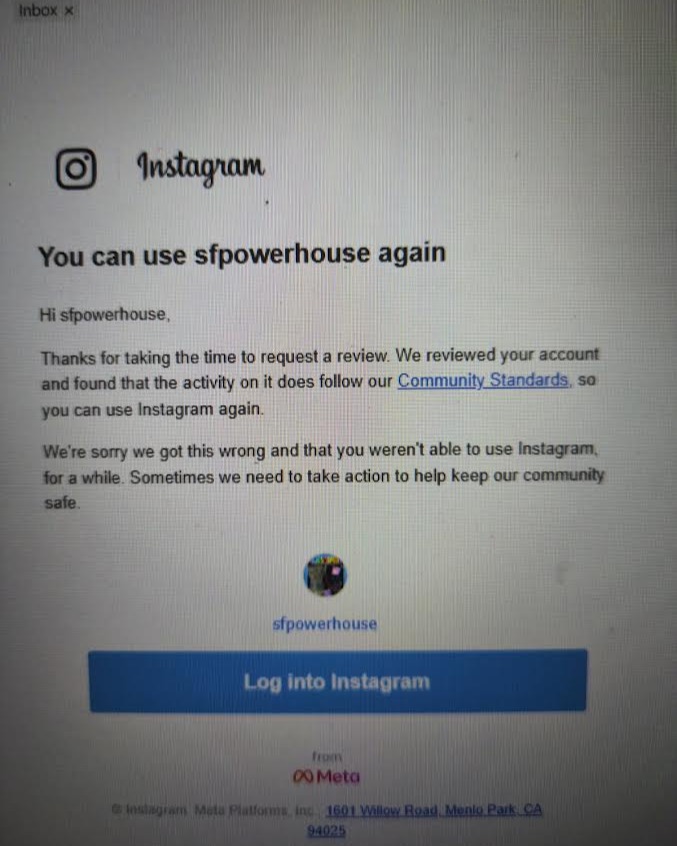
The latest incident involves Powerhouse, a well-known San Francisco leather and kink bar. Its Instagram and Facebook accounts were taken down before eventually being restored.
Honey Mahogany, co-owner of The Stud Collective, shared the news with her followers and asked for help getting Powerhouse’s accounts back.
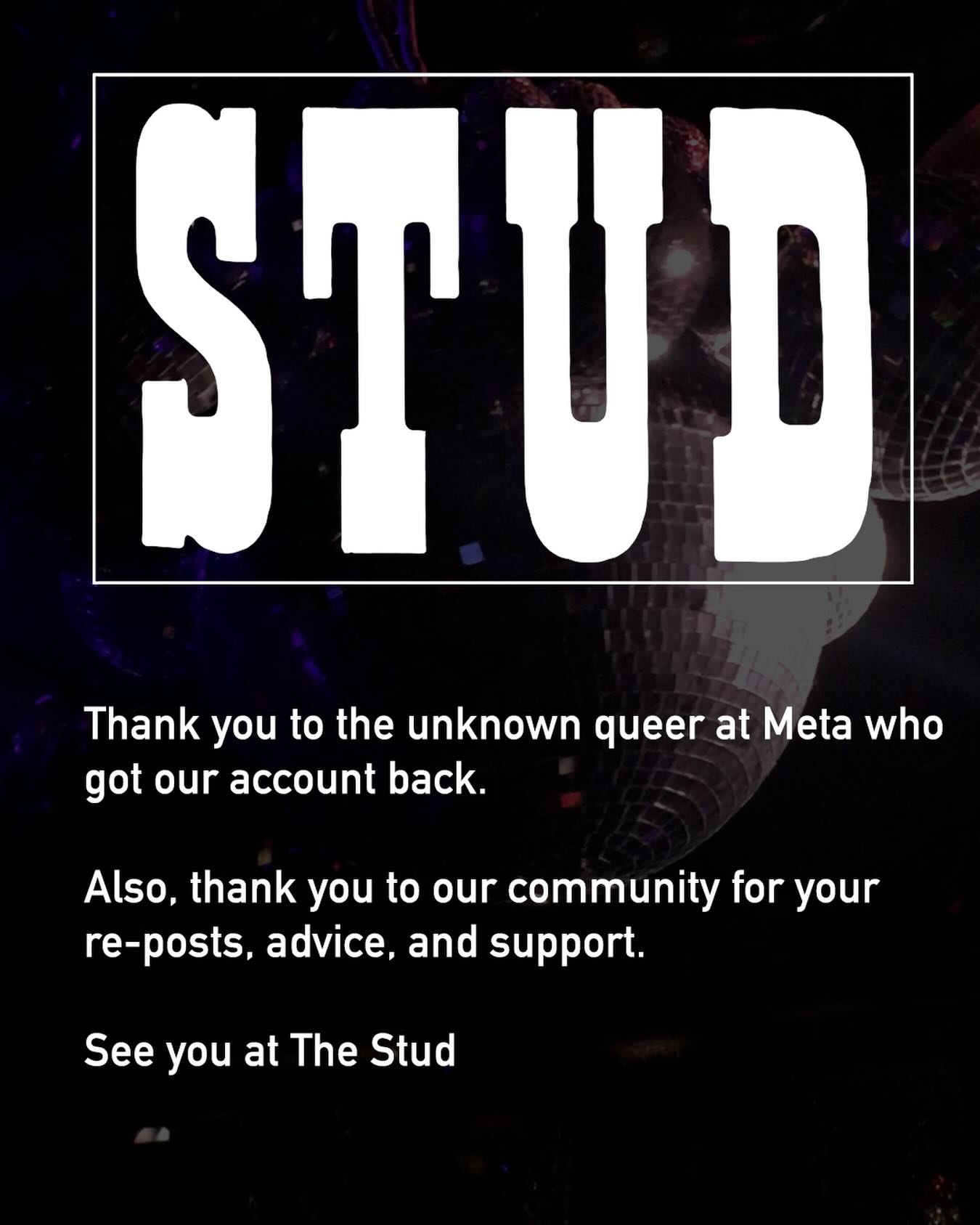
Thankfully, the accounts were restored. But the incident has brought attention to a bigger problem for LGBTQ+ bars that depend on social media to promote their businesses.
READ: A Gay Bar Became a Crime Scene. Tucson’s LGBTQ+ Community Says It Won’t Hide
Instagram Is More Than Just Instagram
For many nightlife businesses, Meta’s Instagram and Facebook are essential marketing tools.
Bars use them to announce parties, promote events, share schedules, and let customers know what is happening. For smaller venues, especially queer-owned businesses working with very small profit margins, losing access can be a serious financial problem.
“It’s their primary way of getting the word out about events and this is devastating for small businesses, especially queer small businesses here in San Francisco that are operating on razor thin margins,” Mahogany said.
And Mahogany has experienced the problem firsthand.
The Stud Was Suspended, Too
Just a month earlier, The Stud’s Instagram and Facebook accounts were also suspended by Meta. According to Honey Mahogany, posts promoting trans events at the club had been flagged as “engaging in human trafficking.” The timing made the situation even worse. The suspension happened just before Dore Alley, a major gay weekend in San Francisco that brings important business to local queer venues.
“The Stud is a labor of love,” Mahogany said. She explained that the venue is collectively owned and that none of the owners have made a profit from it. With the bar operating on a “razor-thin margin,” losing its main way of advertising right before a major weekend was a serious concern.
READ: If You Hate Drag, There’s a Shockingly Easy Solution: Stay Home
This Isn’t Just Happening in San Francisco
Similar problems have also been reported in Australia.
The Sydney Morning Herald reported that at least five LGBTQ+ venues had been affected since mid-July, including Melbourne’s The 86, The Laird and UBQ, as well as Sydney’s Tribe @ 231 and Palms on Oxford.
The reasons given by Meta varied according to the affected bars. Some venues were told their accounts were connected to human exploitation or trafficking, while others faced reviews involving alleged “drugs and guns.”
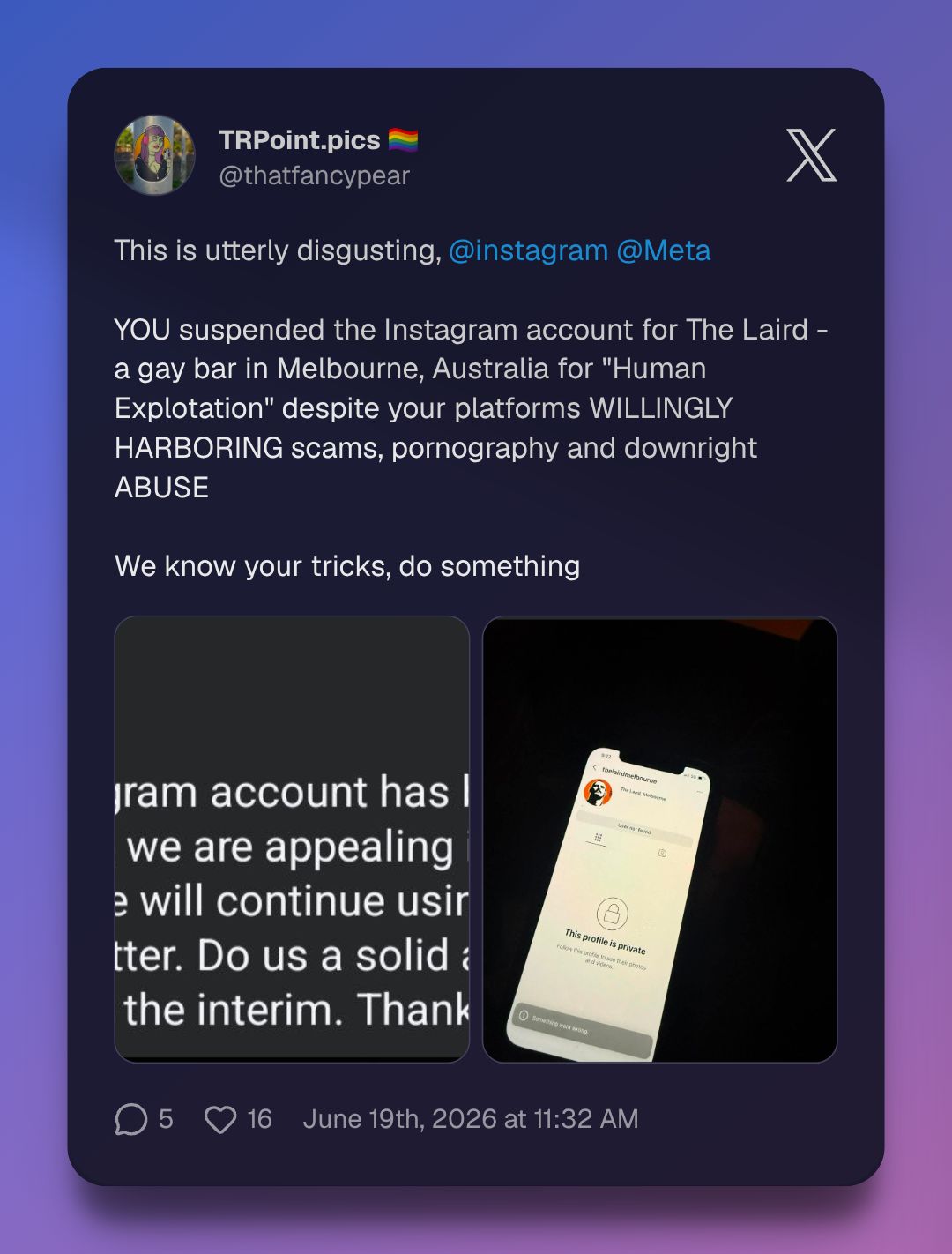
The venues say the biggest problem is not always knowing exactly what they supposedly did wrong and not being able to access their accounts following their suspensions.
Michael Lewis, chief executive of Palms on Oxford and Tribe @ 231, told The Sydney Morning Herald that the two Sydney venues lost access within about an hour of each other after connecting their profiles through Meta.
He also pointed out a frustrating problem with the appeals process with Meta. Users may be told they can appeal a suspension, but if they cannot log into their accounts, they may not be able to submit that appeal in the first place.
Is Meta Targeting Queer Businesses?
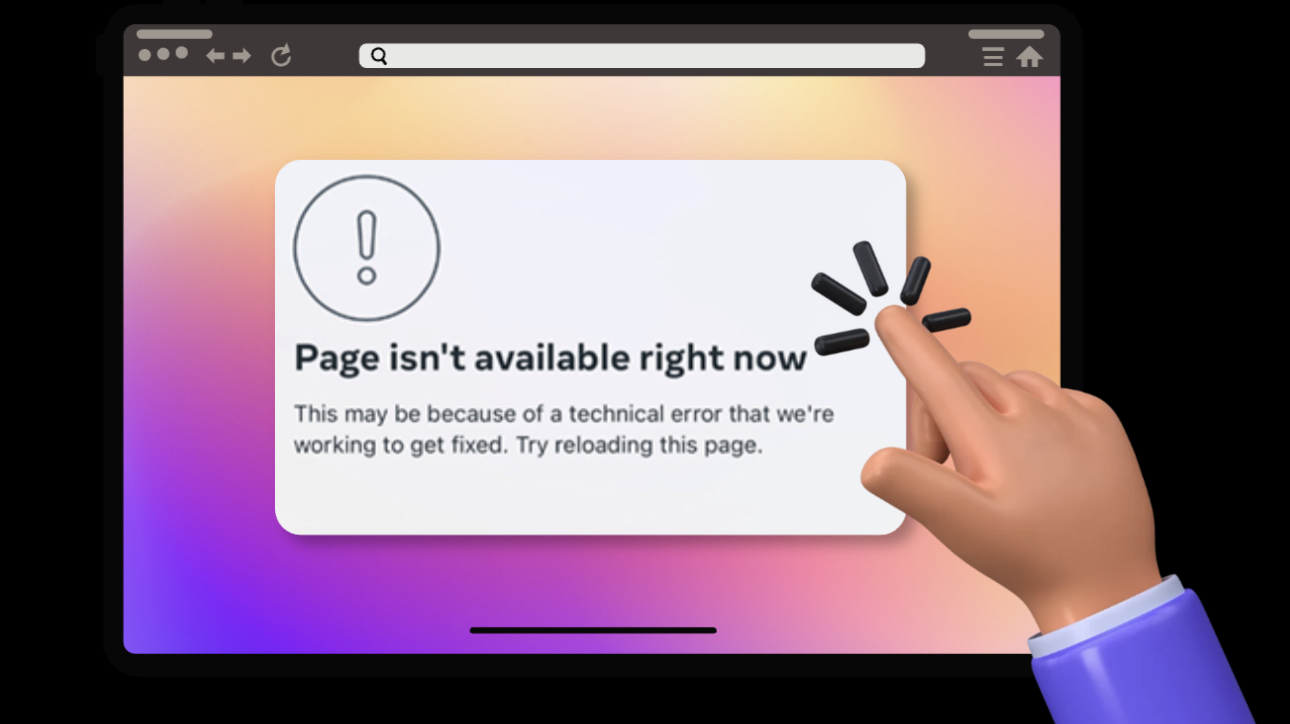
That is the question many people are now asking.
There is currently no clear evidence proving that Meta is deliberately targeting LGBTQ+ businesses because they are queer. Social media platforms use automated systems to detect content that may violate their rules, and those systems can make mistakes.
But when multiple LGBTQ+ venues report losing access to their accounts, particularly when queer events are allegedly mistaken for serious violations such as human trafficking, it is understandable that people are concerned.
For a big corporation, a suspended Instagram account might sound like a minor problem.
For a small queer bar, it can mean fewer people seeing the next party, fewer customers walking through the door, and less money coming in.
The accounts may live online, but the businesses depending on them are very real.