


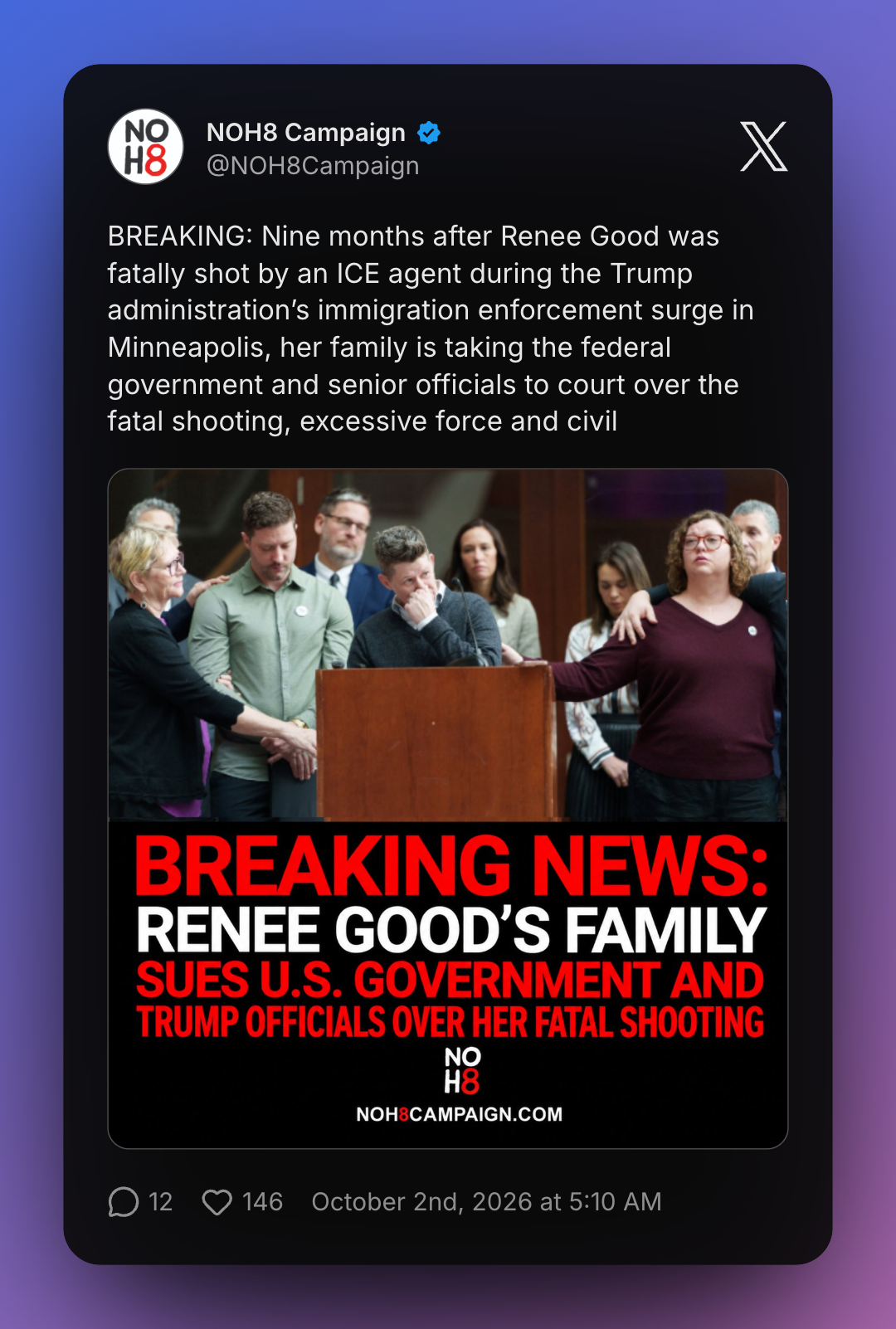
Nine months after Renee Good was fatally shot by an Immigration and Customs Enforcement (ICE) agent in Minneapolis, her family is taking the federal government and several officials to court.
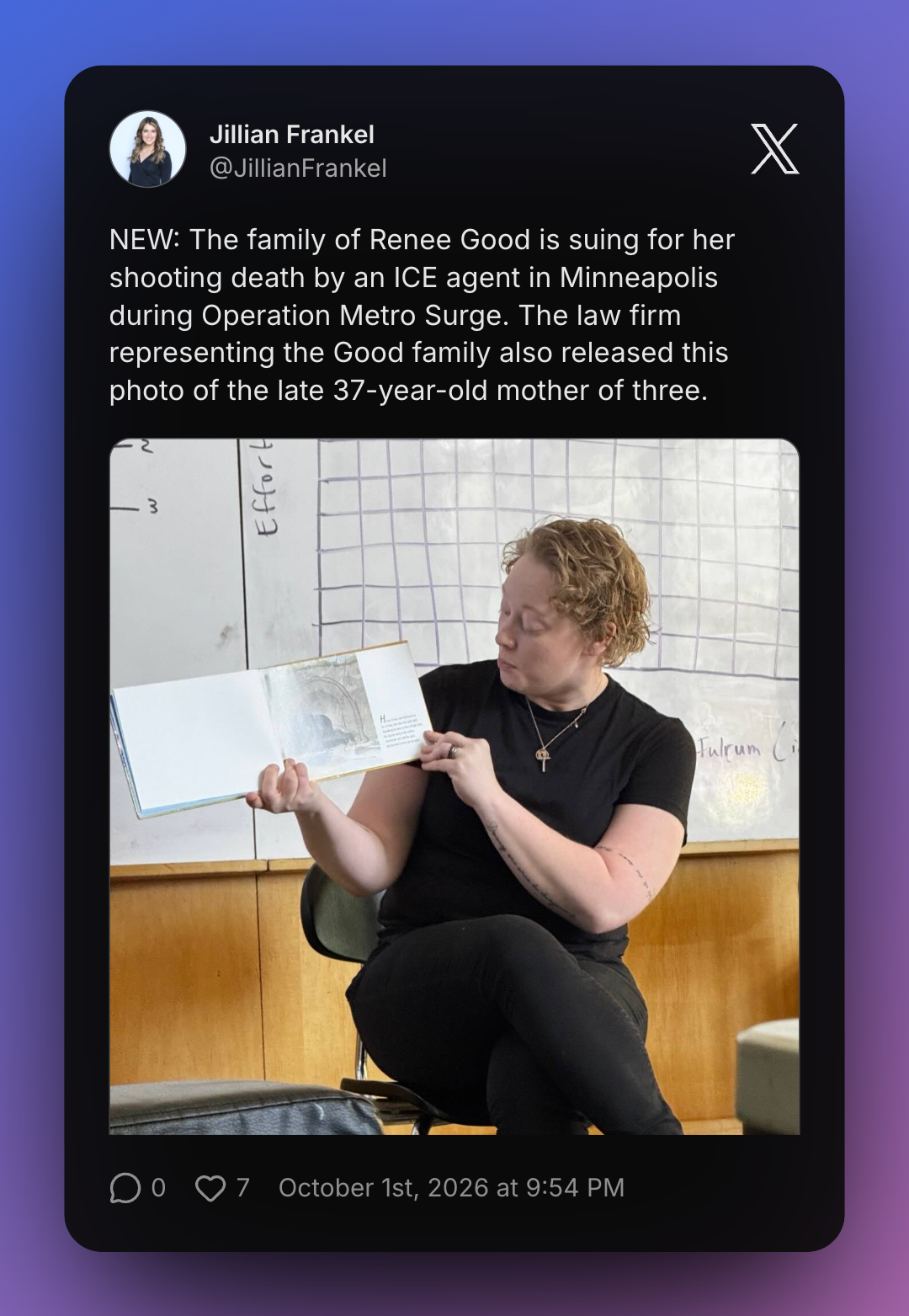
Good was 37, a mother of three, a poet, and part of an LGBTQ+ family. Her death on January 7, 2026, came during a federal immigration enforcement operation that has continued to draw scrutiny. Now, her family is pursuing two separate civil lawsuits over what happened.
What Happened to Renee Good?
Good was in the driver’s seat of an SUV in Minneapolis while federal immigration officers were carrying out an operation known as Operation Metro Surge. According to accounts detailed in the lawsuits and video reviewed by news organizations, Good stopped her vehicle and honked her horn as officers were working in the area.
ICE agent Jonathan Ross approached the vehicle and fired three times. Good was fatally wounded.
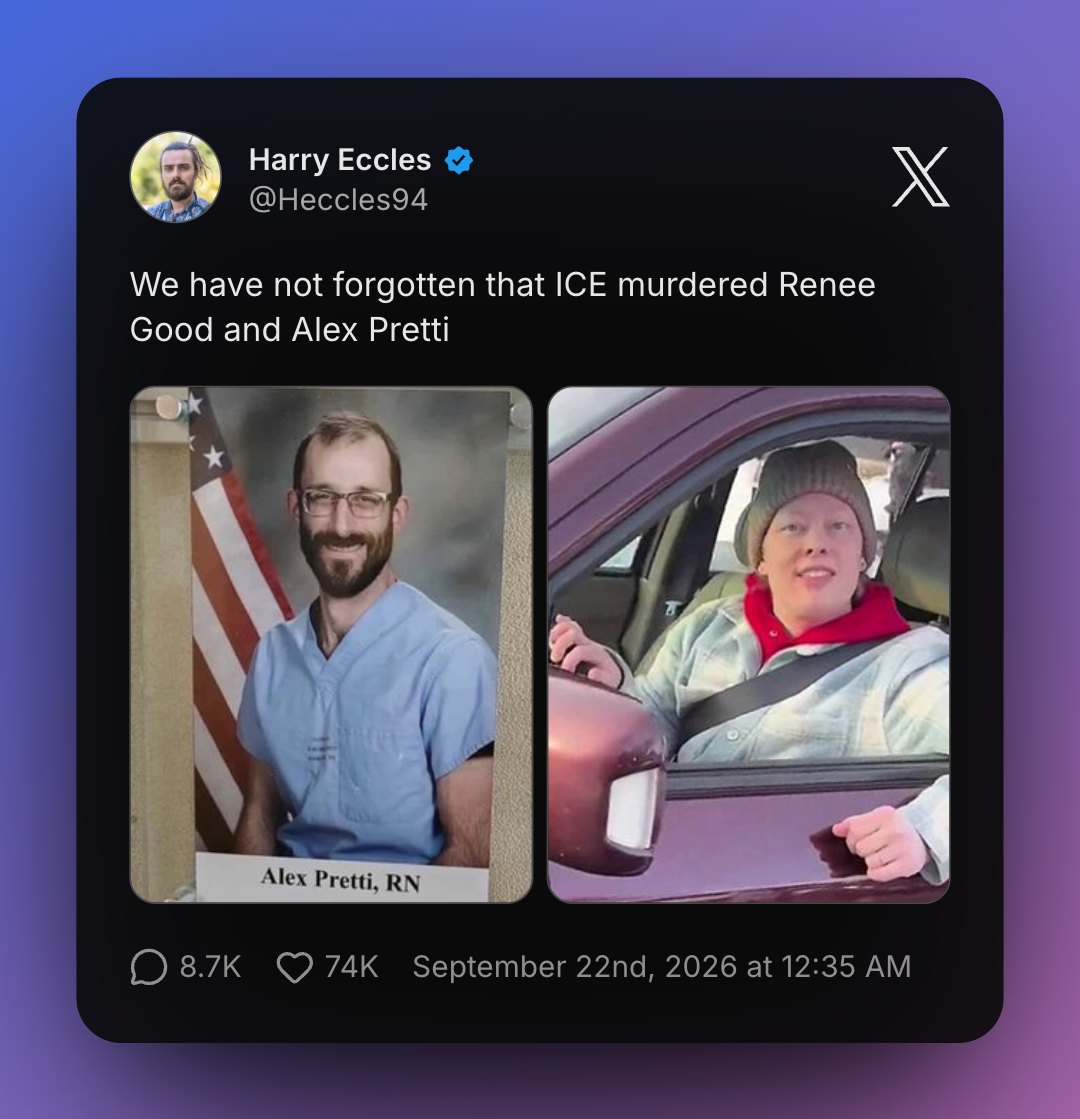
Federal officials said at the time that Good had used her vehicle in a way that threatened officers and that Ross acted in self-defense. However, bystander video has been cited as contradicting parts of that account. The footage shows Good’s vehicle moving away as Ross fired.
Her partner, Becca Good, was present during the shooting and later described Renee as the love of her life.
READ: Julia Roberts and Kamala Harris Show Up for Pride With Messages of Support
What Are the New Lawsuits About?
The family’s two lawsuits take different legal approaches.
The first names the United States government and uses the Federal Tort Claims Act. That law allows certain claims against the federal government when people are injured or killed because of alleged wrongful conduct by federal employees acting within the scope of their work.
The family is seeking damages connected to Renee’s death, including the suffering they say she experienced and the emotional harm suffered by Becca, who witnessed the shooting.
BREAKING: The family of Renee Good, a mother who was fatally shot by an ICE agent in Minneapolis, is suing the Trump administration. pic.twitter.com/Lw1LpmA4yK
— Sky News (@SkyNews) October 1, 2026
The second lawsuit names Ross and several federal officials. It alleges that Renee’s death was connected to a broader civil-rights conspiracy surrounding the immigration operation.
So, Why Is the KKK Being Mentioned?
This is where the story gets particularly unusual.
@mprnews The family of Renee Good filed two civil lawsuits on Thursday, the second invoking the Ku Klux Klan act of 1871 — a move one of their lawyers says is a first for legal action related to Operation Metro Surge. “Congress passed the Ku Klux Klan Act in 1871 because masked men were going in disguise on the highway to terrorize their neighbors on account of their race,” Good family attorney Benjamin Berkman said. “155 years later, armed men went in disguise on Portland Avenue. They went as part of a campaign to terrorize people based on the way they looked, and now Renee Good is dead.” Go to mprnews.org for the full story. Video captured by Matt Sepic and Josh Sauvageau and edited by Carly Danek | MPR News
The lawsuit invokes parts of the Ku Klux Klan Act of 1871, a Reconstruction-era law created in response to organized violence and efforts to strip Black Americans of their civil rights.
That does not mean Renee’s family is accusing the defendants of being members of the Ku Klux Klan.
Instead, the lawsuit is using sections of that law that address conspiracies intended to interfere with people’s constitutional rights. The statute was written more than 150 years ago, but portions of it remain available for certain civil-rights claims.
A Family Looking for Answers
Renee’s brother, Brent Ganger, said the loss continues to affect the entire family and criticized what he described as a lack of accountability following her death.
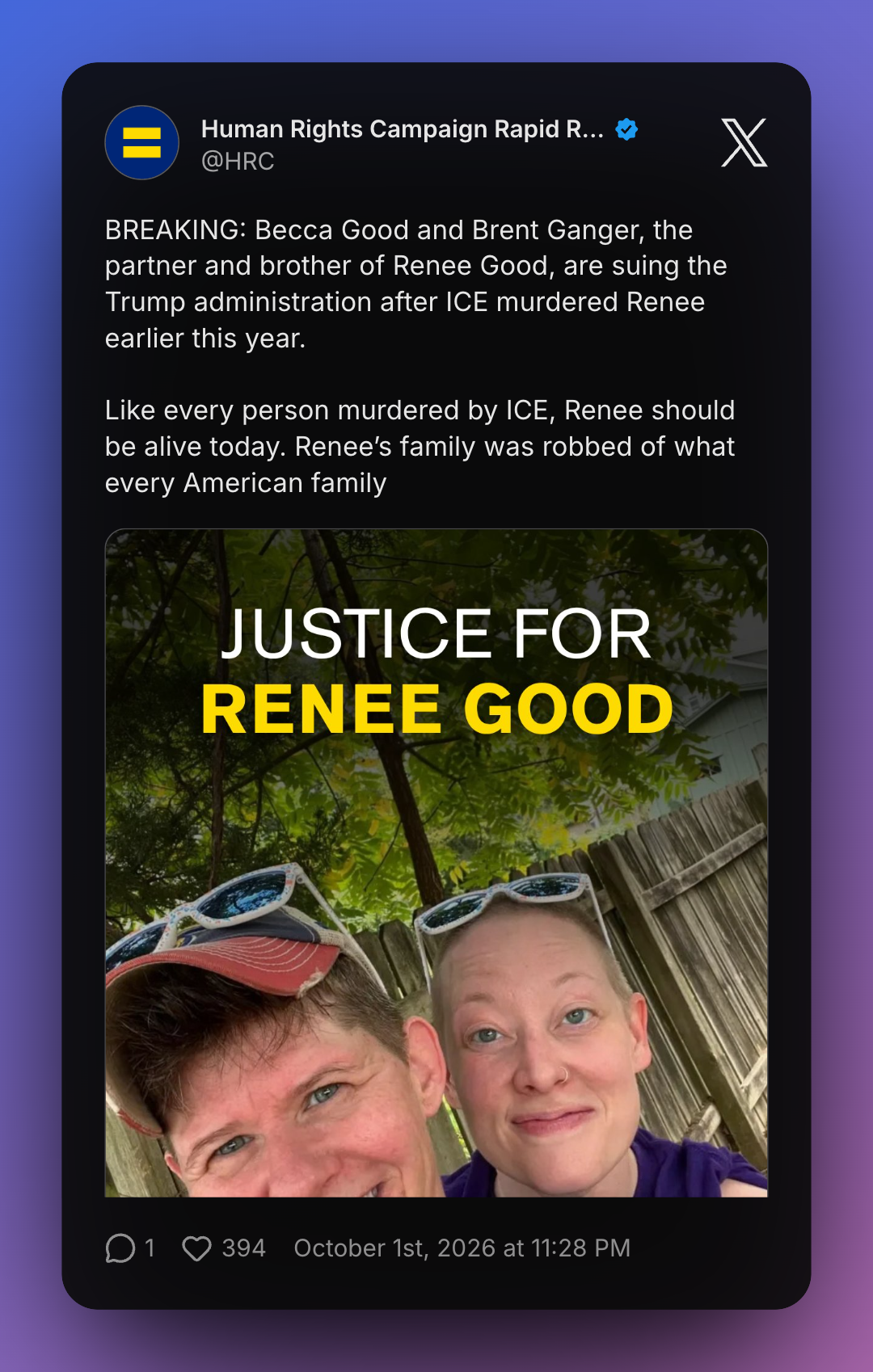
Becca has also spoken about raising their children without Renee and the lasting impact of losing her partner.
The lawsuits do not settle the disputed facts surrounding the shooting. Those allegations will now be considered through the legal process, while the federal government and the other defendants have the opportunity to respond.
For Renee’s family, however, the lawsuits represent another step in asking what happened that January day — and who should be held responsible.