

Is this happening in Trump’s America? In a political climate where LGBTQ+ rights remain a constant point of tension, two Democrats in New York are now running a very specific kind of race: who can most convincingly present themselves as the strongest LGBTQ+ ally.
RELATED: Can Church and State Stay Separate Under Trump’s New Religious Agenda?
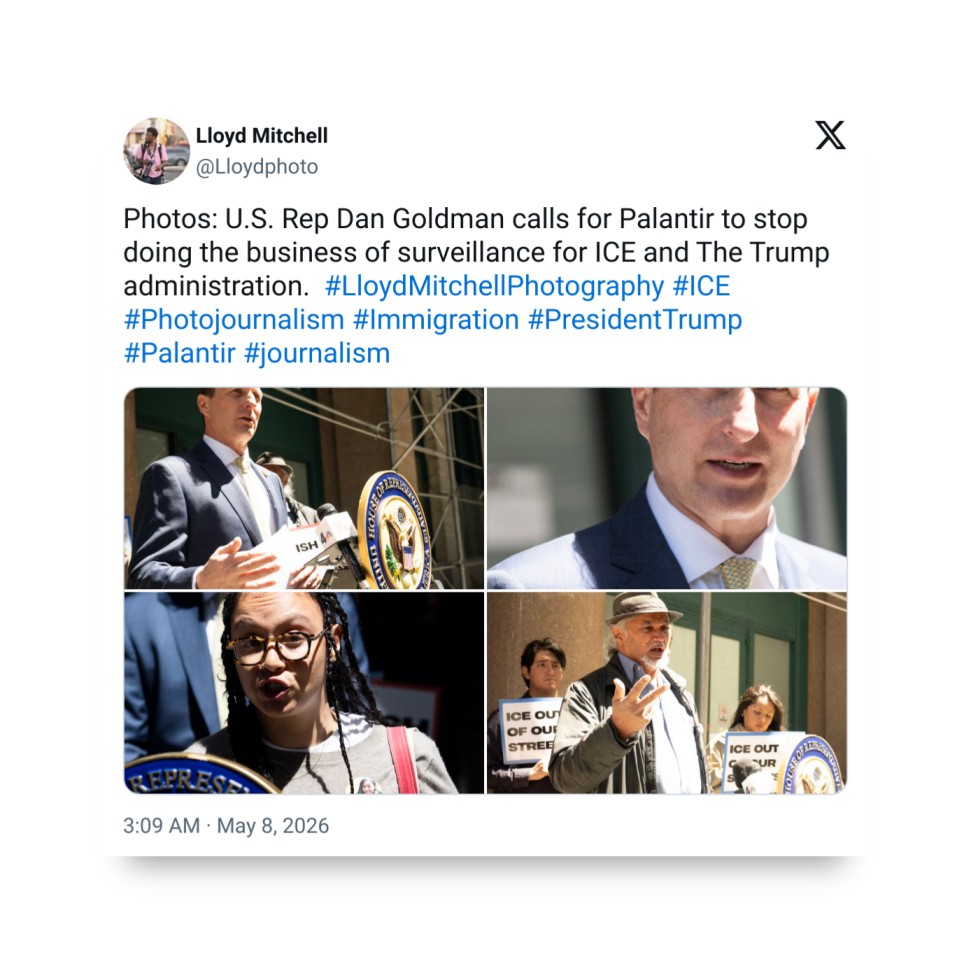
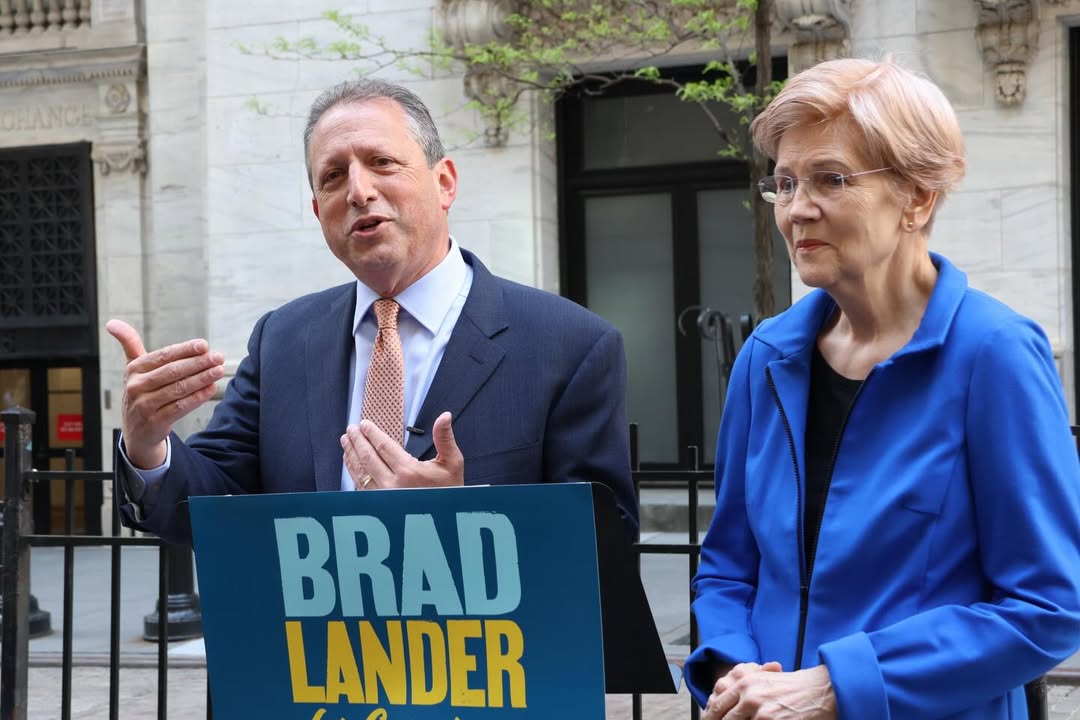
In the safely blue New York City 10th congressional district, the real contest isn’t the general election—it’s the June 23 primary between incumbent Dan Goldman and challenger Brad Lander.
The Endorsement Arms Race
Both campaigns are leaning heavily on LGBTQ+ endorsements as proof of credibility. Lander has support from groups including Stonewall Democrats, Lambda Independent Democrats of Brooklyn, Jim Owles Liberal Democratic Club, NYC Youth 4 Trans Rights, and the Christopher Street Project.
RELATED: Policy Pile-Up: New Laws Are Leaving LGBTQ+ Rights in the Dust
Goldman, meanwhile, is backed by LGBTQ+ aligned elected officials such as Brad Hoylman-Sigal, Erik Bottcher, Deborah Glick, and Tony Simone, alongside support linked to the Congressional Equality Caucus Equality PAC.
The Stonewall Symbolism Moment
Both candidates also showed up publicly at the Pride flag-raising at the Stonewall National Monument after the Trump administration ordered its removal earlier this year.
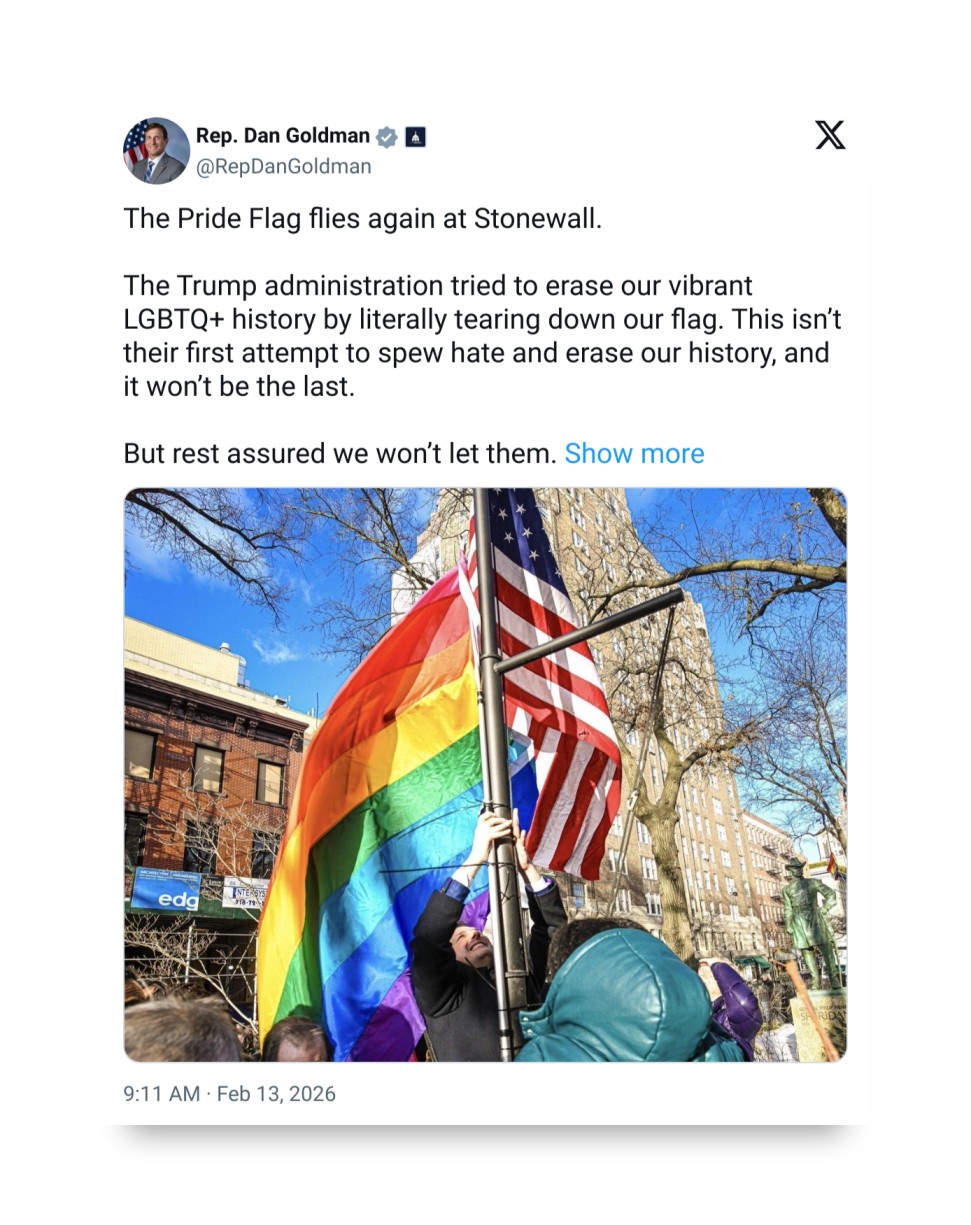
It was less a ceremonial appearance and more a visible reminder that LGBTQ+ rights remain politically charged—even in Democratic strongholds.
Goldman’s Policy Pitch
Goldman’s campaign frames him as a legislative defender of LGBTQ+ rights. According to his press secretary, Maddy Rosen:
“Dan has been a fierce and unyielding advocate for LGBTQ+ New Yorkers, from championing legislation to combat LGBTQ+ discrimination to fighting to protect access to gender-affirming care.”
“As the Trump administration doubles down on its homophobic and transphobic attacks, Dan will continue leading the fight to defend the rights of the LGBTQ+ community.”
His policy proposals include expanding Civil Rights Act protections to LGBTQ+ people, creating a district-level LGBTQ+ advisory committee, strengthening anti-harassment protections in schools, and improving hate crime reporting systems.
Lander’s Record on LGBTQ+ Rights
Lander points to his work in city government as evidence of long-term commitment. As a council member, he supported bans on conversion therapy, gender-neutral bathrooms, and expanded HIV education. As comptroller, he also published an annual LGBTQ+ resources guide for New York City.
He said: “There should never be a question of whether standing up for our LGBTQ+ neighbors, for trans kids, or for other marginalized communities is the right thing to do,”
“In Congress, I’ll make clear that LGBTQ+ rights, healthcare, safety, dignity, and humanity are not up for debate.”
“At a time of escalating attacks on the LGBTQ+ community, I’m proud to have the support of all of New York City’s LGBTQ+ political clubs,”
“All New Yorkers benefit from the fight that began at Stonewall to make sure that everyone can live authentically as themselves without fear.”
A Primary About Proof, Not Position
On paper, Goldman and Lander are not far apart ideologically. The difference is in presentation: track record versus legislative framing, city politics versus federal agenda, endorsements versus institutional backing. In practice, it’s a competition over something more intangible—who looks like the more reliable advocate when LGBTQ+ rights are under pressure nationally.
And in that sense, the race isn’t just about winning a seat in Congress. It’s about convincing voters that allyship is not assumed—it has to be demonstrated, repeatedly, and in public view.
And in that sense, the race isn’t just about winning a seat in Congress. It’s about convincing voters that allyship is not assumed—it has to be demonstrated, repeatedly, and in public view. In 2026, apparently even Democratic primaries come with their own unofficial category for Best Supporting Ally Performance.
Source: Advocate