


Trump has pushed the United States back into a long-running constitutional debate: how should government balance religion and civil rights?
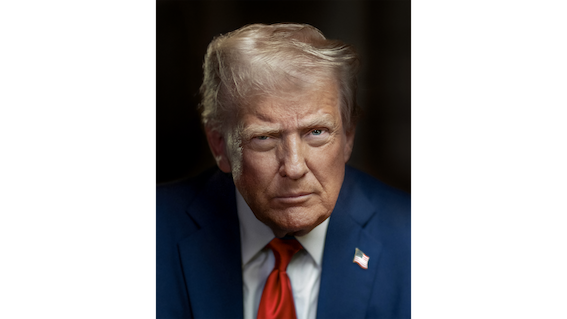
That debate is once again front and center after the Trump administration released a new report focused on what it calls anti-Christian discrimination—placing LGBTQ rights, religious liberty, and the meaning of church-state separation back into the national spotlight. Supporters say Trump is defending faith communities, while critics argue Trump is reopening culture-war battles through federal policy.
Biden “prosecutors and investigators were working hand-in-hand with… outside, pro-abortion, nongovernmental organizations.”@TheJusticeDept‘s Deputy Assistant Attorney General Camille Varone unpacks findings from today’s Eradicating Anti-Christian Bias report. pic.twitter.com/BGqwFEotoX
— Tony Perkins (@tperkins) April 30, 2026
For many LGBTQ Americans and allies, the report raises familiar concerns: when the Trump federal government claims to protect religion, whose rights are being prioritized—and at whose expense?
As of December 2025, it’s also worth noting that while 64% of Americans are Christians, 28% does not practice religion, and the remaining 1% practices religions outside of Christianity, according to the Pew Research Center.
The Constitutional Backdrop
The First Amendment to the U.S. Constitution begins with a well-known principle:
“Congress shall make no law respecting an establishment of religion.”
That clause has long been understood as limiting government involvement in promoting or favoring religion.
According to the Free Speech Center at Middle Tennessee State University, early American religious thinker Roger Williams, founder of Rhode Island, described the need for “a wall or hedge of separation” between church and state. Williams believed government entanglement could corrupt religion itself.
That history makes today’s debate especially charged.
RELATED: Stonewall, Chelsea, Hell’s Kitchen, West Village Keeps LGBTQ Representation
What the New Report Says
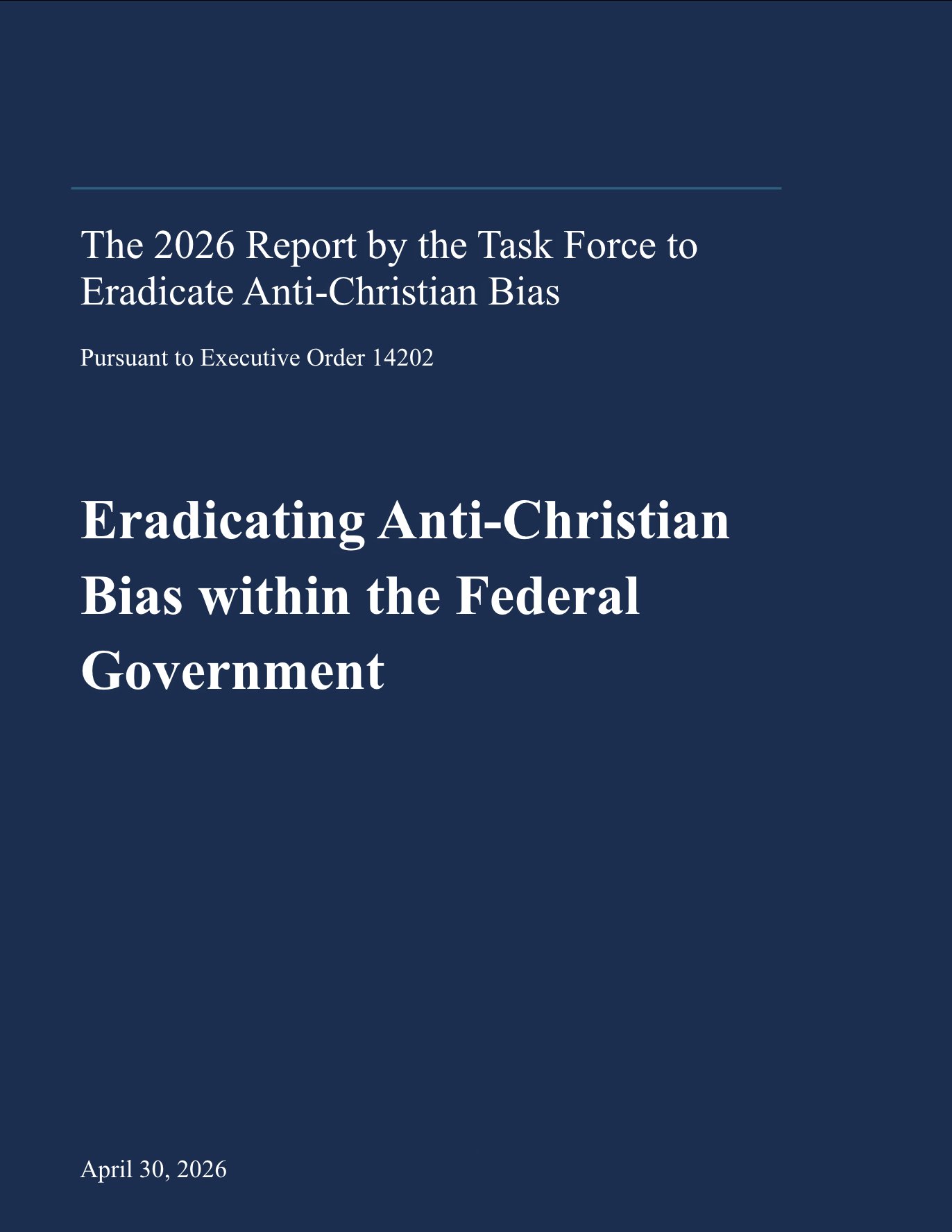
The report was issued under President Donald Trump’s administration and stems from Executive Order 14202, titled Eradicating Anti-Christian Bias.
According to its executive summary, the Trump administration created a task force to investigate whether Christians faced discriminatory treatment under the Biden administration and to identify policies that allegedly burdened Christian beliefs or practices.
The report argues that Biden-era policies often conflicted with what it describes as a traditional Christian worldview—particularly on issues involving:
- Abortion
- Sexual orientation
- Gender identity
- Family placement and foster care
- Counseling practices
The report’s central claim is that some Christians were penalized for living according to their religious beliefs.
Biden “prosecutors and investigators were working hand-in-hand with… outside, pro-abortion, nongovernmental organizations.”@TheJusticeDept‘s Deputy Assistant Attorney General Camille Varone unpacks findings from today’s Eradicating Anti-Christian Bias report. pic.twitter.com/BGqwFEotoX
— Tony Perkins (@tperkins) April 30, 2026
RELATED: Florida Pride Faces Fresh Uncertainty After New DeSantis Law
Why LGBTQ Issues Are Central to the Debate
A major portion of the report focuses on LGBTQ-related protections introduced or supported during the Biden administration. That includes criticism of Health and Human Services guidance and rules affecting foster care placements. The report alleges that some Christian foster families or agencies were disadvantaged if they did not affirm certain LGBTQ identities or placements.
It also criticizes efforts opposing so-called conversion therapy, arguing that families should be able to seek counselors aligned with their religious values.
LGBTQ advocates, however, have long argued that conversion therapy is harmful and unsupported by major medical organizations. Many states and local governments have restricted or banned the practice for minors.
This leaves two very different interpretations colliding:
- One side frames such rules as religious discrimination.
- The other sees them as protections for vulnerable LGBTQ youth.
The Equality Act Fight Returns
The report also revisits the long-running battle over the Equality Act, proposed federal legislation that would expand anti-discrimination protections based on sex, sexual orientation, and gender identity across housing, employment, education, public accommodations, and more.
The Biden administration strongly supported the measure.
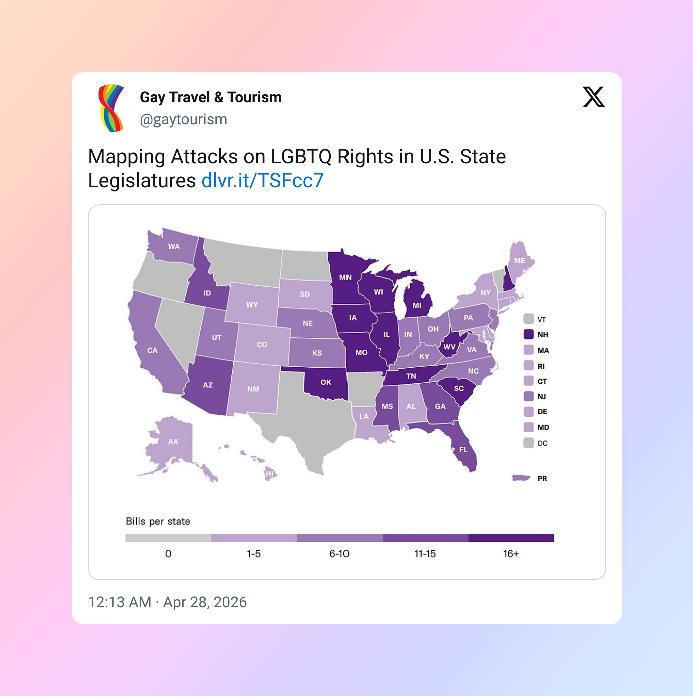
Trump officials now argue that the Equality Act would have weakened religious liberty protections, particularly by limiting the use of the Religious Freedom Restoration Act (RFRA) as a defense in LGBTQ discrimination disputes.
Supporters of the Equality Act have argued the opposite: that LGBTQ Americans deserve clear, nationwide protections against discrimination in daily life.
That disagreement remains unresolved in Congress—and deeply emotional for both sides.
Critics Call the Report Politically Motivated
Not everyone accepts the report’s framing.
🇺🇸 President Trump: “You hear about antisemitic, but you don’t hear about anti-Christian.”
Trump announces a task force to eradicate “anti-Christian bias.” pic.twitter.com/MAMpnw5Y5b
— DD Geopolitics (@DD_Geopolitics) September 8, 2025
The Freedom From Religion Foundation (FFRF) sharply criticized the findings, calling it “a political document masquerading as a civil rights analysis.”
FFRF Co-President Annie Laurie Gaylor argued that the task force was designed from the start to look only for bias against one group—conservative Christians—rather than examining religious liberty fairly across all faiths and beliefs.
Critics say that when government centers one religious perspective, it risks sidelining pluralism and equal treatment.
What This Means for LGBTQ Americans
For LGBTQ communities, the concern is not simply rhetoric—it is policy.
Federal reports can shape agency priorities, legal strategies, and future legislation. Language framing LGBTQ protections as burdens on religion may influence future court fights involving schools, healthcare, foster care, employment, and public services.
Many LGBTQ advocates worry that equality measures are increasingly being recast as discrimination against others.
That framing has become a common political battleground in recent years.
The Bigger Question: Rights vs. Rights?
This debate often gets presented as religion versus LGBTQ equality. But many legal scholars note the real challenge is how to protect both religious freedom and equal civil rights without allowing one to erase the other. That balancing act is difficult, messy, and politically explosive.
Still, millions of Americans are both religious and LGBTQ, or allies of both communities—proof that these identities are not always in conflict.
The Bottom Line
The new federal report has reopened one of America’s oldest arguments: what does freedom of religion mean in a diverse democracy?
For LGBTQ Americans, the answer matters deeply.
Whether this becomes a symbolic political document or a roadmap for future policy, one thing is clear: the conversation about faith, equality, and government power is far from over.
remember when republicans accuse democrats of just shoving their beliefs and agenda in their throats?
yup, an accusation to the democrats is an admission of the republicans
And isn’t he the prime example of a Christian? This is pathetic, just like everything else that comes out of his mouth. He’s intolerable!
I for one, am so tired of living in a dystopian society. Our political system needs a complete makeover, with laws to permanently put a stop to these Orwellian ideas and are not only acceptable for everyone, but eliminate all the hate. Where did “the land of the free and the home of the brave?” With all his loyalists in positions of power, it’s going to take decades to recover once they’re all ousted!!
Write to your representatives and senators. Your voice is the voice they need to hear to stop his foolishness!