


A sweeping new memo issued within the Texas Tech University System is drawing sharp criticism after outlining restrictions on LGBTQ+ topics in academic programs and course content across multiple campuses.
The reporting was first highlighted by Erin Reed of Erin in the Morning, who brought national attention to the memorandum and its implications for students, faculty, and LGBTQ+ scholarship. Additional details were also reported by The Texas Tribune.
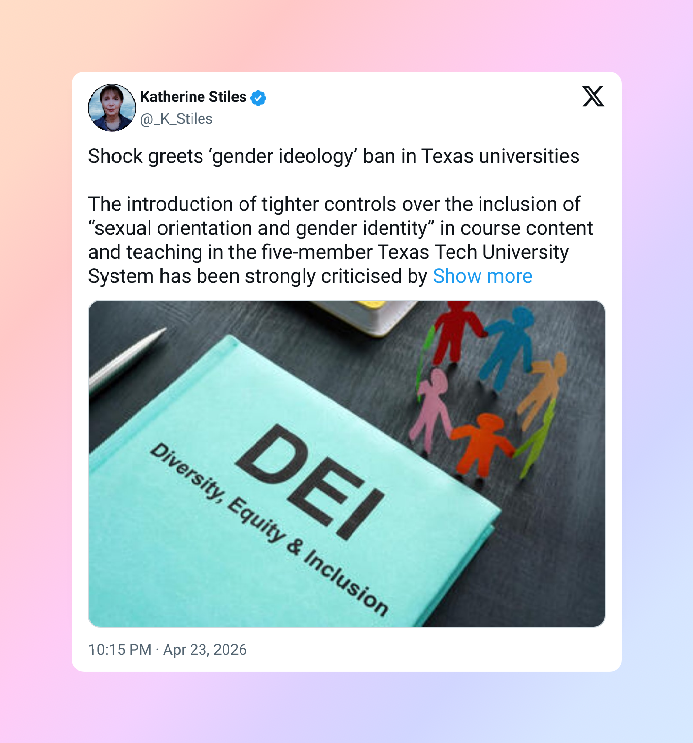
The Texas Tech University System serves approximately 64,000 students across Texas Tech University, Angelo State University, Midwestern State University, and two Health Sciences Centers, according to Erin in the Morning. That means the impact of the memo could stretch far beyond one campus.
What the Memo Says
The document, titled “Texas Tech University System Course Content Guidelines,” was reportedly sent this month to presidents of all five universities in the system.
It was issued by Chancellor Brandon Creighton, a former Republican state senator known for authoring Texas’ ban on diversity, equity, and inclusion programs at public universities, as well as a campus protest restriction law later blocked by a federal judge as unconstitutional.
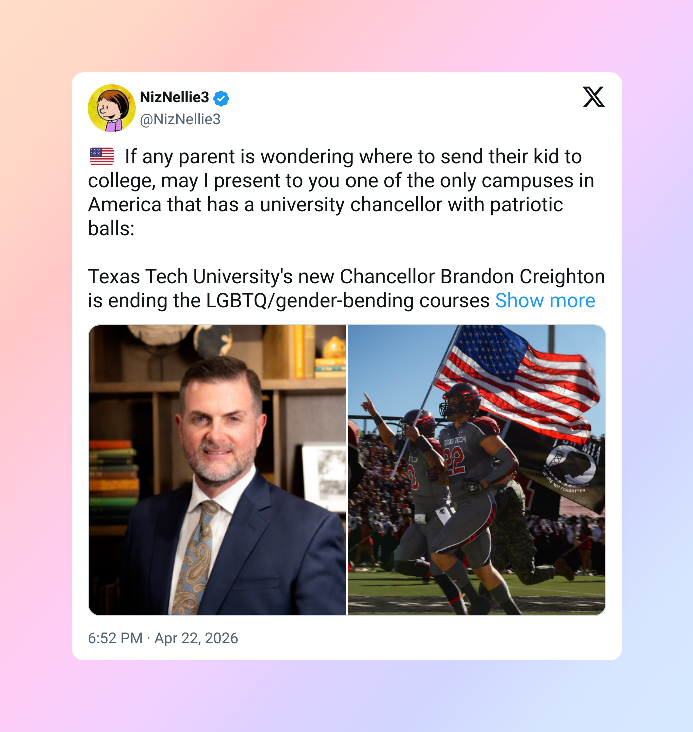
According to the memo, they will be establishing a phase-out process for academic programs centered on sexual orientation and gender identity (SOGI).
The document states that the system is initiating closure procedures for all academic programs “centered on” sexual orientation and gender identity, including undergraduate majors, minors, certificates, and graduate degrees. Currently enrolled students would be allowed to complete their studies through a teach-out process, but future academic credentials in those fields would no longer be offered.
Critics say the move represents one of the most sweeping recent restrictions on LGBTQ+ academic subject matter in higher education.
Restrictions on Course Content
The memo goes beyond degree programs.
It also introduces course content thresholds limiting how LGBTQ+ topics may appear in classrooms. According to the reported language, core and lower-level undergraduate courses would face a strict prohibition on sexual orientation and gender identity content, with alternate materials required if assigned texts center on or substantially include those topics.
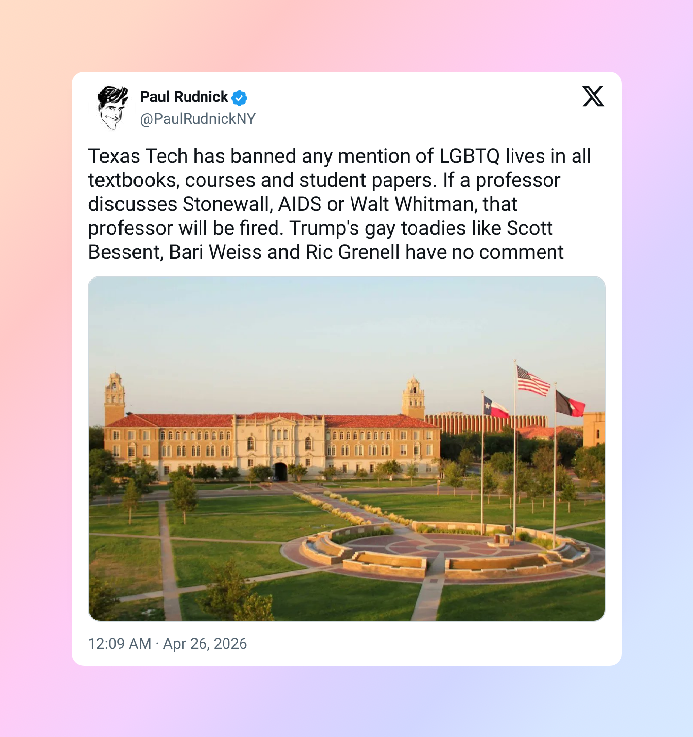
Upper-level undergraduate and graduate courses would receive narrow exemptions, but only under tightly defined academic purposes.
The memorandum further states that only two human sexes, male and female, are legally recognized, and says instructors may not teach gender identity as a spectrum, endorse more than two genders, or separate gender from biological sex as a factual baseline.
While the memo permits instruction on intersex conditions, genetics, endocrinology, and Differences of Sex Development, it reportedly bars faculty from using those biological realities to validate what it describes as fluid gender identities.
RELATED: Ethics Course Canceled Over LGBTQ and Race Topics as Professor Pushes Back
Why Critics Are Concerned
To LGBTQ+ students, faculty, and advocates, the concern is larger than course catalogs.
Universities have long been spaces where students encounter new ideas, study identity and culture, and pursue research rooted in lived experience. Limiting LGBTQ+ topics in coursework or dismantling related academic programs raises questions about intellectual freedom, scholarly independence, and whether queer students are being told their experiences are inappropriate for study.
The memo also lands during a broader political climate in Texas and across the United States where debates over gender identity, DEI programs, and classroom content have become flashpoints.
Critics argue these policies could create a chilling effect, where faculty may avoid relevant scholarship entirely rather than risk violating unclear rules.
RELATED: The Harm Behind Texas Schools Rejecting Trans Students’ Names
Alumni Network Speaks Out
The Texas Tech PRIDE Alumni Network (TTAA PRIDE) issued a statement on Sunday, April 12, condemning the April 9 memo that moves to phase out degree programs focused on sexual orientation and gender identity while placing new limits on related classroom content.
In its response, the group warned that removing LGBTQ+-related material from academic spaces restricts intellectual inquiry, undermines academic freedom, and opens the door for political influence over what can be studied or discussed. TTAA PRIDE added that while the changes are being presented as administrative policy, many LGBTQ+ alumni and students experience them as a form of erasure.
What It Means for LGBTQ+ Students
For queer and trans students, the emotional impact may be just as significant as the academic one.
Seeing your identity treated as something to be phased out, restricted, or narrowly regulated can send a powerful message about belonging. LGBTQ+ studies programs often do more than grant degrees—they create community, preserve history, and provide language for understanding identity.
When those spaces shrink, students often feel the loss first.
The Bigger Texas Picture
Texas has become a major battleground over education policy, from DEI bans to curriculum disputes and campus protest restrictions. This latest memo suggests those battles are now reaching LGBTQ+ scholarship directly.
Whether the guidelines face legal challenges, faculty pushback, or revision remains to be seen.
But one thing is clear: this is no minor administrative update. It is a policy shift with statewide consequences.
And for thousands of students across Texas, the question now is whether higher education will remain a place for inquiry—or become a place where some identities are simply harder to study.