

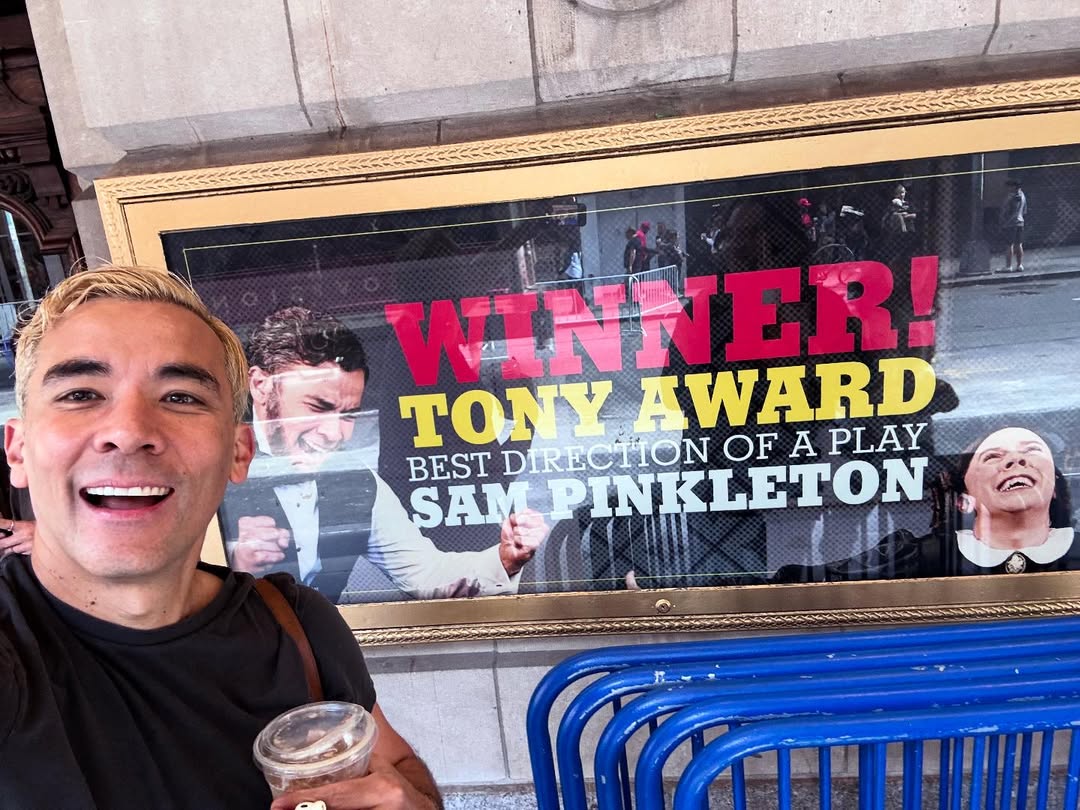
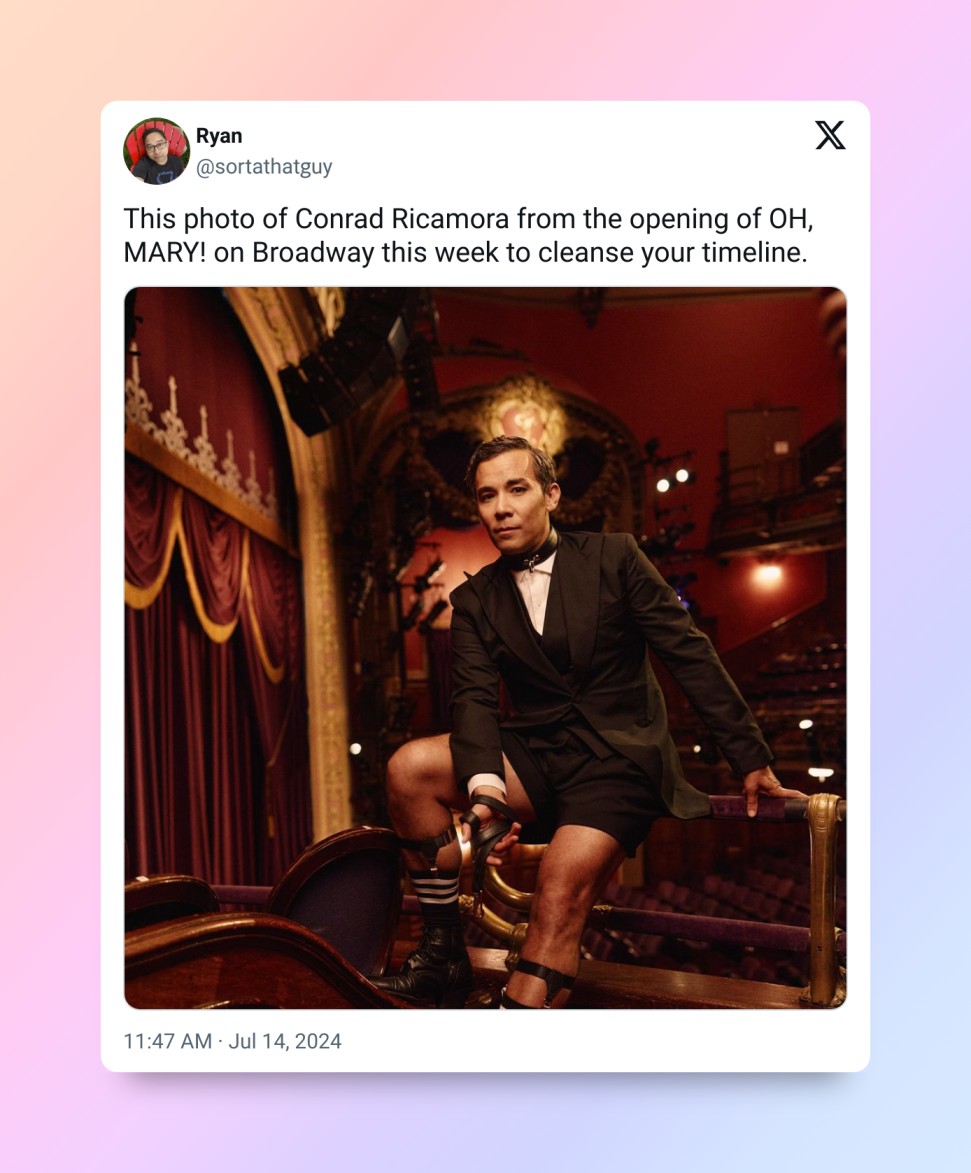
Conrad Ricamora has had one of those years—the kind that makes you wonder if the man’s secretly operating in a different time zone. From a Tony nomination for his role as a closeted, long-suffering husband to Mary Todd Lincoln in Oh, Mary! on Broadway to stepping into the world of film with a Devil Wears Prada sequel, he’s not just making waves—he’s practically tsunamizing them. But it’s not all glittering awards and high-profile roles. Ricamora, always willing to challenge the status quo, is on a mission to make space for flawed, real, and yes, sexy Asian men in Hollywood and beyond.
RELATED: Conrad Ricamora Shares Love Story with Husband Peter Wesley Jensen
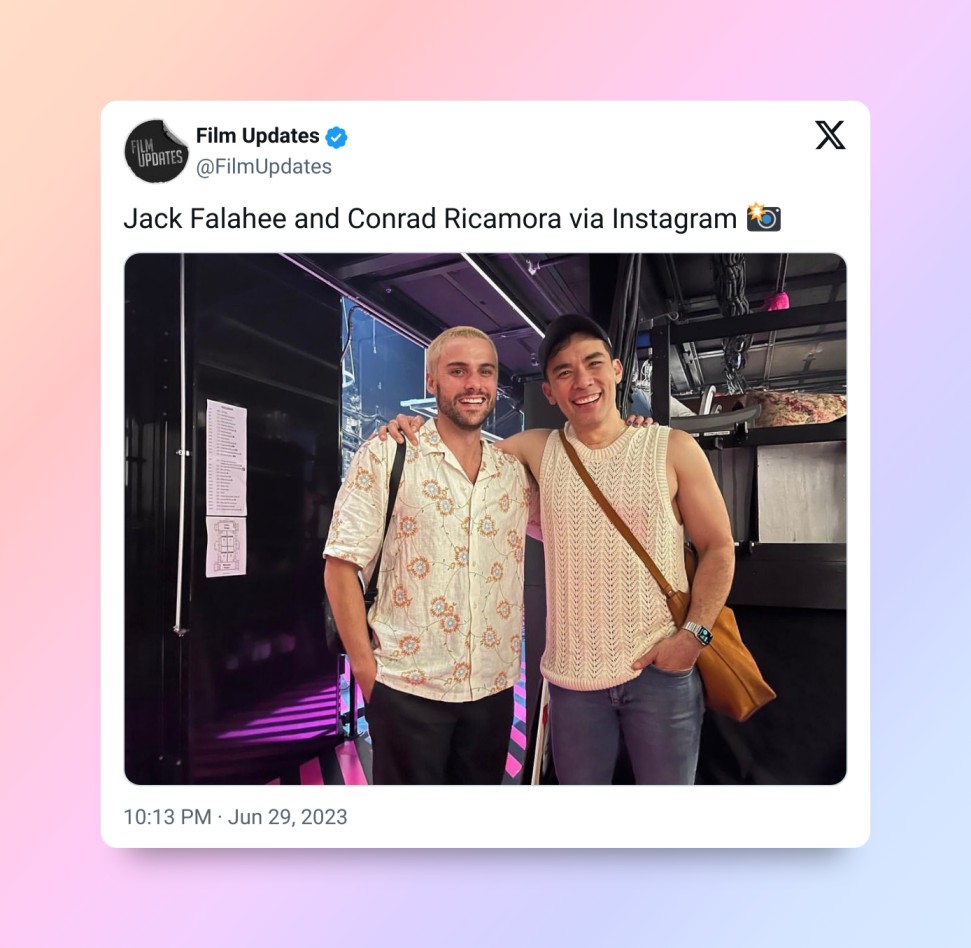
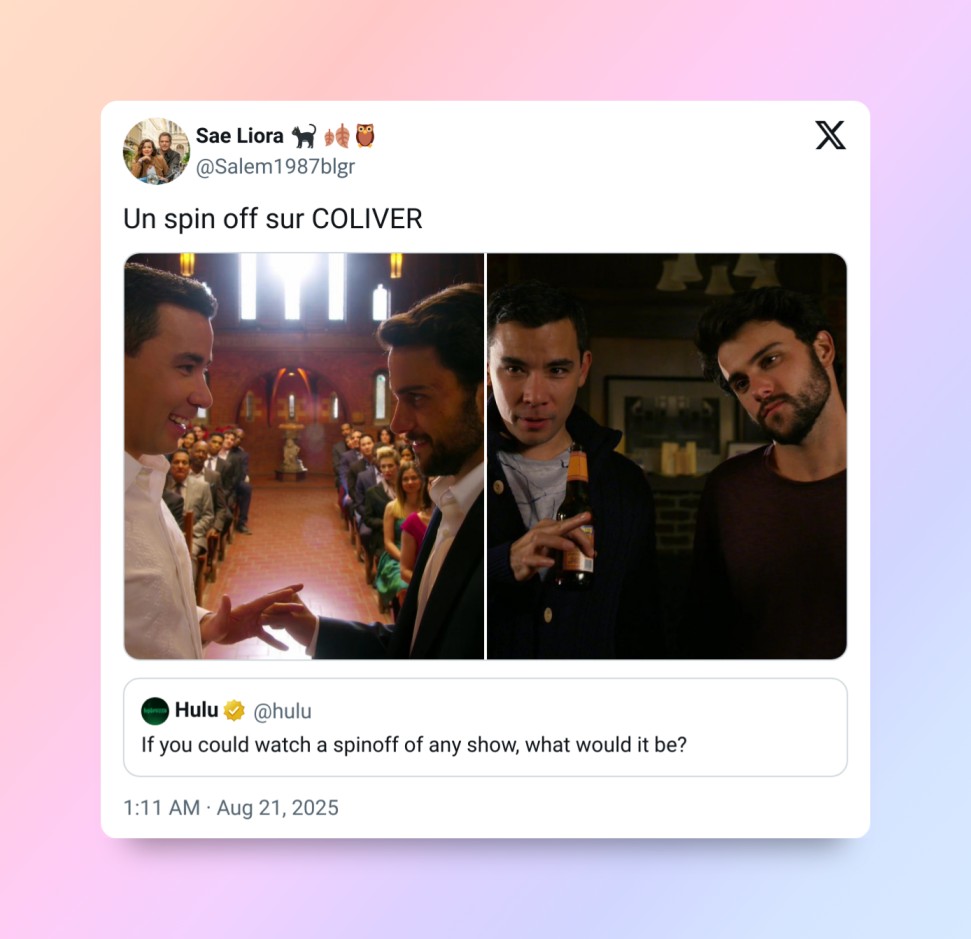
Let’s rewind a bit. Ricamora became a household name in the 2010s as Oliver Hampton on ABC’s How to Get Away With Murder—the shy, tech-savvy boyfriend to Jack Falahee’s sexually adventurous Connor. “Coliver,” as fans dubbed the couple, became one of TV’s most beloved and groundbreaking gay relationships. There was a lot of love to go around: Oliver was smart, complicated, and—thanks to Ricamora’s nuanced performance—deeply human. But what made it especially groundbreaking was that Oliver wasn’t just a sidekick or a token character—he was a full, fleshed-out person, unapologetically living his sex life.
RELATED: From Steamy Hookups to a Twist-Tie Proposal: The Love Story of Coliver
And, yes, there was sex.
“I didn’t know I would ever see a gay—well, multiple gay sex scenes throughout the seasons—on primetime network television,” Ricamora says, shaking his head in disbelief.
“This was airing on ABC, which is owned by Disney!” He laughs at the absurdity of it. “And then as an Asian man? I can’t remember seeing an Asian man in a sex scene. I don’t even have a reference for it.”
That’s a big deal. In a world where Asian men are still underrepresented (and misrepresented) in media, Ricamora’s portrayal of Oliver offered something rare: an Asian man having a real, multi-dimensional sex life. No stereotypes. No whitewashing. Just a character who was allowed to be sexy and flawed and messy—all of it.
Ricamora’s journey didn’t begin in Hollywood, though. Raised on U.S. Air Force bases, his early life didn’t exactly scream “future Broadway star.” He didn’t even know theatre existed until he was 20. “My dad wanted me to get a PhD. He wasn’t thrilled when I told him I wanted to act,” he laughs, referencing his psychology degree. But after cutting his teeth on plays and training, Ricamora eventually found himself rubbing elbows with icons like George Takei and Margaret Cho—two of the few openly gay Asian-American figures he had to look up to.
“I had Margaret Cho to look up to,” Ricamora says, acknowledging the absence of a queer, Asian male role model. But when Daniel Dae Kim joined Lost, he began to see a different kind of Asian man on TV—one that was, well, sexy. It was progress, but it wasn’t enough.
And then came How to Get Away With Murder.
“Still to this day, I’ll have Asian-Americans and Asians in other parts of the world reaching out to me saying this was the first time they saw an Asian man have a sex life that was three-dimensional on TV,” Ricamora shares. “Because if you don’t see it, it’s hard to then be that.”
The ripple effect of Ricamora’s portrayal is undeniable. His work gave so many people the confidence to embrace their own sexuality, especially in cultures where that’s still taboo. He was the first to show them that an Asian man can be all of it—romantic, smart, sexy, and vulnerable—and not a single stereotype in sight.
But Ricamora’s mission goes far beyond his own on-screen representation. He’s deeply committed to paving the way for future Asian-American actors and creating opportunities where there were once none. When the Maybe Happy Ending casting controversy broke out earlier this year, where an Asian-American-led show decided to replace Darren Criss (an Asian-American actor himself) with a white actor, Ricamora didn’t hold back.
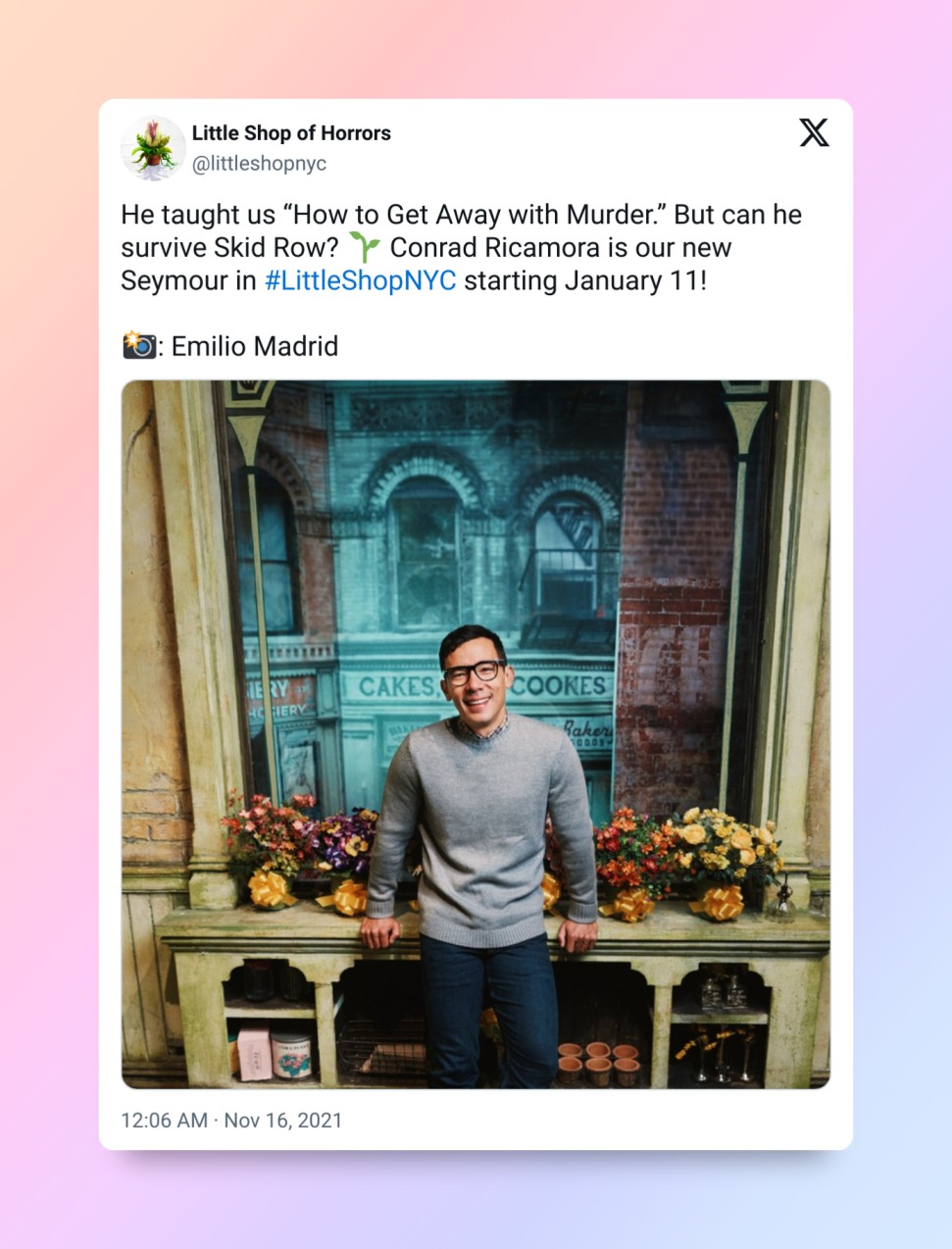
“It really made no sense,” he says of the decision. “It felt like this was in that vein of erasure and diminution,” referring to the historical practice of casting white actors in Asian roles—a painful reminder of shows like Miss Saigon and Anything Goes. For Ricamora, this was more than just a professional misstep; it felt like a betrayal of the hard-fought progress for Asian representation in the arts.
As a result, he launched The Right To Be There scholarship, raising over $70,000 to support Asian-American actors in training. It’s a mission close to his heart, as he believes that visibility is everything: “I want them to see what I didn’t see when I was growing up. I think my life overall would have been easier if I had been able to see myself on stage.”
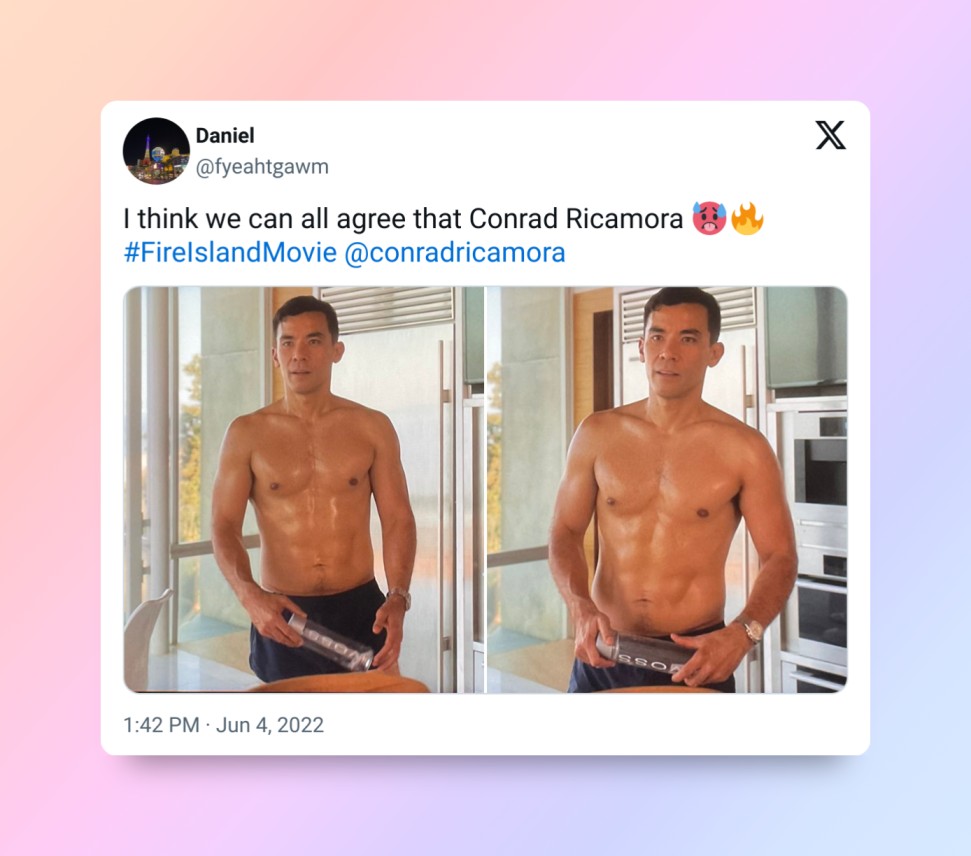
Next up for Ricamora is his West End debut at RepresentAsian, a night dedicated to showcasing Asian musical theatre talent and raising funds for the Boury Academy, which supports young Asian actors in the UK.
“There’s just so much potential in this community. We’re here. We exist,” Ricamora emphasizes. And though progress in diversity is often fragile, he remains hopeful that the next generation will have the tools and the confidence to make their mark.
But the fight isn’t over. Progress is fragile, Ricamora notes. His experiences in Hollywood and on Broadway have shown him how quickly representation can be reversed if we don’t stay vigilant. The casting decisions, the microaggressions, the systemic barriers—they’re still very real.
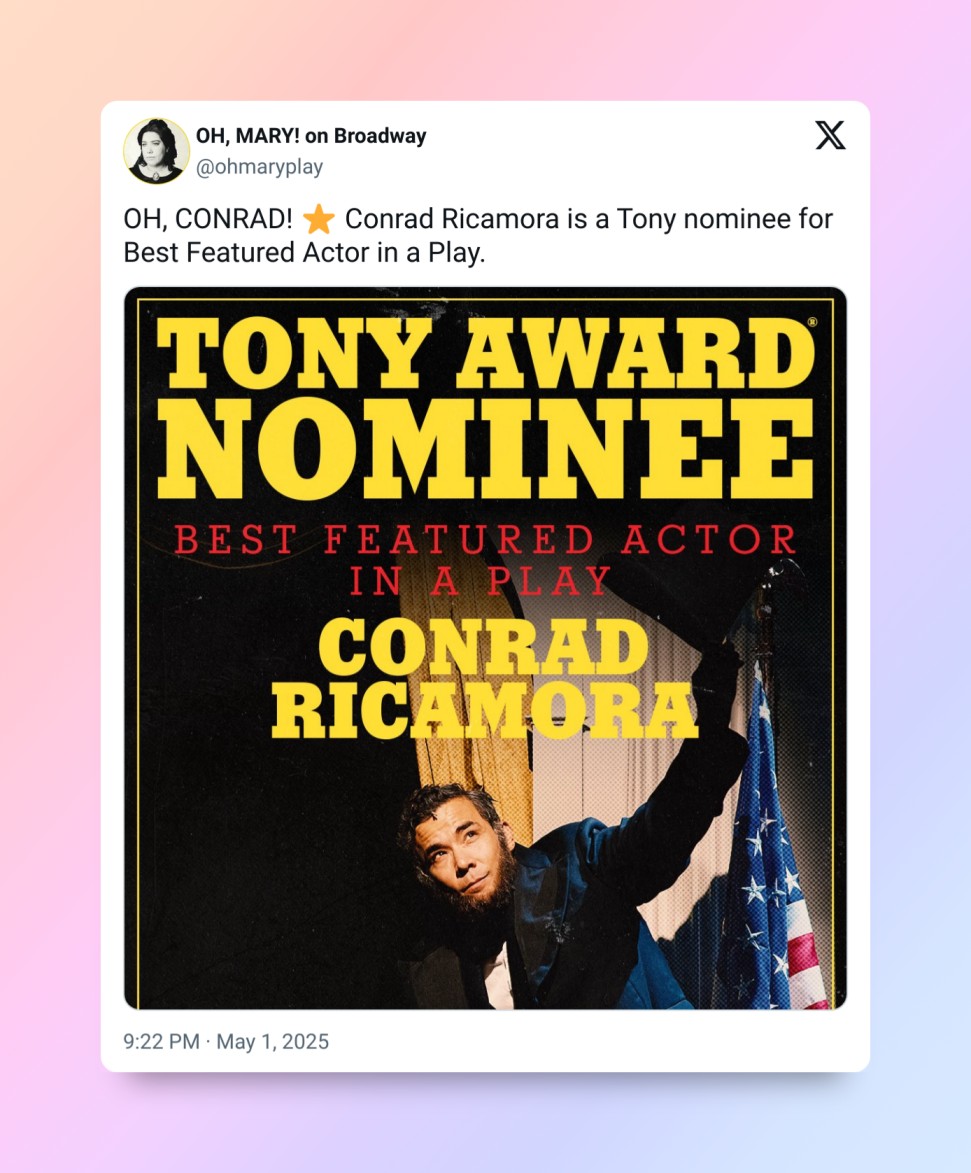
But Conrad Ricamora isn’t backing down. He’s not just playing roles—he’s reshaping the narrative. Whether it’s with a Tony nomination, a groundbreaking performance, or a scholarship fund, Ricamora is reminding us that Asian men can be sexy, complicated, and real—and they deserve to take up space in every corner of the stage, screen, and beyond.
And that’s something we should all be standing up and applauding.
Source: PinkNews