


LGBTQ issues once again found themselves at the center of America’s ongoing culture wars this week. While each story focused on a different topic, they all shared a common thread: LGBTQ people remained the subject of political campaigns, advocacy efforts, and public debate.
Here’s a look at three stories that caught our attention.
A Republican Candidate Is Selling a $99 Course to “Fight” the “Homosexual Lifestyle”
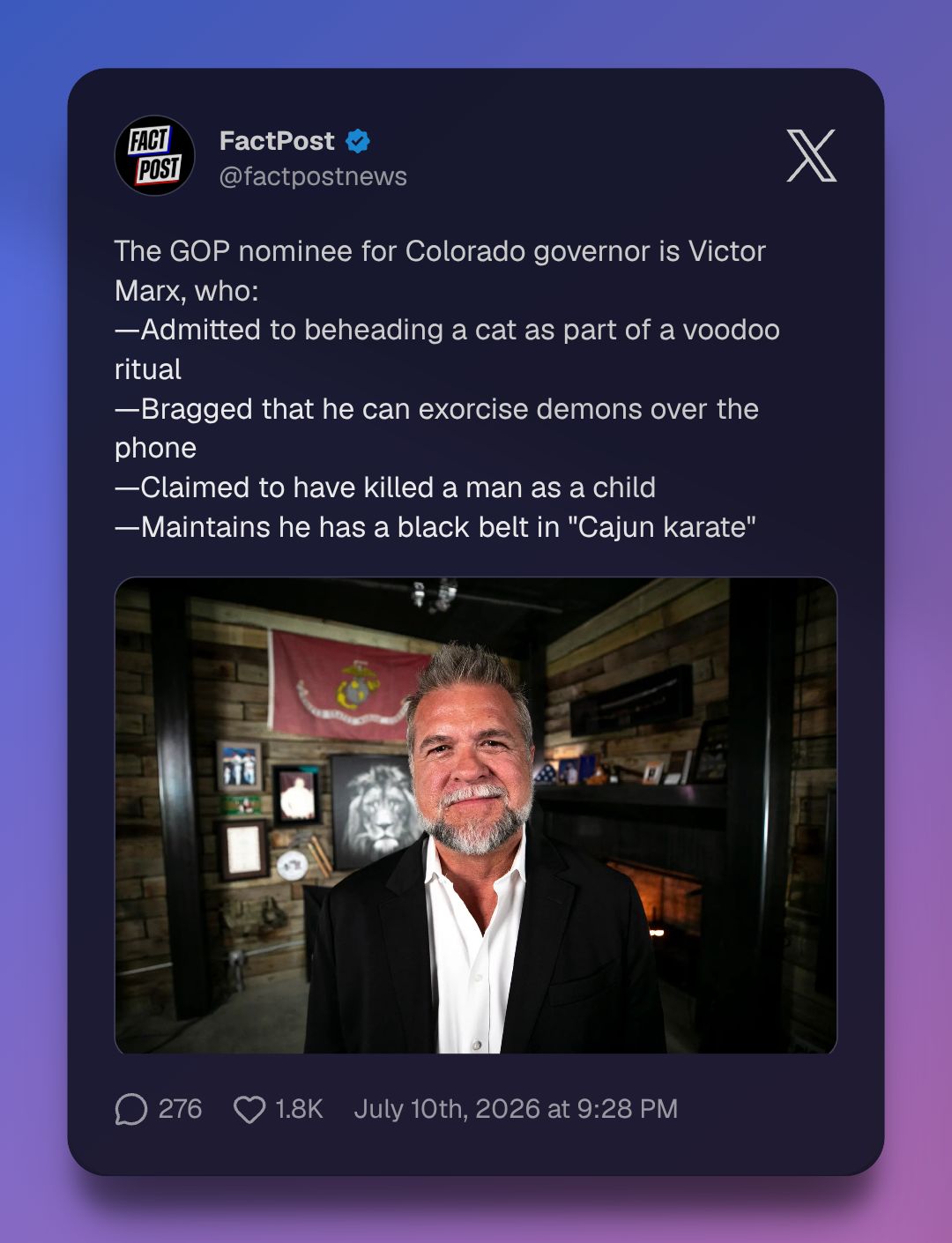
Victor Marx, founder of All Things Possible Ministries and a Republican candidate for governor of Colorado, is facing criticism over a ministry course that describes homosexuality as something people can overcome through prayer.
The eight-part, $99 program discusses what Marx considers spiritual threats, placing the “homosexual lifestyle” alongside issues such as addiction, murder, and low self-esteem. In previous interviews, Marx has said he believes prayer can help people become “free” from those struggles.
Reporter: Victor Marx, Colorado’s Republican candidate for Governor, pitches his demon-hunting prayer as effective against everything from homosexuality to murder. Marx says he never charges for the prayer itself, only the films, courses, and training work involving “spiritual… pic.twitter.com/8sB4ByxrD7
— FactPost (@factpostnews) July 30, 2026
According to his ministry, it also tracks the number of people it says have been delivered from demons, using those figures in fundraising and promotional materials.
Major medical and mental health organizations do not classify being LGBTQ as a disorder or illness, and efforts to change a person’s sexual orientation have long been rejected by leading professional organizations.
RELATED: Turns Out the Scariest Thing at the Outlet Mall Was… Gay Outdoor Furniture
HIV Prevention Ads Become the Latest Target
Meanwhile, conservative advocacy group One Million Moms has launched a petition urging TV Land to stop airing commercials for PrEP Wisdom, an educational campaign promoting HIV prevention.
The campaign, created by ViiV Healthcare, features television personality Michelle Visage and encourages people to learn more about PrEP, medication that can significantly reduce the risk of acquiring HIV when taken as prescribed.
In its petition, One Million Moms argues the commercials are inappropriate for daytime and early evening television, particularly when they air during family-friendly programming. The group also objects to the campaign’s inclusion of LGBTQ people, including drag performers and transgender individuals. On top of that, One Million Moms has also labeled the new Minions movie “demonic.”
Supporters of the campaign, however, view the advertisements as public health messaging designed to increase awareness of HIV prevention among communities that could benefit from the medication.
A Proposal Targeting Transgender Teachers
In North Carolina, State Representative Erin Paré suggested new legislation after expressing concerns about a transgender teacher working at a local elementary school.
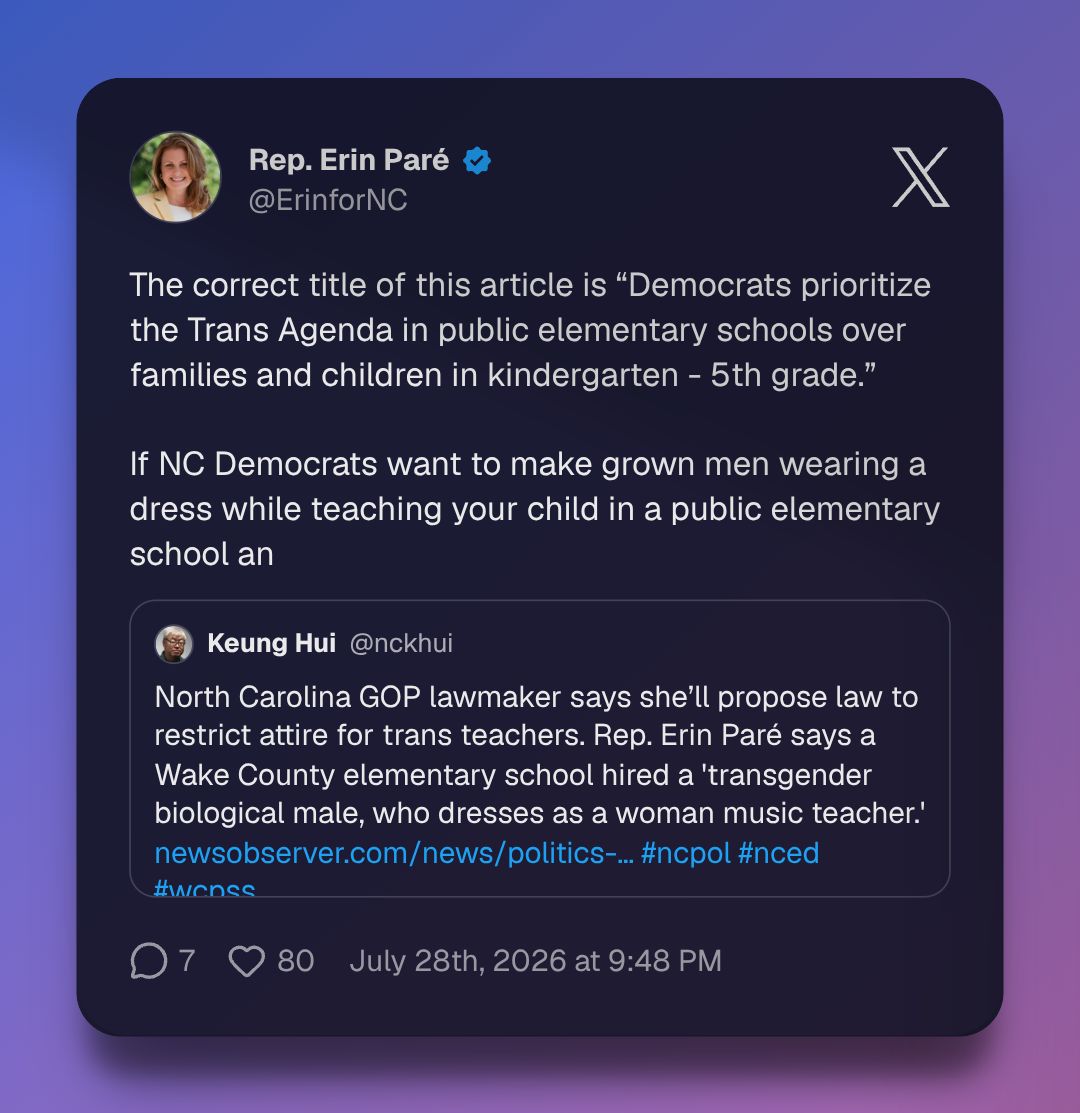
In a Facebook post, Paré said she may introduce a bill requiring “gender-appropriate professional attire” for public school employees. She argued that school dress policies should prevent children from being exposed to what she described as age-inappropriate discussions about gender identity.
Her comments followed concerns raised by some parents regarding the teacher’s appearance rather than allegations of misconduct or violations of existing school policies.
The proposal has sparked debate over where lawmakers should draw the line between regulating professional dress standards and protecting the rights of transgender employees in the workplace.
The Bigger Picture
Although these stories involve different issues, they reflect a broader trend in which LGBTQ topics continue to play a prominent role in political and cultural debates.
Whether the conversation centers on religion, education, or public health, these discussions often extend beyond policy and into questions about visibility, inclusion, and equal treatment. As those debates continue, LGBTQ advocates remain focused on ensuring that access to healthcare, workplace equality, and the freedom to live openly remain part of the national conversation.