


Viagra has spent decades building a very specific reputation. Mention the little blue pill at brunch and you’ll get at least three raised eyebrows, one terrible joke, and somebody insisting they “have a friend” who uses it. But now, Viagra may be stepping into an entirely different spotlight—and this time, the punchline could save lives.
RELATED: Peptides Are Everywhere Right Now — But Are They Actually Worth It?

Researchers at Tel Aviv University believe sildenafil, the drug sold under the brand name Viagra, may help reduce the ability of cancer cells to spread by interfering with one mechanism they use to metastasize. If future research confirms the findings, Viagra could become more than a bedroom staple—it could become part of a much bigger conversation about cancer treatment.
Viagra Takes Aim at Cancer’s Escape Plan
Scientists found evidence that sildenafil limits cancer cells’ ability to use cholesterol, a key ingredient that helps malignant cells break away from a primary tumor and travel to other organs.
RELATED: HIV Treatment Without the Daily Grind? Scientists Say ‘Maybe’
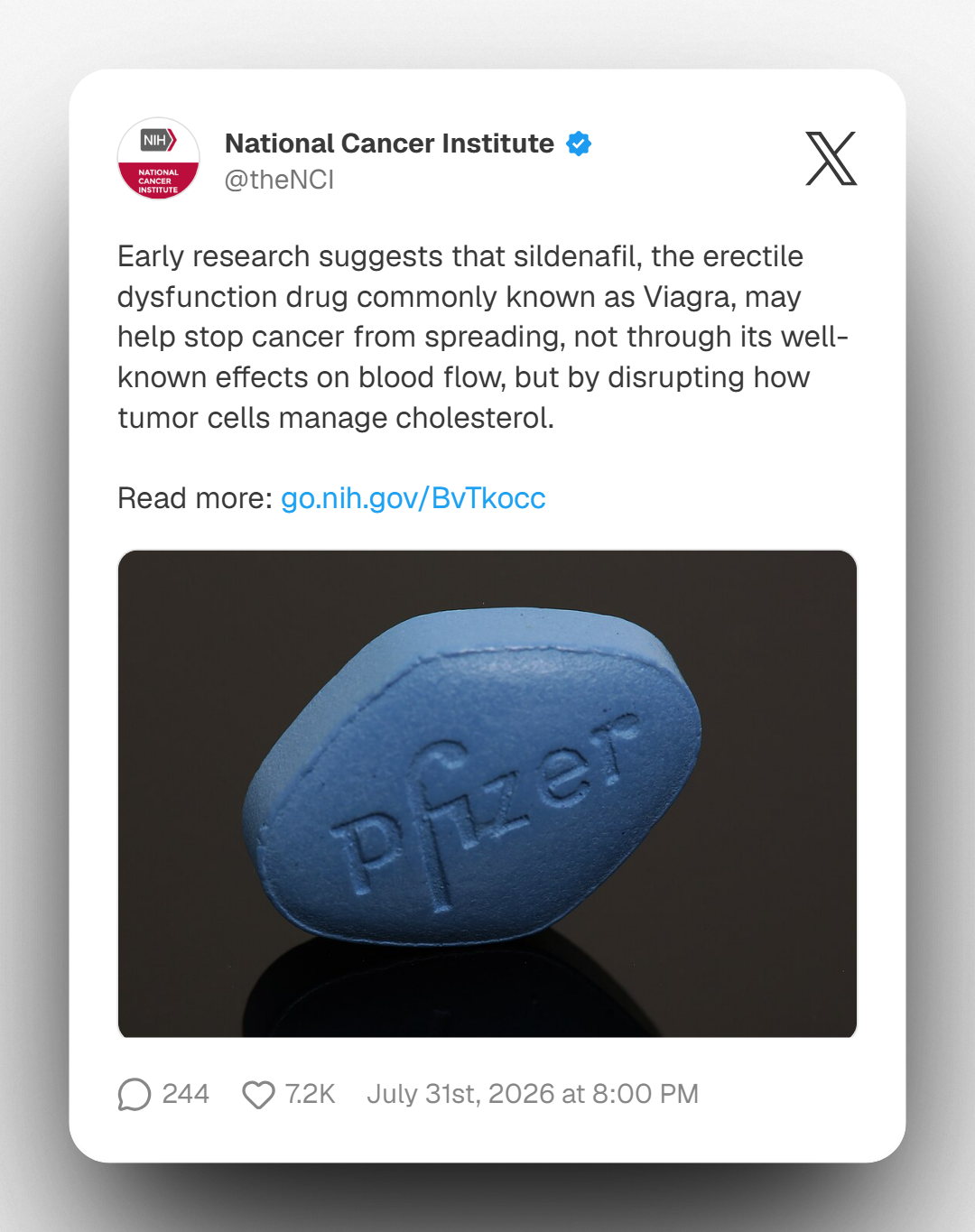
The National Cancer Institute highlighted the study over the weekend on X. The research was conducted in early 2026 and published in mid-July.
“Cholesterol is particularly important for cancer cells seeking to break away from the primary tumor, migrate throughout the body and invade distant organs,” the researchers said.
When cancer cells can’t easily access cholesterol, they have a tougher time “forming metastases,” the process where they spread through the bloodstream and establish new tumors elsewhere in the body.
The research remains in its early stages, but the initial findings have scientists paying close attention.
“The combination could not only limit cancer cells’ access to existing cholesterol but also prevent them from producing new cholesterol, potentially enhancing the anti-metastatic effect,” it says.
The Internet Had Thoughts—Naturally
As you’d expect, social media wasted absolutely no time reacting to the possibility that Viagra could have an unexpected second act.
“The one potential cancer drug republicans won’t try to cut research for. Touché,” pointed out the person who posts under the popular account, “evan loves worf.”
It was one of many celebratory reactions, though not everyone was ready to start handing out Nobel Prizes just yet.
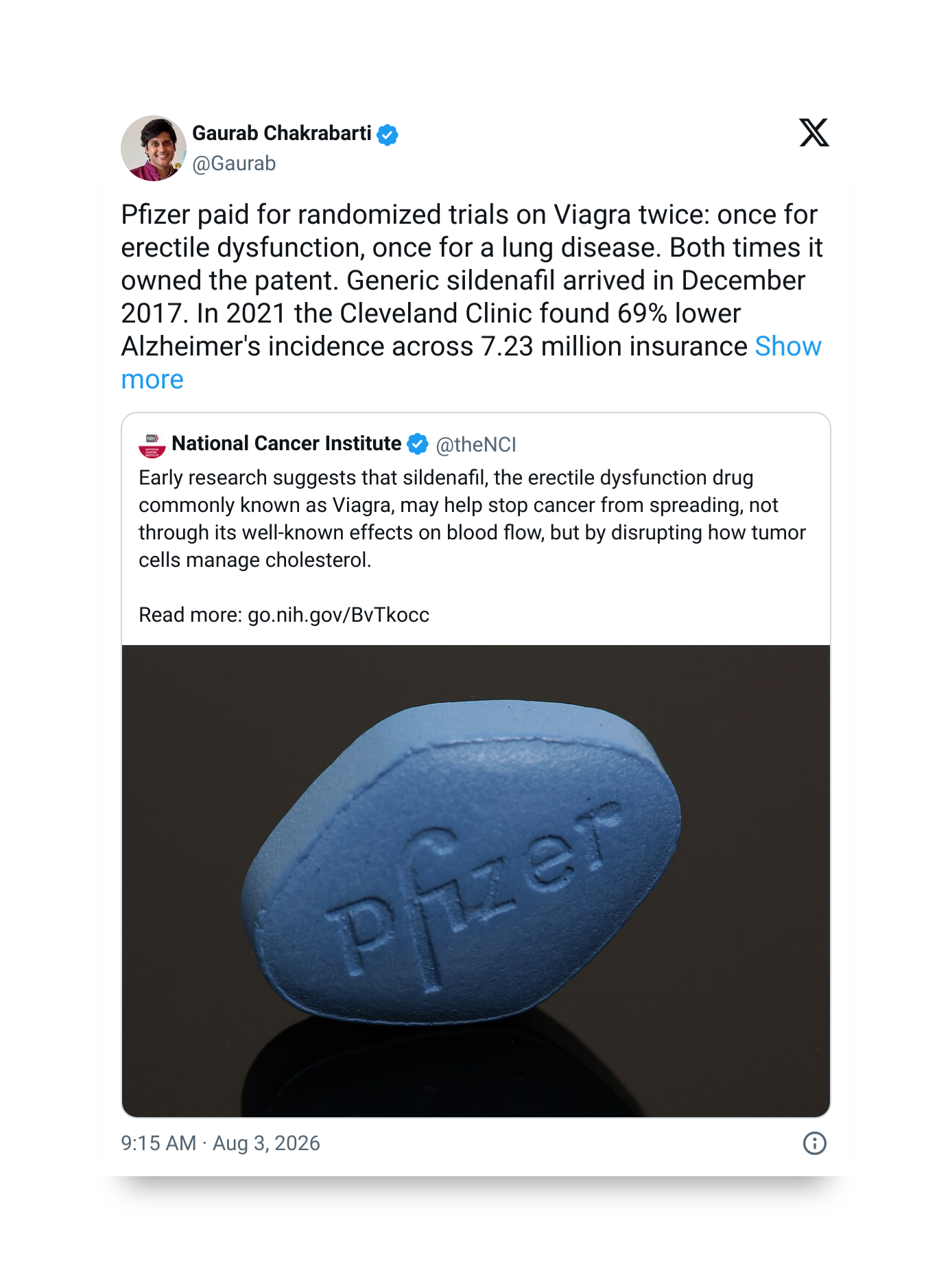
One scientist on X offered an important reality check, noting that none of the studies conducted were randomized trials.
“Many findings like these fall apart when you finally test them,” he added.
It’s a fair reminder that promising research isn’t the same as proven treatment. Medical breakthroughs often look exciting in early studies before larger clinical trials reveal a more complicated picture.
A Familiar Medication Keeps Finding New Tricks
Still, this wouldn’t be the first time a medication surprised researchers by doing far more than originally intended.
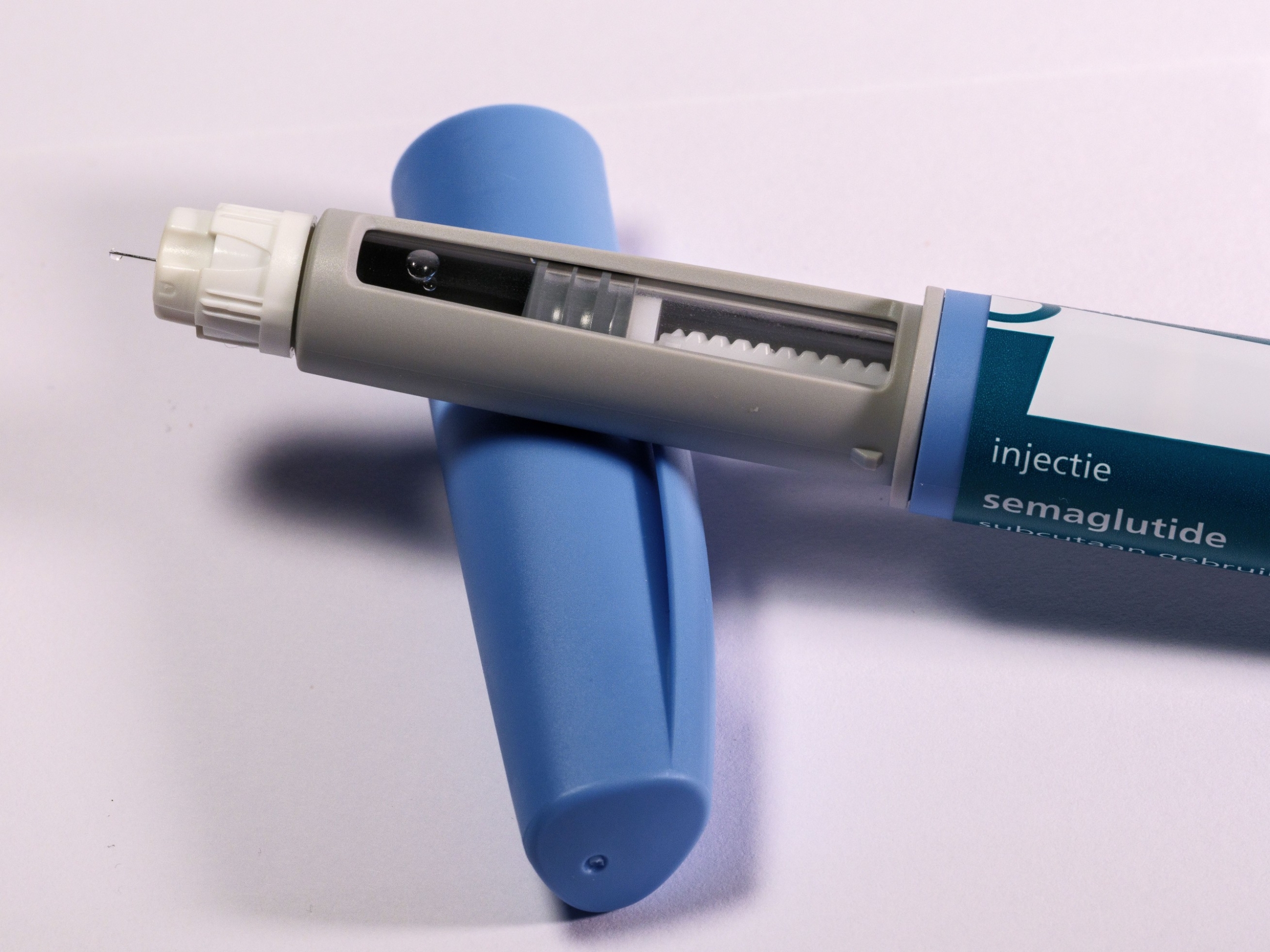
We’ve already watched GLP-1 drugs evolve from diabetes treatments into medications with potential benefits across a growing list of health conditions. Whether Viagra follows a similar path remains to be seen, but scientists clearly think it’s worth investigating.
For many LGBTQ+ people, Viagra isn’t exactly unfamiliar territory. Last year, Queerty explored how many gay men use ED medications to counter the sexual side effects of antidepressants, which can make it difficult to maintain an erection or reach climax.
Urologists also told Queerty that gay men are more likely to experience erectile dysfunction for a variety of reasons, including the prevalence of having more sexual partners.
With PrEP and DoxyPEP now part of everyday conversations about sexual health, many believe it’s also time to talk more openly about ED medications without the unnecessary stigma.
While there’s little evidence proving gay men use ED drugs more frequently than straight men, experts say the idea isn’t far-fetched.
Dr. Philip Cheng, head of Urology at Reproductive Medicine Associates of New Jersey and Peak Men’s Health, previously explained that many of his younger gay patients seek these medications primarily for sexual enhancement.

“Gay men, in general, are more likely to utilize treatment for sexual enhancement,” he said. “A lot of my younger gay patients are asking for ED medications like Viagra, Cialis, etc, and it’s more for performance enhancement. They don’t have severe issues. They want stronger erections with these medications.”
Hope, With a Healthy Dose of Caution
That doesn’t mean Viagra is something people should start taking casually.
A 2021 study found younger men could become “psychologically dependent” on ED medications when they’re used without a medical need. Like any prescription drug, there are real risks alongside the potential benefits.
But if future clinical research confirms Viagra can help reduce the spread of certain cancers, the little blue pill may end up with a legacy that’s far bigger than its original purpose.
It’s still early, and no one should mistake hopeful science for established medical practice. Even so, every meaningful advance against cancer starts with a promising discovery. If Viagra eventually becomes one more weapon against one of humanity’s toughest diseases, that’s a glow-up no one saw coming—and one worth rooting for.