


A great disco song is a bit like glitter at a Pride parade: once it gets everywhere, there’s no putting it back in the bottle. Victor Willis spent years explaining what YMCA meant to him, while the rest of the world happily gave it a life of its own. Love it, debate it, dance to it—few songs have inspired as much joy, discussion, and enthusiastic arm choreography. Now, with Willis’ passing at 74, disco has lost one of its defining voices, and pop culture has lost a man whose legacy proved far bigger than any single interpretation.
RELATED: Patrick Muldoon Dies at 57: The Low-Key ’90s TV Hottie
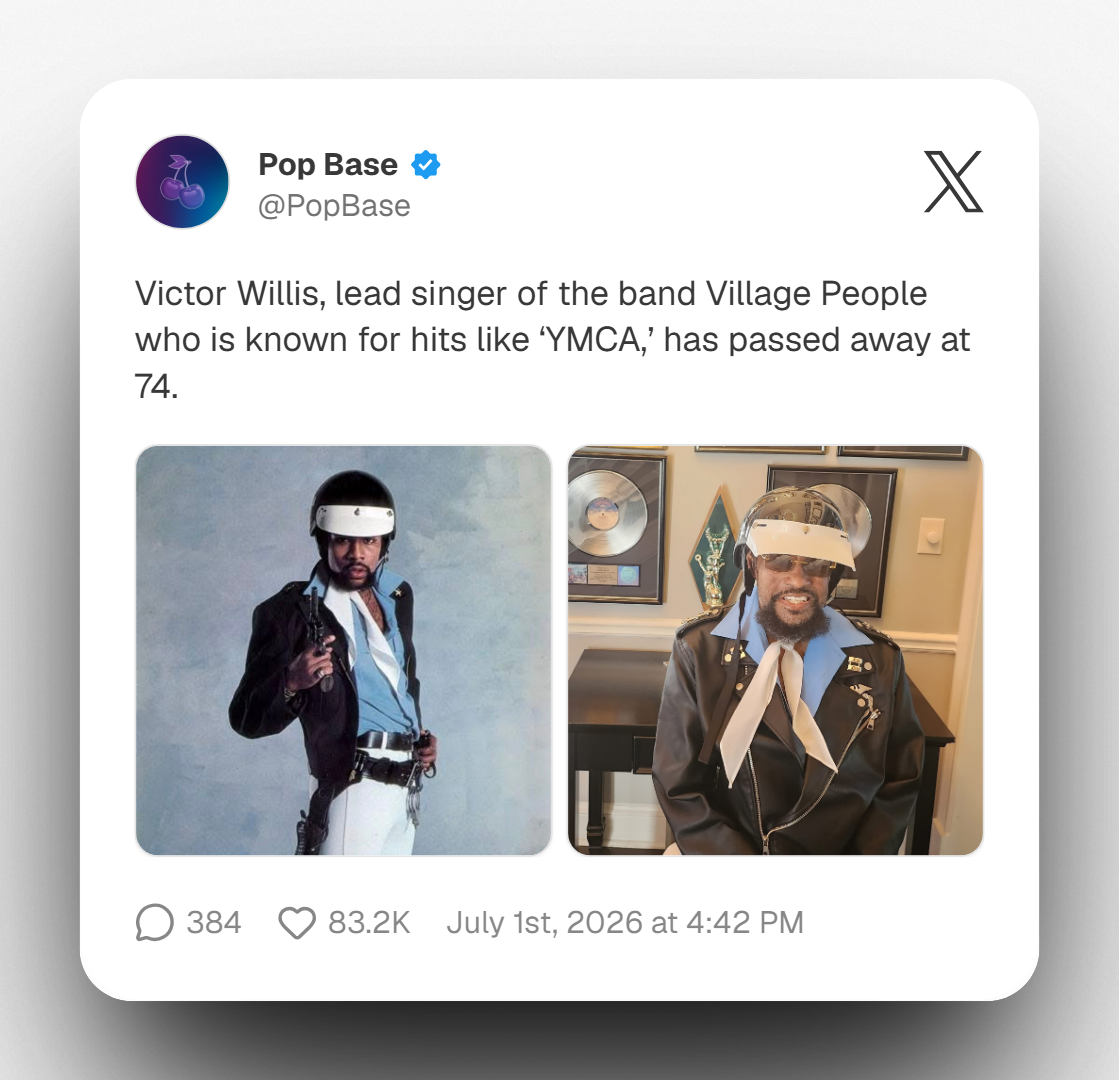
Victor Willis leaves behind one of disco’s biggest legacies
Victor Willis, the unmistakable lead singer of Village People, has died at the age of 74 after what the band described as a “short but aggressive illness.” The news was announced through Village People’s official social media accounts, with Willis’ wife, Karen Huff-Willis, sharing a similar statement asking for privacy.
RELATED: Remembering Heath Ledger: Ally Before Hollywood Caught Up
For many LGBTQ people, the news feels oddly personal. Even if you never owned a Village People record, chances are you’ve danced to YMCA at a Pride celebration, wedding reception, gay bar, birthday party, or somewhere between “I’ll only stay for one drink” and “Why is it suddenly 2 a.m.?” Some songs become hits.
YMCA became a social event.
Before the sailor hats came Broadway
Long before he became disco royalty, Willis was singing gospel in his father’s Baptist church in San Francisco. Music was already part of the family business, but his ambitions stretched beyond Sunday mornings. After exploring jazz and soul, he landed roles in Hair, Two Gentlemen of Verona and The Wiz, where he met future first wife Phylicia Rashad. Then came a meeting that changed everything.
French producer Jacques Morali recruited Willis for a new disco project after telling him:
“I had a dream that you sang lead on my album and it went very, very big.”
Safe to say, the dream had excellent instincts.
Village People turned camp into chart gold
Village People never looked like anyone else. A construction worker, a cowboy, a police officer, a sailor—on paper it sounds less like a pop group and more like the beginning of a joke. Somehow, it worked brilliantly. The costumes were outrageous. The hooks were impossible to forget. The dance floors stayed full.
With Willis providing the powerhouse vocals, the group produced an incredible run of hits including YMCA, Macho Man, Go West, In the Navy, and Key West. Disco may have faded from the charts, but those songs never really left the party.
YMCA: The anthem that politely ignored its creator
Here’s where the story gets fascinating. For years, Willis rejected the widespread belief that YMCA was intentionally written as a gay anthem.
“As I’ve said numerous times in the past, that is a false assumption based on the fact that my writing partner was gay, and some (not all) of Village People were gay, and that the first Village People album was totally about gay life,” he said.
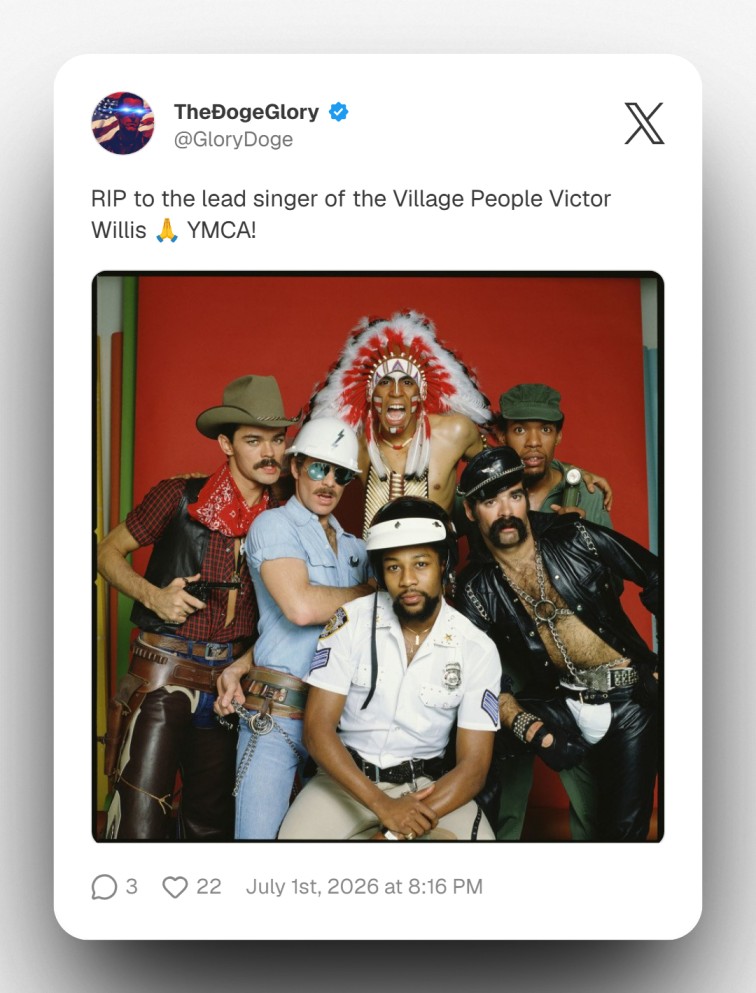
Instead, he maintained that the inspiration came from the YMCA facilities he observed in San Francisco.
“That was my interpretation of it,” he told the BBC in 2019. “I didn’t know anything about the lifestyle of other people that go there.
“For me, YMCA was about, like the last line says, ‘They can start you back on your way’. A person could go stay at the Ritz Carlton or the Hilton, or these expensive hotels. But if you don’t have that kind of money, you might have to go to the Y.”
It’s one of those rare moments where both history and the artist seem to be telling different versions of the same story. Because while Willis explained his intentions, millions of LGBTQ listeners found something else in the song: community, celebration, camp, freedom, and an excuse to enthusiastically spell four letters in public without anyone asking questions. At some point, YMCA stopped belonging to one writer and became everybody’s dance break.
Success didn’t make life easy
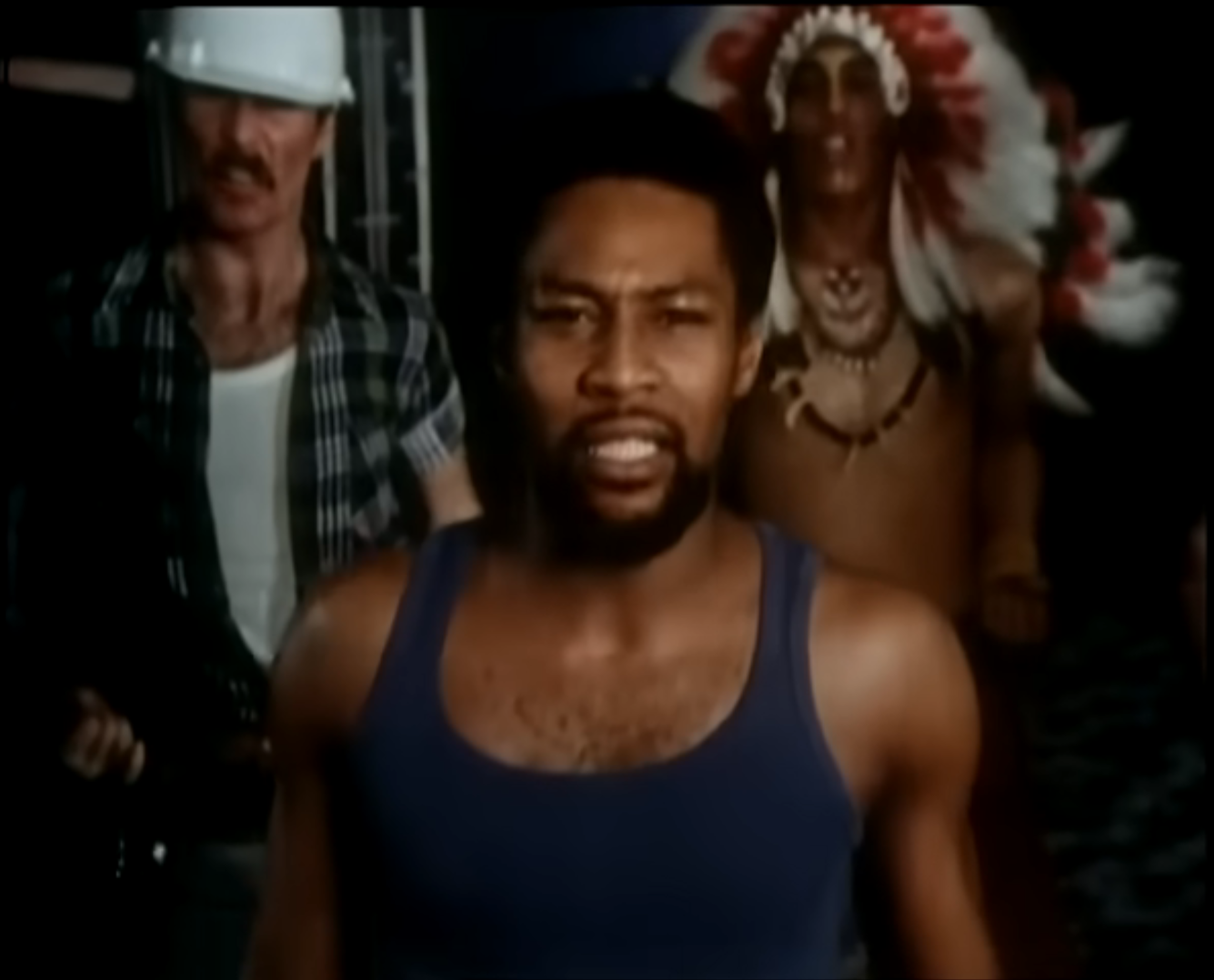
Leaving Village People before the film Can’t Stop the Music turned into a notorious flop looked like smart timing, but life after the band proved much harder than Willis expected. His solo career struggled, and disappointment eventually spiraled into addiction.
“I got very depressed over the years and decided to just drop off the map. So I got into drugs,” he told the San Diego Union-Tribune in 2015.
“I spent the 1980s and ’90s… well, I got kind of drugged out, because I was disappointed with the way things were and got frustrated, and gave up for a bit, and decided I didn’t want to be a part of it.
“So much had been taken away from me that I just turned to drugs.”
Thankfully, that wasn’t the end of the story. Following substance abuse treatment, Willis rebuilt both his personal life and his career. He successfully fought for ownership rights to many of the songs he helped write, winning a landmark copyright battle that restored his connection to the music millions already associated with him. He eventually returned to Village People in 2017.
Politics entered the chat
The later chapters of Willis’ career became unexpectedly political. When Donald Trump adopted YMCA for campaign rallies, Willis initially made it clear he wasn’t endorsing the president.
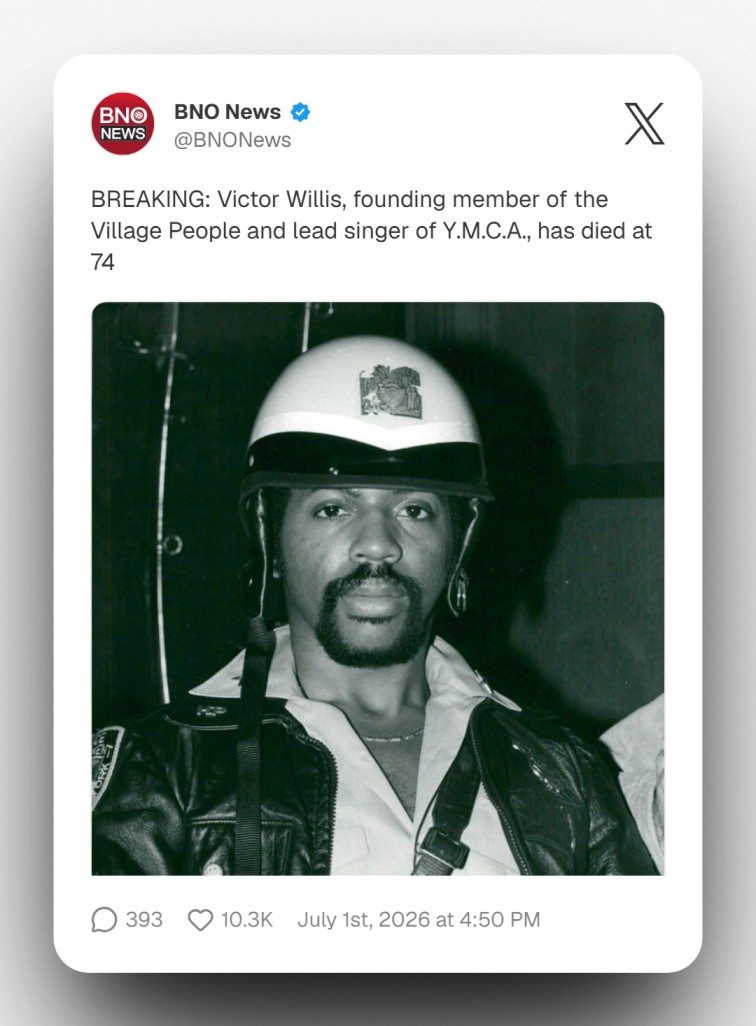
“I don’t endorse Trump, I’ve never endorsed Trump, nor has the Village People,” he told the BBC in 2020. “We have even asked him basically to even stop playing our music at his rallies.
“But because of the copyright laws in the United States… he’s able to play our music any time he wants to at any venue because he’s not using it in an incorrect way, so we don’t knock it.”
His decision to appear during Trump’s 2025 inauguration celebrations later surprised many fans.
“We know this won’t make some of you happy to hear, however we believe that music is to be performed without regard to politics,” he wrote.
“Our song YMCA is a global anthem that hopefully helps bring the country together after a tumultuous and divided campaign where our preferred candidate lost.”
Following Willis’ death, Trump paid tribute by writing, “We loved them and their great and uplifting song.”
He added, “We will think of Victor every time YMCA is played… My condolences to his wonderful family and group.”
The dance floor gets the final word
Whether you see YMCA as a pop masterpiece, a disco classic, a gay anthem, or simply the one song guaranteed to make your uncle leap out of his chair at weddings, its place in music history is beyond dispute. It was preserved by the National Recording Registry and welcomed into the Grammy Hall of Fame. More importantly, it earned something that no trophy can measure: longevity.
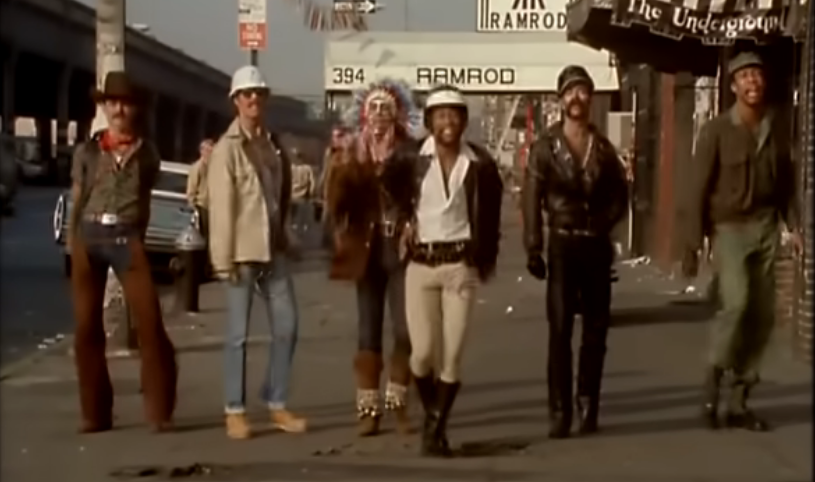
Nearly five decades later, the opening notes still trigger the exact same reaction. People grin, abandon whatever conversation they were having, and instinctively begin forming giant letters with their arms as though they’ve trained for this moment their entire lives. Victor Willis may never have agreed with every meaning people attached to YMCA. But perhaps that’s the strange magic of pop music. Once a song belongs to the world, it starts collecting stories of its own.
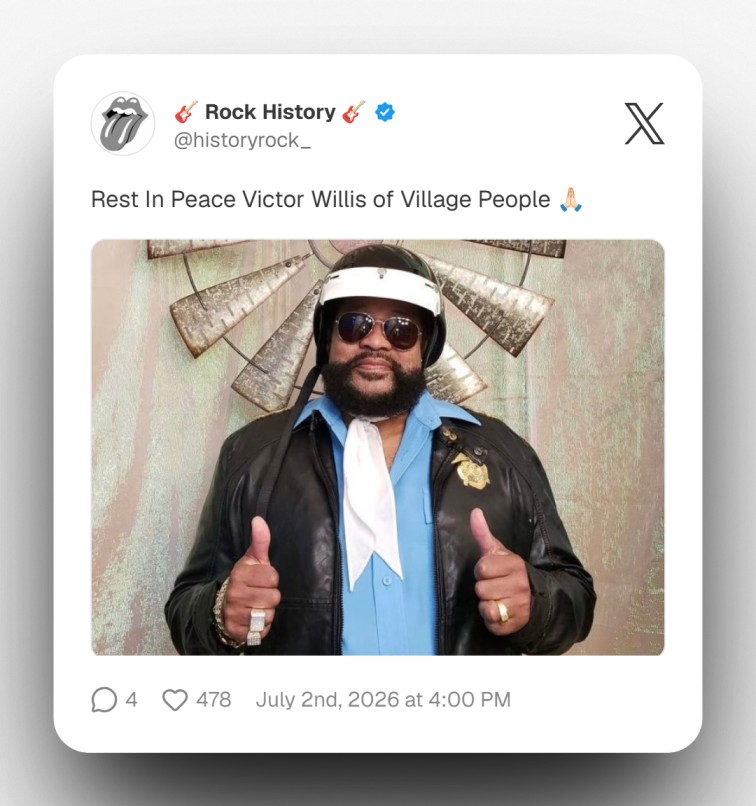
And if millions of people are still dancing to yours nearly 50 years later, you’ve probably done something right.
Source: BBC