


The best gay books are not only the books that “represent” gay people well, but the ones that show how gay life has been imagined, hidden, punished, celebrated, eroticized, politicized, and remembered across different countries, languages, and eras.
This list focuses on gay novels, gay fiction, memoir, historical fiction, and classic gay literature centered mainly on gay men, gay male desire, and queer identity. Some of these titles are famous because they changed literature. Some became cult favorites because gay readers kept passing them from one generation to the next. Some are beautifully written, some are difficult, and some are tragic in ways that still feel very present.
I prefer books that understand desire, fear, humor, beauty, sex, friendship, loneliness, family, community, and the strange process of becoming yourself in a world that often wants a simpler version of you. This is how this list came up:
10 Best Gay Books
- Giovanni’s Room, James Baldwin
- Maurice, E. M. Forster
- The Picture of Dorian Gray, Oscar Wilde
- A Single Man, Christopher Isherwood
- The Line of Beauty, Alan Hollinghurst
- Dancer from the Dance, Andrew Holleran
- Kiss of the Spider Woman, Manuel Puig
- Confessions of a Mask, Yukio Mishima
- Before Night Falls, Reinaldo Arenas
- The Song of Achilles, Madeline Miller
1. Giovanni’s Room, James Baldwin
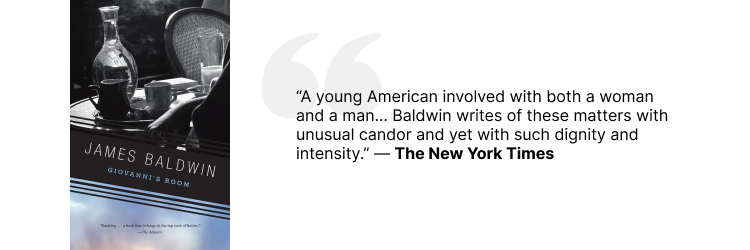
If one book sits at the core of modern gay literature, it is Giovanni’s Room.
Published in 1956, James Baldwin’s novel follows David, a young American man living in Paris, as he becomes involved with Giovanni, an Italian bartender. The book was written out of Baldwin’s European years in the 1950s, and that expatriate setting matters: Paris becomes a place of possible freedom, but also a place where David cannot escape himself.
The novel is often described as one of the greatest gay novels ever written because it treats sexuality not as a simple revelation, but as a moral and emotional crisis. David is engaged to a woman, drawn to men, and terrified of what his desire means. His gay relationship with Giovanni becomes the center of the story, but Baldwin is just as interested in shame, masculinity, denial, and the violence people commit when they cannot accept themselves.
What makes Giovanni’s Room last is the prose. Baldwin is precise, elegant, and brutal. The book is short, but nearly every page feels charged. It is one of those rare gay books where the beauty of the writing deepens the pain instead of softening it.
Today, Giovanni’s Room still feels urgent because internalized shame has not disappeared. It has changed vocabulary. It can sound like detachment, irony, “no labels,” or emotional distance. Baldwin saw the structure underneath all of that: the fear of being known.
For readers searching for the best gay books, this is the first title I would recommend. It is not the happiest book on the list, but it may be the most essential.
2. Maurice, E. M. Forster

Maurice is one of the foundational gay novels in English literature, partly because of what it says and partly because of when it could finally be said publicly.
- M. Forster wrote the novel in 1913 and 1914, revised it over the years, and kept it unpublished during his lifetime. It appeared posthumously in 1971. That publishing history is central to the book’s power. Maurice is a gay love story written in a period when a happy ending for gay men was not only unusual in fiction, but socially and legally dangerous to imagine.
The main character, Maurice Hall, is a young man moving through school, Cambridge, family expectations, and the rigid structures of Edwardian England. He is not a modern gay protagonist with a ready-made language of identity. He is confused, conventional, class-bound, and often afraid. His coming of age is slow because the world around him gives him almost no honest way to understand himself.
What makes the novel radical is that Forster refuses the usual punishment. Maurice does not simply die, repent, marry a woman, or vanish into respectability. The book imagines love between men as a possible life, not merely a private disaster.
The relationship between Maurice and Alec Scudder also brings class into the story. This is not only a gay romance; it is a novel about England, hierarchy, shame, and the dream of escaping a system built to keep people in place.
In a broader list of gay literature, Maurice belongs beside James Baldwin, Oscar Wilde, Gore Vidal, Mary Renault, Edmund White, and Alan Hollinghurst. It is one of the great examples of gay fiction imagining acceptance before society was ready to offer it.
3. The Picture of Dorian Gray, Oscar Wilde
The Picture of Dorian Gray is not a gay novel in the modern marketing sense, but it is impossible to talk seriously about gay literature without Oscar Wilde.
First published in 1890 and revised in 1891, the novel tells the story of Dorian Gray, a beautiful young man whose portrait ages and decays while he remains outwardly young. Around that famous premise, Wilde builds a brilliant tale about art, beauty, corruption, secrecy, youth, and the double life.
The gayness of Dorian Gray is coded, but the charge is unmistakable. Basil Hallward’s devotion to Dorian, Lord Henry’s seductive influence, and Dorian’s hidden life all speak to a queer world where desire had to move through suggestion, atmosphere, and style. The novel understands beauty as a form of power, but also as a trap.
Dorian remains fascinating because he is both object and subject: looked at, desired, shaped, and destroyed by the image of himself. In the age of apps, Instagram, curated bodies, and public performance, that idea feels almost too current. Wilde understood the danger of turning life into a surface long before gay culture had a digital mirror.
The novel is also funny, sharp, and morally slippery. Wilde’s wit makes the book pleasurable even when the story turns dark. That tension between pleasure and punishment is part of why The Picture of Dorian Gray remains one of the most famous queer classics.
If Giovanni’s Room is about shame, Dorian Gray is about beauty, vanity, and the fear that the truth of the self might be uglier than the face shown to the world.
4. A Single Man, Christopher Isherwood
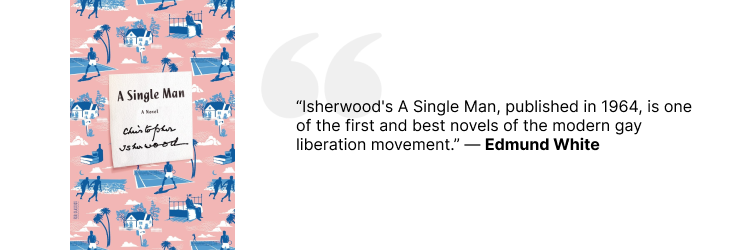
Christopher Isherwood’s A Single Man is one of the most elegant and concentrated portraits of gay loneliness in modern fiction.
Published in 1964, the novel follows George, a middle-aged English professor living in California, through one day after the death of his partner, Jim. The structure is simple: George wakes up, goes to work, interacts with students and neighbors, drinks, remembers, and continues. But through that single day, Isherwood builds an entire emotional world.
The book’s central wound is not only grief. It is unrecognized grief. George has lost the man he loved, but the straight world around him does not fully acknowledge the relationship or the loss. That makes A Single Man one of the great gay books about mourning, aging, and invisibility.
Isherwood avoids melodrama. George is not reduced to sadness. He is intelligent, irritable, sensual, funny, observant, judgmental, and still very much alive. That fullness matters. Gay characters in literature have often been treated as symbols, warnings, or tragedies. George feels like a person.
The book also connects to Isherwood’s larger body of work, including The Berlin Stories, but A Single Man is more intimate and controlled. It is not about a whole city or political moment in the obvious sense. It is about consciousness: how a gay man moves through a world that does not quite know what to do with him.
For readers interested in gay novels that address maturity, grief, and daily life rather than youth alone, A Single Man remains indispensable.
5. The Line of Beauty, Alan Hollinghurst
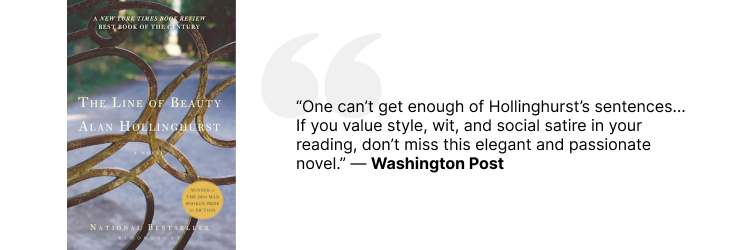
Alan Hollinghurst’s The Line of Beauty is one of the great gay novels of the twenty-first century and one of the strongest works of contemporary fiction about sex, class, politics, and beauty.
Published in 2004, the novel won the Man Booker Prize that same year. It is set largely in Thatcher-era Britain and follows Nick Guest, a young gay man who moves into the Notting Hill home of a wealthy Conservative family. Nick is both a guest and an outsider, close enough to privilege to be seduced by it, but never secure enough to own it.
The book works as historical fiction because the 1980s are not just a background. The decade shapes everything: money, drugs, real estate, ambition, Tory politics, gay sex, and the shadow of AIDS. Hollinghurst writes a social world where beauty and corruption often share the same room.
Nick is one of the great gay characters in contemporary fiction because he is neither hero nor victim. He is intelligent, aesthetic, erotic, passive, ambitious, and often morally compromised. He wants beauty so badly that he sometimes mistakes access for belonging.
Hollinghurst’s earlier novel, The Swimming-Pool Library, is also essential gay literature, but The Line of Beauty has the broader social range. It captures gay life without isolating it from class, race, politics, or money.
The title itself points to beauty’s double edge. The “line of beauty” refers to an aesthetic curve, but the book also knows other lines: lines of cocaine, lines of inheritance, lines of power, lines that include some people and exclude others.
For anyone building a serious shelf of gay books, Alan Hollinghurst is non-negotiable. The Line of Beauty is his masterpiece.
6. Dancer from the Dance, Andrew Holleran
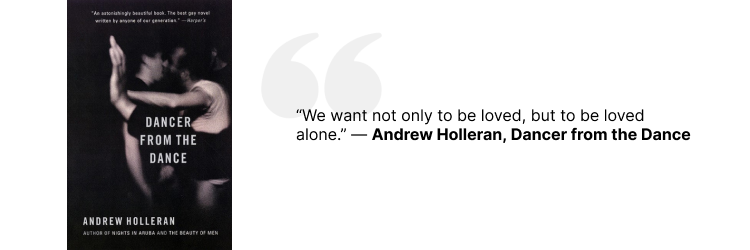
Andrew Holleran’s Dancer from the Dance is one of the defining novels of gay life in 1970s New York.
Published in 1978, the book captures a pre-AIDS world of bars, discos, Fire Island, drugs, cruising, gossip, beauty, sex, friendship, and loneliness. It is one of the most important gay novels about community as performance: the dance floor as stage, refuge, marketplace, and temporary heaven.
The central figure, Anthony Malone, is less a traditional main character than a legend remembered by others. He leaves behind a straight life as a lawyer and enters the gay world of New York, where he becomes part of a social universe that is glamorous, funny, cruel, and fragile.
The novel’s power now comes partly from historical knowledge. Readers in 2026 know what the characters do not: that AIDS will soon transform this world. That gives the book a haunting quality, but it should not be reduced to hindsight. Dancer from the Dance is also alive with humor, music, bodies, jokes, longing, and friendship.
Holleran understands the contradiction of gay nightlife. It can be shallow and sacred at the same time. It can offer community while intensifying loneliness. It can make a man feel seen for one night and forgotten the next morning.
Few books capture the emotional architecture of gay male social life so clearly. Alongside writers like Edmund White, David Leavitt, and later Douglas Stuart, Holleran helped define how gay men could be written as members of a culture, not just as isolated problems.
For readers who want gay fiction with style, sadness, and a sense of vanished history, Dancer from the Dance is essential.
7. Kiss of the Spider Woman, Manuel Puig
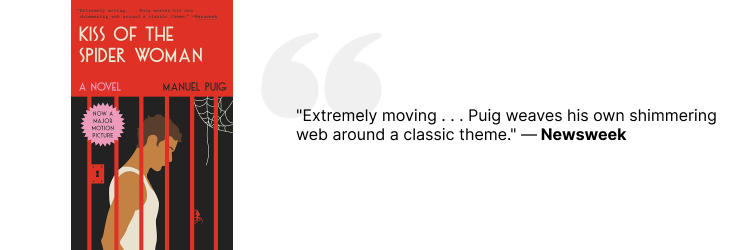
Manuel Puig’s Kiss of the Spider Woman is one of the great queer novels of Latin America and one of the most important gay books outside the Anglo-American canon.
Published in Spanish in 1976 as El beso de la mujer araña, the novel takes place largely inside an Argentine prison cell. Its two central characters are Molina, a gay man imprisoned for alleged corruption of a minor, and Valentín, a Marxist political prisoner. Their relationship develops through conversation, especially through Molina’s retellings of films.
The structure is unusual: dialogue, movie plots, reports, and footnotes create a layered reading experience. But the emotional movement is direct. Molina uses cinema as escape, seduction, memory, and survival. His love of melodrama is not treated as trivial. It becomes a language for feeling.
The novel is also a study of masculinity. Valentín begins as the serious political man; Molina appears more theatrical, romantic, and vulnerable. But Puig complicates both of them. Political courage and emotional courage begin to look less separate than they first appear.
Kiss of the Spider Woman matters because it connects sexuality to state power. Gay life here is not just private identity; it is shaped by prison, surveillance, violence, ideology, and the body under control.
The book later became a famous film and stage musical, which helped expand its cultural reach. But the novel remains the source: intimate, formally bold, and emotionally dangerous.
For readers searching for gay literature with political force, Kiss of the Spider Woman is one of the strongest choices on this list.
8. Confessions of a Mask, Yukio Mishima
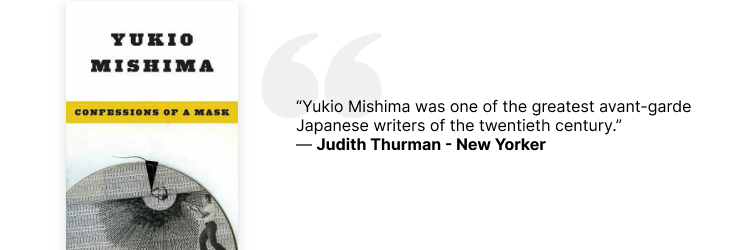
Yukio Mishima’s Confessions of a Mask is one of the most important gay novels from Japan and one of the darkest books on this list.
First published in 1949, the novel follows a young man who becomes aware of his attraction to men while learning to perform the heterosexual role expected of him. The “mask” of the title is not just secrecy. It is a complete social identity built to conceal desire.
This is a coming-of-age novel, but it is not a comforting one. The narrator’s self-discovery is entangled with shame, fantasy, male beauty, violence, martyrdom, and death. Mishima does not offer the reader a clean path toward acceptance. Instead, he maps the psychological cost of repression.
The book’s intensity can be difficult, but that difficulty is part of its importance. Not every gay novel is about liberation. Some are about the hidden self before liberation is imaginable. Some show how a young man can become divided so early that the false self feels almost natural.
In global gay literature, Confessions of a Mask expands the conversation beyond familiar Western narratives. It belongs in the same broad discussion as Thomas Mann’s Death in Venice, Herman Melville’s Billy Budd, Gore Vidal’s The City and the Pillar, and other books where desire, masculinity, and social codes collide.
The novel remains thought-provoking because it does not flatter the reader. It asks what happens when desire cannot become speech, when sexuality becomes performance, and when a person learns to survive by becoming unreadable.
For readers interested in the more psychologically complex side of gay fiction, Mishima is essential.
9. Before Night Falls, Reinaldo Arenas
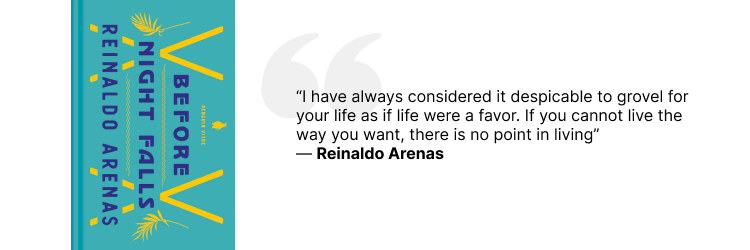
Reinaldo Arenas’ Before Night Falls is not a novel, but it absolutely belongs in a list of the best gay books.
Published in English in 1993 after Arenas’ death, this memoir recounts his life as a Cuban writer, from rural poverty to literary ambition, censorship, imprisonment, persecution, exile, and illness. It is one of the great queer memoirs of the twentieth century.
Arenas writes about gay life with force and refusal. He is not interested in becoming respectable for straight people, editors, judges, governments, or polite readers. The book is sexual, angry, funny, raw, and often shocking. That freedom of voice is the point.
What makes Before Night Falls so important is its understanding that sexuality is never isolated from politics. Arenas shows how a gay man’s body, art, friendships, and private life can all become targets under authoritarian power. The memoir is about writing, but also about surveillance, prison, exile, hunger, betrayal, and survival.
It also broadens the map of gay literature. Too often, lists of gay books center on Paris, London, New York, and college campuses. Arenas brings in Cuba, revolution, rural life, poverty, the sea, the prison cell, and the exile community.
As a memoir, Before Night Falls has a different kind of authority from fiction. It does not ask what might happen to a gay writer under repression. It tells us what did happen.
For readers who want gay books that connect life, history, sexuality, and political struggle, this is indispensable.
10. The Song of Achilles, Madeline Miller
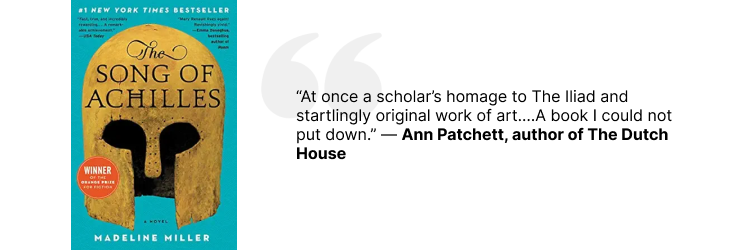
Madeline Miller’s The Song of Achilles is the most recent book on this list, and one of the most beloved gay books of the last fifteen years.
Published in 2011, the novel retells the Trojan War from the perspective of Patroclus, focusing on his relationship with Achilles. It combines romance, myth, fantasy, historical fiction, and tragedy in a way that has made it especially popular with younger readers, though it is not only a young adult book.
The novel’s success comes from emotional clarity. Patroclus is not the strongest or most famous figure in the myth. He is the person who loves, watches, fears, and follows. Through his narration, Achilles becomes not only a warrior but a beautiful, dangerous, gifted young man moving toward fate.
For gay readers, the importance of The Song of Achilles is partly corrective. Classical stories have often been taught in ways that soften or debate queer intimacy. Miller places the gay relationship at the emotional center. The love between Achilles and Patroclus is not a footnote, not a joke, and not a theory. It is the engine of the story.
The book also works because it understands doomed romance. We know the Trojan War cannot end happily. We know glory and death are linked. But the inevitability makes the love story more powerful, not less.
Some readers may prefer more formally complex gay novels. Others may find the prose too direct. But influence is not only measured by difficulty. The Song of Achilles has become one of the favorite books of many queer readers because it makes gay love feel epic, intimate, and unforgettable.
More Gay Books Worth Reading Next
A list of ten cannot cover the full world of gay literature. These are the core recommendations, but the wider shelf is rich.
Gore Vidal’s The City and the Pillar, published in 1948, is a landmark American gay novel and one of the earliest major postwar books to treat gay male desire directly. Mary Renault’s The Persian Boy remains a classic of historical fiction about Alexander the Great and his lover Bagoas. Her work is essential for readers who want gay books set in the ancient world.
Alan Hollinghurst’s The Swimming-Pool Library is another major title, especially for readers who want explicit, stylish gay fiction about sex, history, and class. Edmund White’s A Boy’s Own Story is a key coming-of-age novel in American gay literature. Andrew Sean Greer’s Less, a Pulitzer Prize-winning comic novel about an aging gay writer, brings humor and melancholy into contemporary fiction.
André Aciman’s Call Me by Your Name, published in 2007, remains one of the most famous modern gay romance novels, centered on a summer relationship between Elio and Oliver. John Boyne’s The Heart’s Invisible Furies, published in 2017, spans decades of Irish life and gay identity. Armistead Maupin’s Tales of the City series captures queer community, chosen family, and city life with warmth and humor.
For younger readers, or anyone interested in YA and graphic novels, Heartstopper has become a major contemporary series about romance between two boys, while books like Simon vs. the Homo Sapiens Agenda, They Both Die at the End, and Red, White & Royal Blue show how gay characters have moved into popular young adult and contemporary romance spaces.
There is also a larger queer canon beyond gay male literature. Writers such as Dorothy Allison, Carson McCullers, Jane Bowles, May Sarton, Virginia Woolf, and many lesbian, bisexual, and trans authors are essential to the wider history of queer books. A list of gay male books is only one part of the house.
What Makes These the Best Gay Books?
Together, these books show the range of gay literature: classic, erotic, political, tragic, romantic, funny, stylish, experimental, and deeply human.
I believe the strongest starting point is still Giovanni’s Room. It remains the book that most clearly shows what happens when desire, shame, masculinity, and fear collide. But the real value comes from reading across the list. Baldwin gives one truth. Forster gives another. Wilde, Isherwood, Hollinghurst, Holleran, Puig, Mishima, Arenas, and Miller each open a different door.
Gay literature is not a niche category. It is one of the richest ways modern writing has explored identity, beauty, freedom, secrecy, family, sex, friendship, community, and love.
The best gay books not only tell us who gay men have been. They ask who we are allowed to become.
More Queer Books with Gay Characters
There are several other books with gay characters worth adding to your shelves, especially if you want to explore different corners of gay fiction, historical fiction, young adult, contemporary fiction, romance, and queer literature.
This is where the good stuff gets even wider: classic gay novels, cult favorites, award-recognized titles, new books, and authors often discussed by queer readers, critics, and organizations such as the Publishing Triangle.
The City and the Pillar, Gore Vidal
Published in 1948, The City and the Pillar is one of the obvious next stops after the main list. It was a landmark American gay novel at a time when gay male characters were rarely written with directness or sympathy. The story follows a young man coming of age and discovering his homosexuality, and it remains important because Gore Vidal treated gay desire as central to the novel rather than as a coded side note.
The Persian Boy, Mary Renault
Mary Renault’s The Persian Boy is an essential title for readers who like historical fiction. Published in 1972, it tells part of Alexander the Great’s story through Bagoas, a Persian eunuch and lover of Alexander. Renault’s work helped make ancient-world gay relationships feel emotionally and politically serious on the page, and The Persian Boy is still one of her most famous books.
The Swimming-Pool Library, Alan Hollinghurst
Alan Hollinghurst’s The Swimming-Pool Library is a natural follow-up if The Line of Beauty works for you. Published in 1988, it is explicit, stylish gay fiction about sex, class, memory, and the hidden history of gay men in Britain. It has the same Hollinghurst interest in beauty, privilege, and desire, but it feels rawer and more openly erotic.
A Boy’s Own Story, Edmund White
Edmund White’s A Boy’s Own Story is one of the classic coming-of-age gay novels. Published in 1982, it begins White’s autobiographical trilogy and follows a young man’s early sexual and emotional awakening in midcentury America. It is especially useful for readers interested in gay literature that treats youth, self-discovery, shame, and desire with both intelligence and candor.
Less, Andrew Sean Greer
Andrew Sean Greer’s Less brings a very different tone. It is a Pulitzer Prize-winning comic novel about Arthur Less, an aging gay writer who travels the world while trying to avoid his ex-boyfriend’s wedding. It is funny, elegant, and surprisingly moving, and it is a good reminder that gay books do not always have to be tragic to be serious.
Call Me by Your Name, André Aciman
Published in 2007, Call Me by Your Name remains one of the most famous contemporary gay romance novels. Set during a summer in Italy, it follows the intense relationship between Elio, a teenage boy, and Oliver, a visiting scholar. Its reputation grew even more after the film adaptation, but the novel itself remains a defining modern story about first love, memory, obsession, and longing.
The Heart’s Invisible Furies, John Boyne
Published in 2017, The Heart’s Invisible Furies is a broader social novel about a gay man’s life across decades of Irish history. It moves from the 1940s into the present, following Cyril Avery as he struggles with sexuality, family, shame, love, and the changing place of gay identity in Ireland. It is a good pick for readers who want gay fiction with historical sweep and emotional scale.
Tales of the City, Armistead Maupin
Armistead Maupin’s Tales of the City is worth mentioning because it captures queer community in a way few books do. First serialized in the 1970s and published in book form in 1978, the series follows a group of friends in San Francisco, many of them LGBTQ. It is warm, funny, messy, and deeply tied to the idea of chosen family.
Heartstopper, Alice Oseman
For readers interested in young adult, graphic novels, and newer gay books, Heartstopper is one of the most popular recent examples. Alice Oseman’s series focuses on the romance between two boys and has become a major comfort read for younger queer audiences, especially for readers looking for tenderness, friendship, and queer joy.
Simon vs. the Homo Sapiens Agenda, They Both Die at the End, and Red, White & Royal Blue
These titles show how gay characters have moved into mainstream YA, romance, and contemporary fiction. Simon vs. the Homo Sapiens Agenda is a popular young adult gay novel about identity, secrecy, and first love. They Both Die at the End is a YA novel about life, love, and connection under the pressure of limited time. Red, White & Royal Blue is a contemporary romance about the First Son of the United States and a British prince.
These books may not all belong in the same “best of all time” top ten, but they help show the range of gay literature. Some are classics, some are funny or tragic. Some are romantic, political, or historical. Together, they make the category of books with gay characters feel much bigger than any single list can capture.
The Front Runner?
I joined a gay book club this winter, which just celebrated its second year, so it’s fascinating to see this list because the first book we discussed when I joined was Giovanni’s Room. This past meeting was on Heated Rivalry. The July book is The Picture of Dorian Gray, the August book is A Single Man.
In the past Maurice, Dancer from the Dance, The Heart’s Invisible Furies, Tales of the City and A Boys Own Story have been discussed.
I’m going to pass this list on to the leader of this group. Thank you. Good suggestions.