


The race for Attorney General in Delaware is officially heating up, and one challenger is already drawing attention for both his legal résumé and deeply personal story.

Dwayne Bensing, a longtime civil rights lawyer and Legal Director (on sabbatical) of the American Civil Liberties Union of Delaware, is running to unseat two-time Attorney General and incumbent Attorney General Kathy Jennings, who is seeking a third term in office.
For LGBTQ+ voters and progressive advocates, Bensing’s candidacy represents more than another political campaign. It reflects a growing demand for attorneys general willing to directly challenge government overreach, corporate influence, and attacks on civil rights at a time when those battles are intensifying nationwide.
A Campaign Focused on Accountability
Bensing announced his candidacy with a platform centered on tackling corporate greed, increasing government oversight, and protecting civil rights.
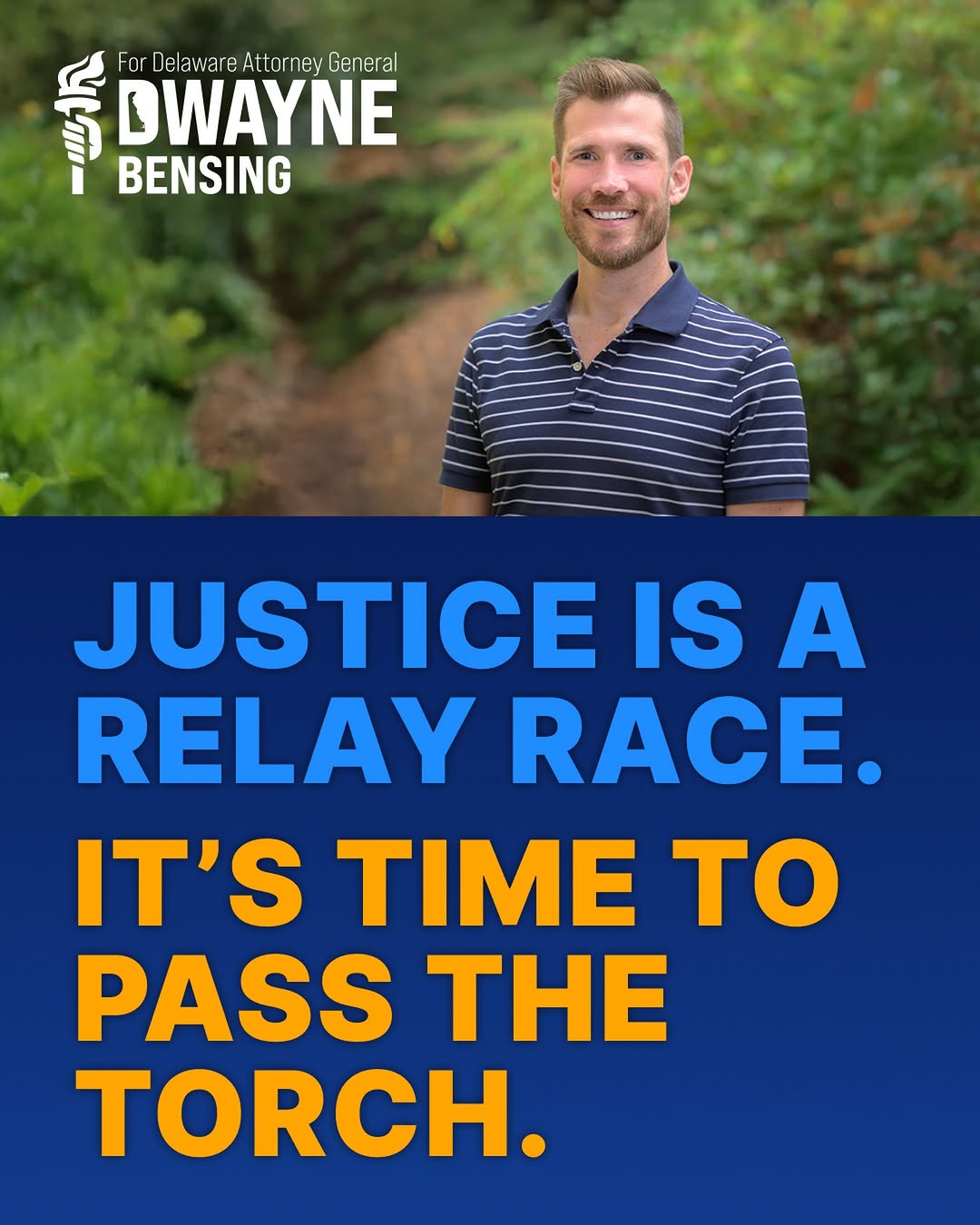
In campaign statements, he has emphasized that the Attorney General’s office should act independently from political power rather than simply defending state agencies.
“The Attorney General is an independent legal officer whose duty is to ensure that the State upholds its obligations to the people,” Bensing said. “When a state agency engages in abuse of power, the Attorney General represents the people, not the agency.”
That message could resonate strongly in a political climate where voters increasingly expect state attorneys general to play larger roles in national fights over constitutional rights, education policy, healthcare access, and discrimination protections.
RELATED: Gay Dads Raise $207K While MAGA Influencer Struggles to Reach $2K
From Public School Teacher to Civil Rights Attorney
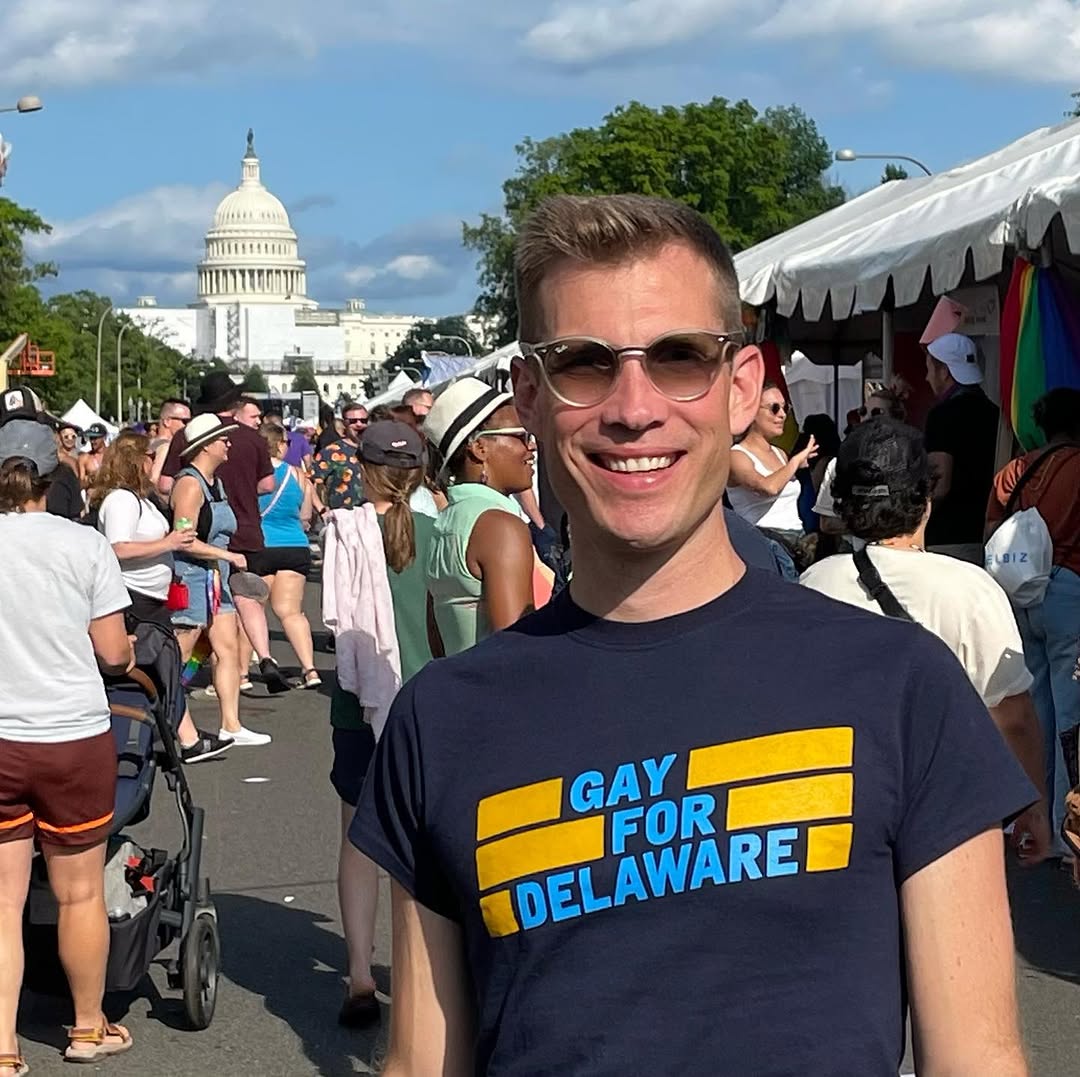
Before entering the legal world, Bensing spent time teaching middle school science and social studies in Philadelphia as part of Teach for America after being selected as a Truman Scholar in 2006. After graduating from the University of Pennsylvania Law School, he began his legal career at Fried, Frank, Harris, Shriver & Jacobson LLP in Washington, D.C. He later joined the U.S. Department of Education’s Office for Civil Rights before moving to the Civil Rights Division at the United States Department of Justice.
Bensing eventually joined the ACLU of Delaware in 2020 and became Legal Director in 2022, where much of his work focused on education equity, free speech protections, and the rights of incarcerated people.
One of the most significant cases tied to his work involved a landmark education funding settlement in Delaware. The case pushed the state toward modernizing decades-old property tax assessments while also securing expanded funding for low-income students, English learners, mental health resources, and literacy support programs.
RELATED: King Charles on UK Conversion Therapy Ban, Rod Stewart Said What About Trump?
A Personal Story Behind the Politics
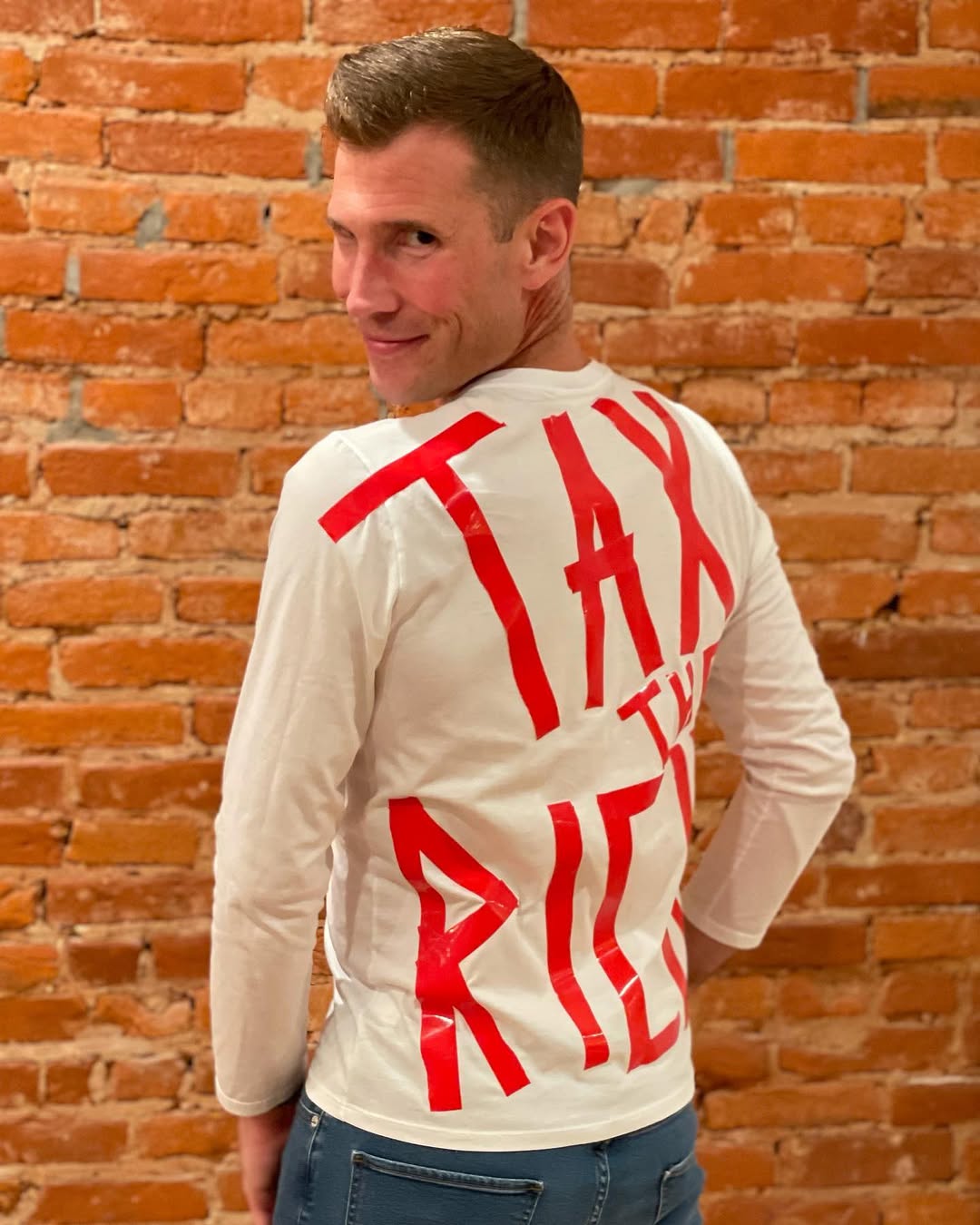
Part of what makes Bensing’s campaign stand out is how openly he discusses the financial instability and caregiving responsibilities that shaped his life long before politics entered the picture.
According to campaign materials, Bensing’s parents struggled financially when he was born and made the difficult decision to have a family friend help raise him because they could not afford to do so themselves. Later, after his mother suffered a serious workplace accident and a lengthy illness involving Legionnaires’ disease, the family faced bankruptcy and lost their mobile home.
Bensing and his sister reportedly spent periods of childhood sleeping on their grandmother’s floor while the family tried to recover financially.
As a college freshman, he returned home to care for his grandmother, who lived with multiple sclerosis, and his grandfather, a World War II veteran battling lung cancer. He continued helping care for his grandmother throughout law school and the early years of his legal career.
The experiences, according to Bensing, shaped his understanding of how systems often fail vulnerable people when accountability disappears.
“When the system fails to hold the powerful accountable, it is the vulnerable who pay the price,” he said.
What the Delaware Race Could Represent
Beyond the policy debates, Bensing’s campaign also adds to the growing visibility of LGBTQ+ candidates running for major statewide legal offices across the country.
While Delaware has long been viewed as politically blue, statewide races still carry symbolic weight, especially as legal battles over LGBTQ+ protections continue unfolding nationally.
In addition to his work with the ACLU, Bensing currently serves as Vice-Chair of the Delaware Human and Civil Rights Commission and teaches at Delaware Law School, where he focuses on dignity rights for incarcerated populations.
Now, he is hoping to take that advocacy work statewide.
Whether voters are ready to replace a two-term incumbent remains to be seen, but Bensing’s campaign is already positioning itself as one of the more closely watched civil rights-focused races in Delaware politics.