


Dog Day Afternoon is widely considered one of the greatest crime films ever made, but what many people don’t realize is that the Oscar-winning classic is also rooted in LGBTQ history.
Long before Al Pacino shouted “Attica!” on screen, there was John Wojtowicz, a Vietnam veteran, LGBTQ activist, husband, father, and a man desperate to save the person he loved.
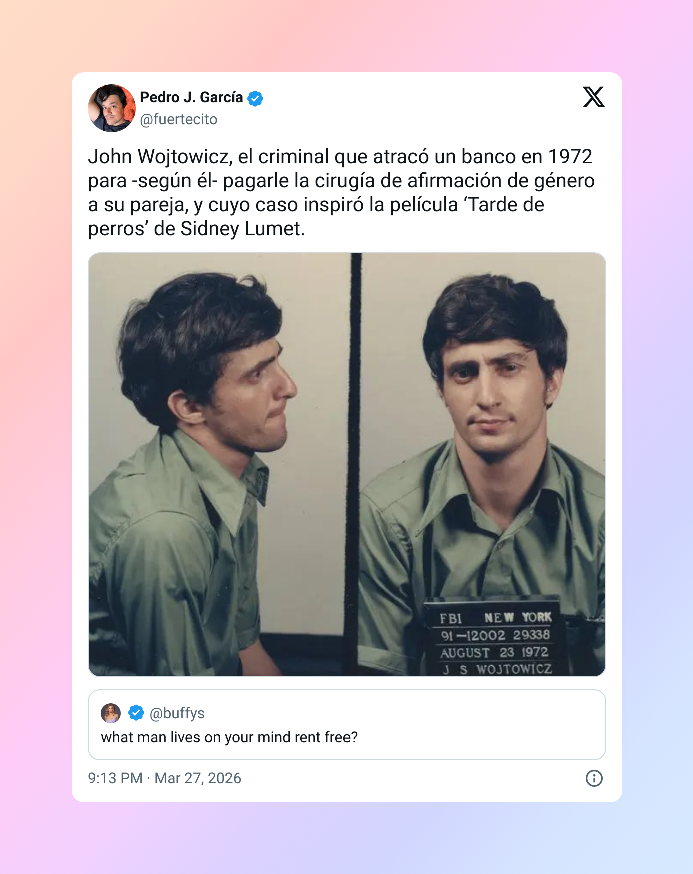
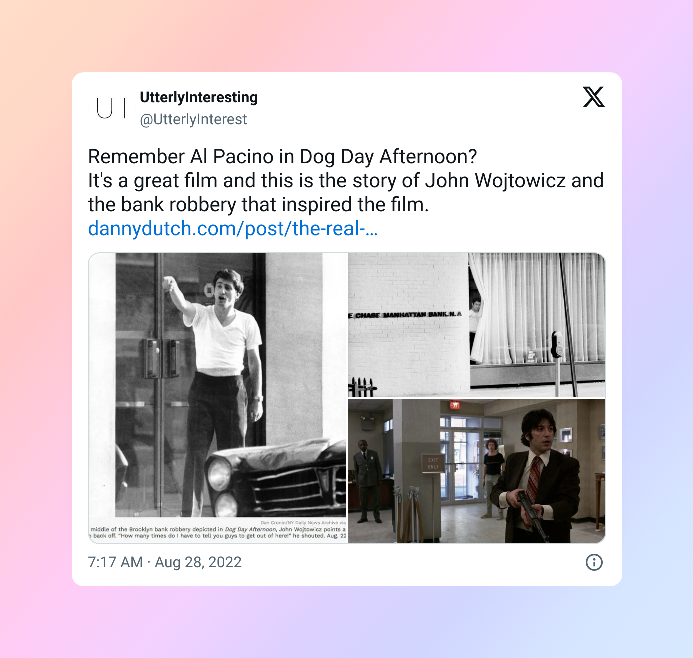
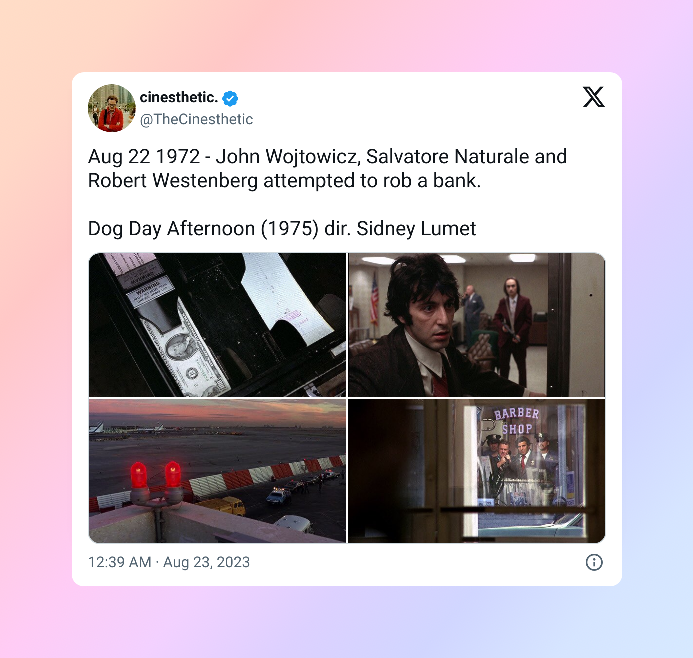
On August 22, 1972, Wojtowicz and his accomplices attempted to rob a Chase Manhattan Bank branch in Brooklyn, New York. What was supposed to be a quick robbery unraveled into a 14-hour hostage standoff after police surrounded the bank. By the end of the ordeal, his accomplice Salvatore Naturile had been killed and Wojtowicz was arrested.
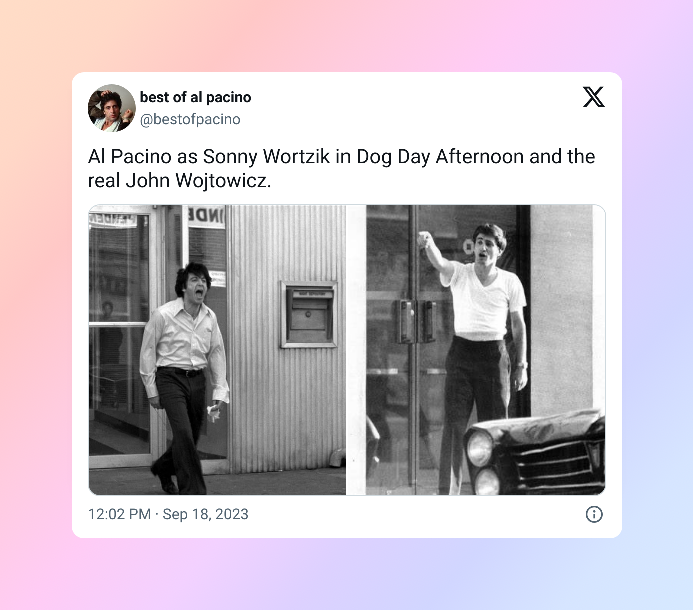
The incident would later inspire Sidney Lumet’s critically acclaimed 1975 film Dog Day Afternoon starring Al Pacino, John Cazale, James Broderick, and Charles Durning.
The film became a massive success, earning multiple Academy Award nominations and winning Best Original Screenplay. Yet according to Wojtowicz himself, the movie left out what mattered most to him.
DOG DAY AFTERNOON (1975) was inspired by the real life crime of John Wojtowicz in 1972. In a Life magazine article regarding the crime, Wojtowicz was described as “a dark, thin fellow with the broken-faced good looks of an Al Pacino or Dustin Hoffman”. pic.twitter.com/Y5B1wLUGmt
— John Barker | ATRM (@JohnBarkerATRM) February 28, 2020
RELATED: Women’s Tennis Enters a New Era With Trans Ban and Mandatory Sex Testing
A Love Story Lost in Translation
One of the primary motivations behind the robbery was raising money for gender affirming surgery for his partner, Elizabeth Eden, a transgender woman who had been struggling with severe depression and multiple suicide attempts.
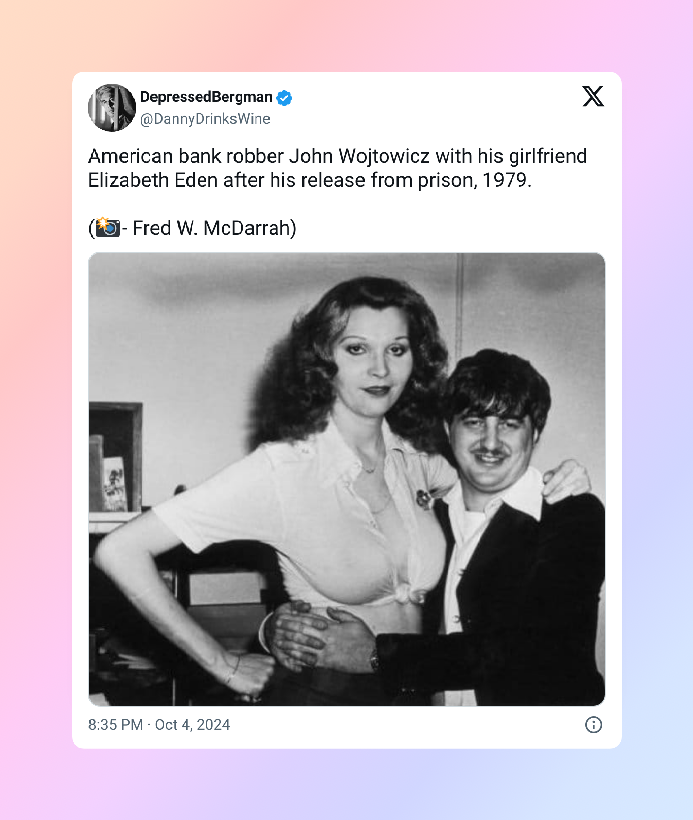
The couple met in 1971 after Wojtowicz separated from his wife, Carmen Bifulco, with whom he shared two children. The pair held a public wedding ceremony that same year in New York City.
In a 1976 article that was ultimately rejected by The New York Times but later published by Gay Sunshine: A Journal of Gay Liberation, Wojtowicz shared his heartbreak over how the film presented his story.
Wojtowicz reasoned that Dog Day Afternoon was not able to fully explain his motives behind the robbery, adding, “I did what a man has to do in order to save the life of someone I loved a great deal.“
Wojtowicz explained that Eden desperately wanted gender affirming surgery and had attempted suicide after he was unable to obtain the money needed for the procedure. After Eden was hospitalized and placed in psychiatric care, Wojtowicz felt he had run out of options.
“I began what I felt was necessary to save the life of someone I truly and deeply loved,” he wrote. “No monetary value can be placed on a human life.”
While the robbery was undeniably criminal, the circumstances surrounding it paint a far more complicated and deeply human story than many audiences realize.
SUGGESTED: Meet Hollywood’s Buff New Obsession—The Future Rocky Has Everyone Sweating
What John Wojtowicz Thought of the Film
Wojtowicz had complicated feelings about Dog Day Afternoon. He felt exploited by the film’s production and claimed promised compensation agreements were never honored. At the same time, he was overwhelmingly complimentary of both the cast and director.
“The directing by Mr. Sidney Lumet was fantastic,” he wrote. “The cast did an outstanding and monumental job as a whole.”
His praise for Pacino was particularly enthusiastic.
“Al Pacino’s performance has to be called ‘out of sight’ and the best he’s ever done,” Wojtowicz wrote. “He made me laugh, cry, sweat, and feel uncomfortable at times all in one movie.”
Perhaps the most poignant line from his essay came near its conclusion: “I feel deeply hurt by the movie.”
More than fifty years later, Dog Day Afternoon remains a masterpiece of American cinema. But it is also a reminder that behind one of Hollywood’s greatest crime dramas was an Transgender love story about sacrifice, identity, and the extraordinary lengths people will go to for someone they love.
Sometimes the truth is even more remarkable than the movies.