


Andrew Scott is happy to see gay love stories getting their happily-ever-afters. But when it comes to the AIDS crisis, the Elsinore star believes audiences shouldn’t be so quick to look away from the painful chapters of queer history.
RELATED: Matthew Lillard Gets Real About ‘Scream 7’ Regrets and ‘Carrie’
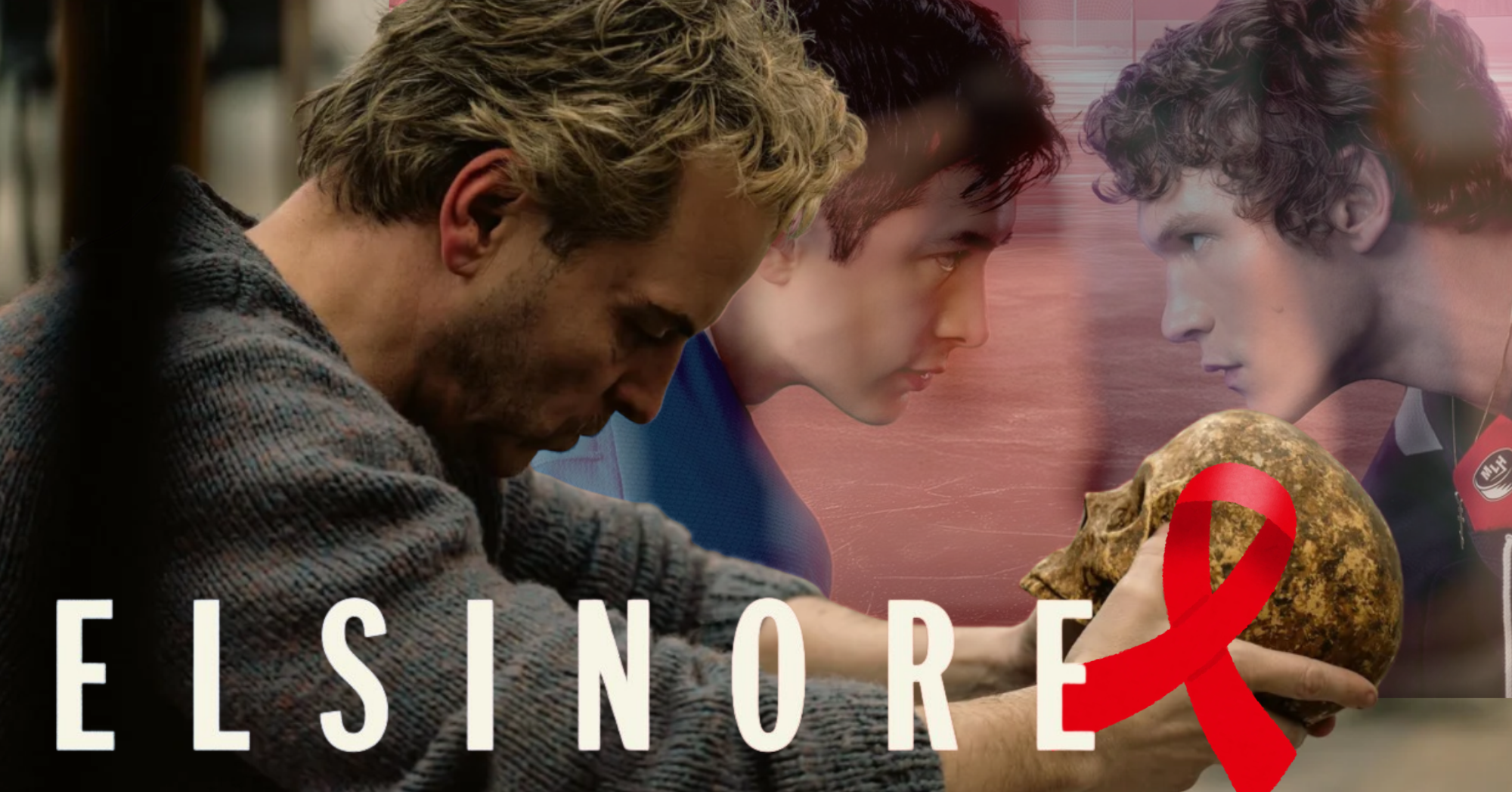
Speaking at the BFI London Film Festival, the openly gay Irish actor addressed the growing conversation around queer joy in film and television, welcoming feel-good romances like Heated Rivalry, Heartstopper, and Red, White & Royal Blue. However, he also pushed back against the idea that audiences have had enough of stories about gay suffering, particularly those depicting the AIDS crisis.
The fight of his life. The triumph of a lifetime. Andrew Scott stars in ELSINORE, “a jaw-dropping cinematic achievement.” Watch the trailer now. Only in theaters November. https://t.co/Lm4iTjUxHn
— Elsinore (@elsinoremovie) September 28, 2026
Scott’s comments came during a career-spanning conversation at BFI Southbank following the European premiere of Elsinore, a drama directed by Simon Stone and written by Stephen Beresford. The film follows actor Ian Charleson during the final weeks of his life as he played Hamlet at London’s National Theatre in 1989, before dying from AIDS in 1990.
For Scott, celebrating queer happiness and remembering the people who endured a much harsher reality are not competing priorities. Both deserve a place on our screens.
RELATED: Michael Johnston Wants a Meaningful Gay Role—and a Steamy Moment, Too
Andrew Scott Welcomes ‘Heated Rivalry’ and Queer Joy
Scott made it clear that he has no complaints about the current appetite for happier LGBTQ+ stories. If anything, he is delighted that audiences can enjoy romances in which queer characters get to fall in love without every storyline ending in tragedy.
“I welcome things like Heartstopper and Heated Rivalry and Red, White, and Royal Blue and all those things that are joyful. I really, really, really do. And I think the fact that there’s lots of different types of gay drama, so to speak, on film [and] television is extraordinary.”
That enthusiasm matters in a cultural landscape where queer characters have historically been denied the romantic possibilities routinely afforded to their straight counterparts. Sometimes, gay men deserve nothing more complicated than a steamy romance, mutual pining, and two handsome men finally figuring out that they are, in fact, in love.
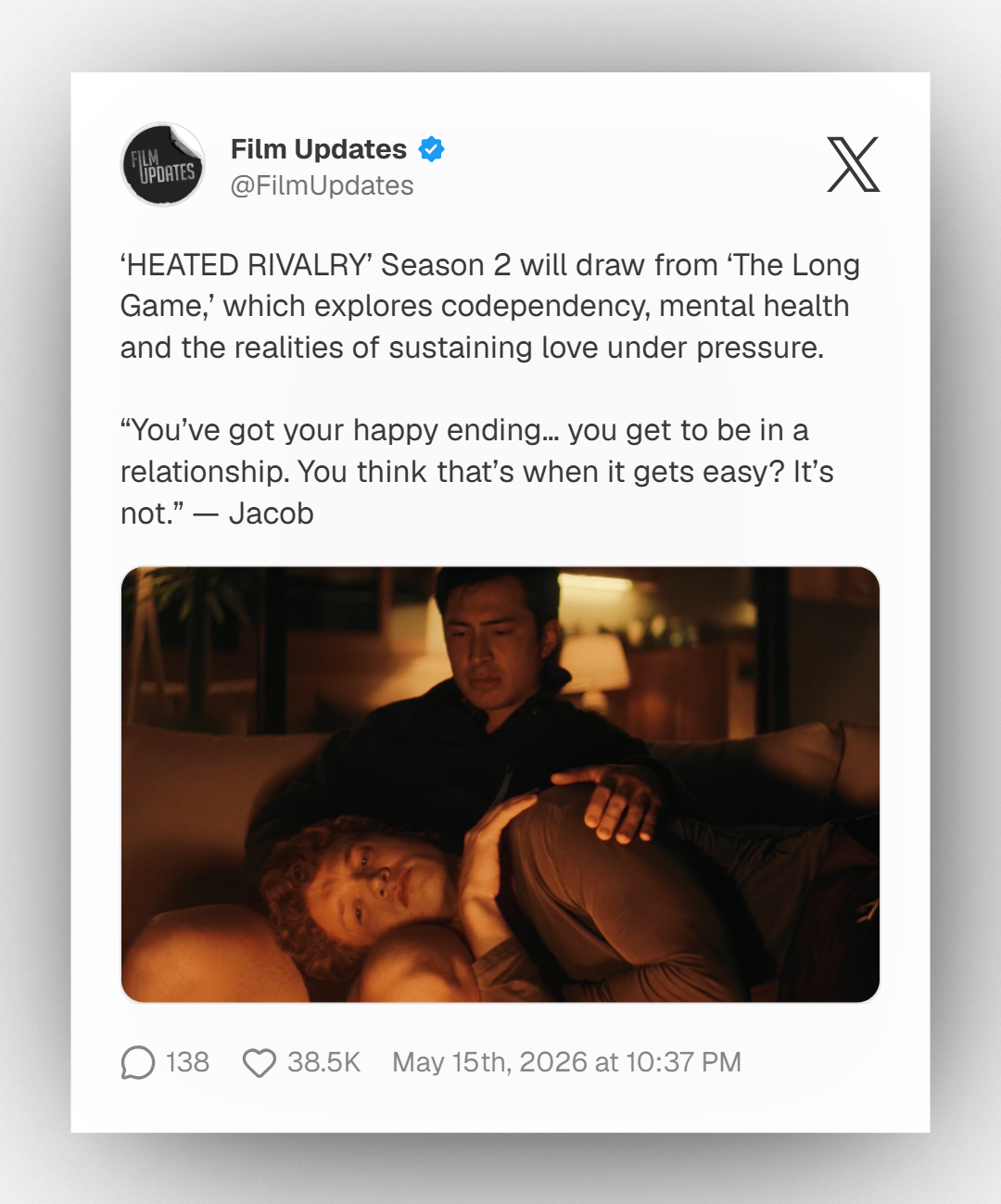
Heated Rivalry, with its central romance between rival hockey players Shane Hollander and Ilya Rozanov, represents the kind of story that lets queer desire take center stage. Its popularity also illustrates the appeal of LGBTQ+ narratives that make room for pleasure, intimacy, and emotional fulfillment.
But Scott’s appreciation for those stories does not mean he believes the industry should abandon the difficult ones.
Andrew Scott Is Troubled by the Desire to Forget the AIDS Crisis
Scott addressed the criticism sometimes directed at films that return to the familiar trope of the tragic gay character. While he understands the desire to move beyond narratives dominated by suffering, he worries that rejecting painful queer history altogether risks placing the burden of discomfort on the wrong people.
Andrew Scott on why it’s important to tackle topics like the AIDS crisis in cinema: “It troubles me a little bit because people perhaps don’t want to go back to a time that was incredibly difficult for gay people. I think that sometimes comes from a place of shame … but the shame does not lie with the gay people.”
— Variety (@Variety) October 8, 2026
“It troubles me a little bit because I think people perhaps don’t want to go back to a time when you’re talking about the AIDS crisis, or you’re talking about [a time] when it was incredibly difficult for gay people. I think that sometimes comes from a place of shame. You go, ‘I don’t want to go back there. I don’t want to see that anymore.’ There’s something a little troubling about that for me, to say:
‘I don’t want to go and see something that was a difficult time.’ Because the shame does not lie with the gay people. The shame lies with the governments who ignored the AIDS crisis and the stigma that was around people and the innate prejudice that was in society. That’s someone else’s shame,”
The actor received applause for his remarks, which put the responsibility for historical suffering where he believes it belongs: on the institutions and prejudices that compounded the crisis, not on the people who lived through it.
His point is not that queer audiences should spend every waking moment revisiting trauma. Nor is it that every gay film needs a heartbreaking ending to qualify as meaningful. Rather, the freedom to celebrate queer happiness should not require pretending that the community’s past was always happy.
After all, a generation of LGBTQ+ people endured devastating losses, discrimination, and stigma during the AIDS crisis. Their experiences are part of queer history, even when remembering them is painful.
The goal is not to replace queer joy with queer tragedy. It is to make room for both.
‘Elsinore’ Revisits Ian Charleson’s Final Performance
Scott’s connection to Elsinore goes beyond his work as its leading actor. He also serves as a producer, bringing a personal investment to a story about an actor who continued performing Hamlet while living with AIDS.
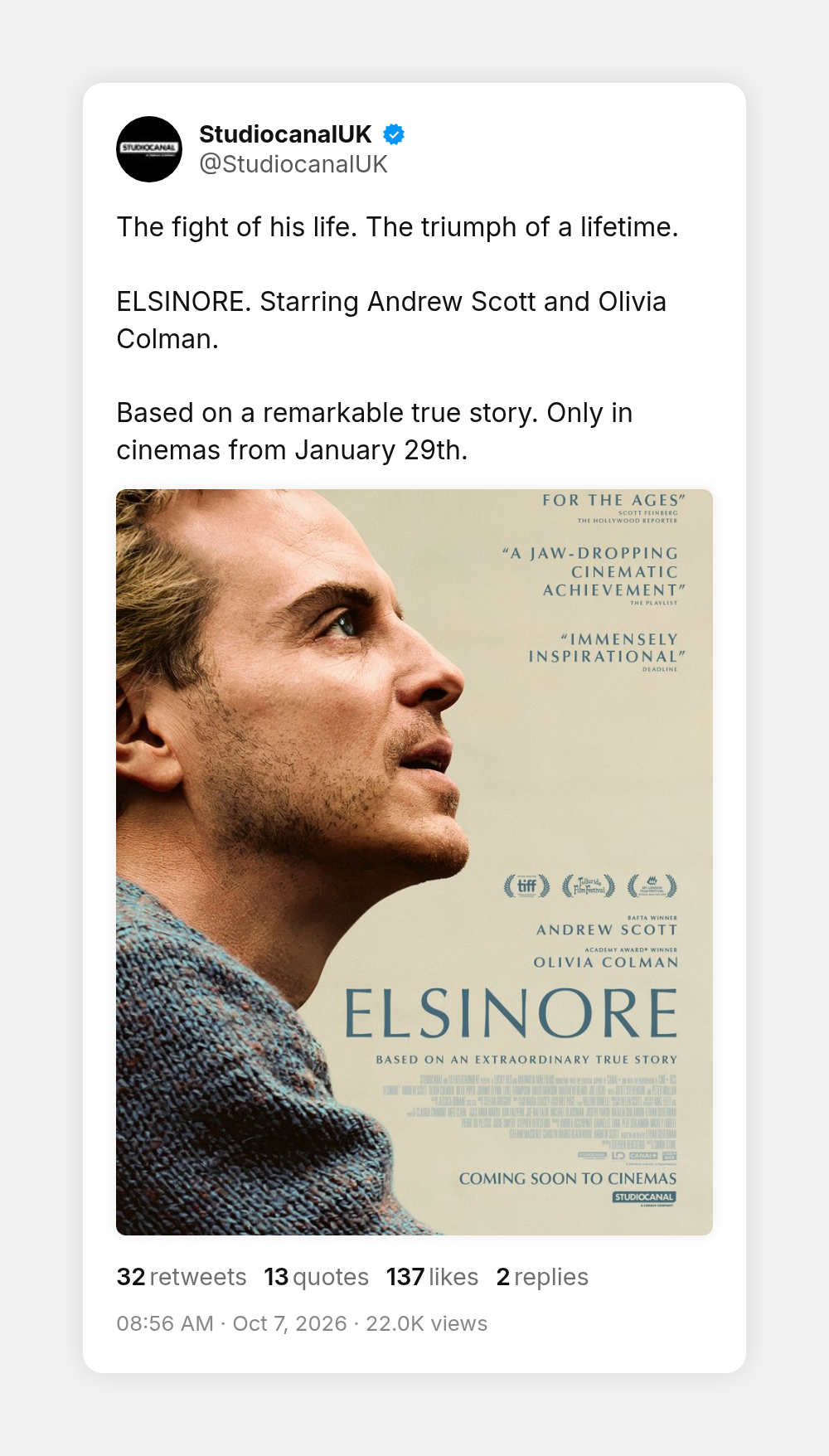
Scott knows firsthand how physically demanding the role can be. He played Hamlet for 150 performances at London’s Almeida Theatre in 2017, an experience that gave him a glimpse of the extraordinary stamina the part requires.
“Everybody knows this, but [Hamlet] is three hours and 45 minutes long. We do it twice on a Wednesday and twice on a Saturday. I’ve played the part myself,” he said. “It absolutely knocks the stuffing out of you.”
Reflecting on Charleson’s achievement, Scott said: “The idea that he did that when he had no immune system is so genuinely… the physical and psychological toll that must have taken on him. But in another way, it enlivened him, and I could sort of understand that.”
The film also confronts the physical effects of Charleson’s illness, including facial swelling caused by septicaemia. Scott reflected on how difficult it must have been for the actor to perform while facing an audience that could see the visible effects of his condition.
“I think he was concerned that people would be like, ‘Oh my god!’ because he was not recognizable necessarily at some stages, and that’s really heartbreaking and almost humiliating. I can imagine that he thinks this is going to be a humiliating experience to come out and have everybody facing the same direction — at you. The bravery of that, at a time when having that particular disease felt like there was some sort of blame attached to it,” said Scott.
That experience captures one of the most painful realities of the period: people with AIDS often faced not only a life-threatening illness but also the stigma attached to it. Charleson’s decision to continue performing, despite his deteriorating health, is central to the story Elsinore tells.
Andrew Scott Remembers the Support That Ian Charleson Received
Although Elsinore examines a period marked by fear and prejudice, it also highlights the support Charleson received from his fellow theater professionals after disclosing his diagnosis.

Scott spoke warmly about the relationships he has built with fellow actors throughout his career, including Olivia Colman, Benedict Cumberbatch, Phoebe Waller-Bridge, and Paul Mescal.
“Not just Olivia, but seeing all those people, Phoebe and Paul and Benedict… Actors are the loves of my life in some way,” said Scott. “I love actors… They’re fun and brilliant people. If you are feeling awful when you go on stage, the actors are always there. But Ian Charleson, I know without a doubt that when he told them about [his AIDS diagnosis], the outpouring of support from the theater community, when there wasn’t a lot of support for anybody, was extraordinary. And I’m proud of that. The film sort of addresses that.”
That solidarity offers another dimension to the film’s portrayal of the AIDS crisis. The story is not solely about illness and death; it also recognizes the people who stood beside Charleson at a time when support was far from guaranteed.
For Scott, the opportunity to bring that story to the screen is particularly meaningful.
Andrew Scott’s Career Has Never Been Just One Role
During the BFI Southbank discussion, Scott also reflected on the roles that helped shape his career, from playing Moriarty in the BBC’s Sherlock to becoming an object of fascination for audiences as the Hot Priest in Phoebe Waller-Bridge’s Fleabag.

He admitted that the success of Sherlock took him by surprise, despite having worked extensively in film and theater before joining the series.

“I’d been in lots of things before — film, theater, everything, but that was just seen across the world. It was in 230 countries across the world. It was an instantaneous hit with the public, and also the critics seemed to like it. So it certainly change things for sure.”
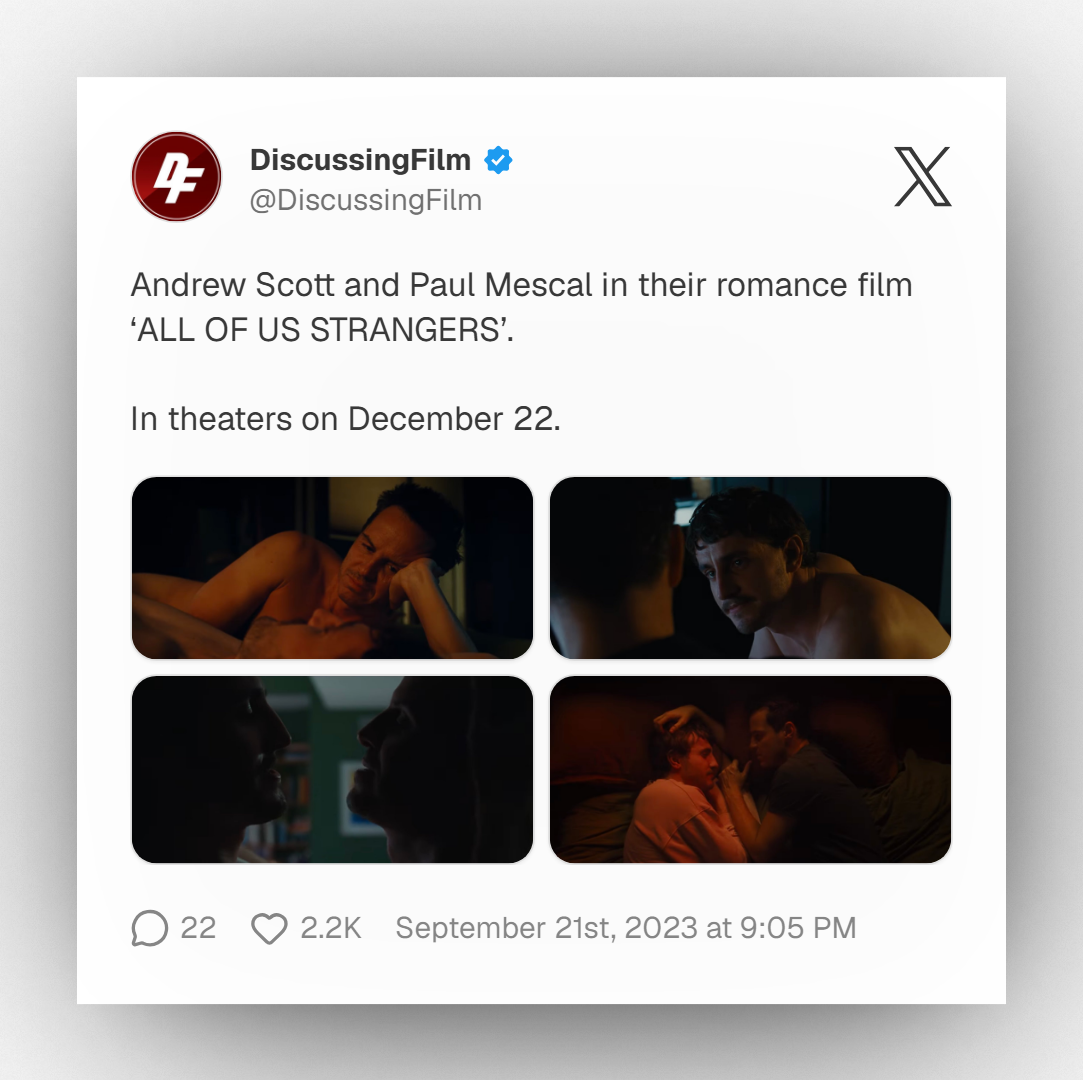
His other notable credits include All of Us Strangers, Blue Moon, Wake Up Dead Man, and Pressure, demonstrating a career that moves comfortably between stage and screen.
paul mescal & andrew scott in ‘all of us strangers’ https://t.co/vKFOuZTdcj
— One Perfect Scene (@oneperfectscene) November 25, 2024
Scott also discussed his approach to acting, explaining that he does not consider himself a method actor and sometimes prefers to discover a character without an extensive backstory.
“What’s so extraordinary about Fleabag and the Priest and the Godmother and all those characters,” he explained, “[is] they don’t even have a name. We don’t know anything about them. We don’t know their backstory. I think sometimes backstory is overpraised, and sometimes I like, depending on the project, to know as much as the audience does.”
He also paid tribute to his late mother, whom he described as one of the most influential creative presences in his life. Her love of theater, films, and the arts helped shape his own path, reinforcing his belief that cultural experiences can have a lasting impact regardless of how large or small a person’s life might appear.
Queer Stories Deserve More Than One Ending
Scott’s remarks arrive at a moment when LGBTQ+ entertainment can encompass everything from the romantic intensity of Heated Rivalry to films confronting the devastation of the AIDS crisis.
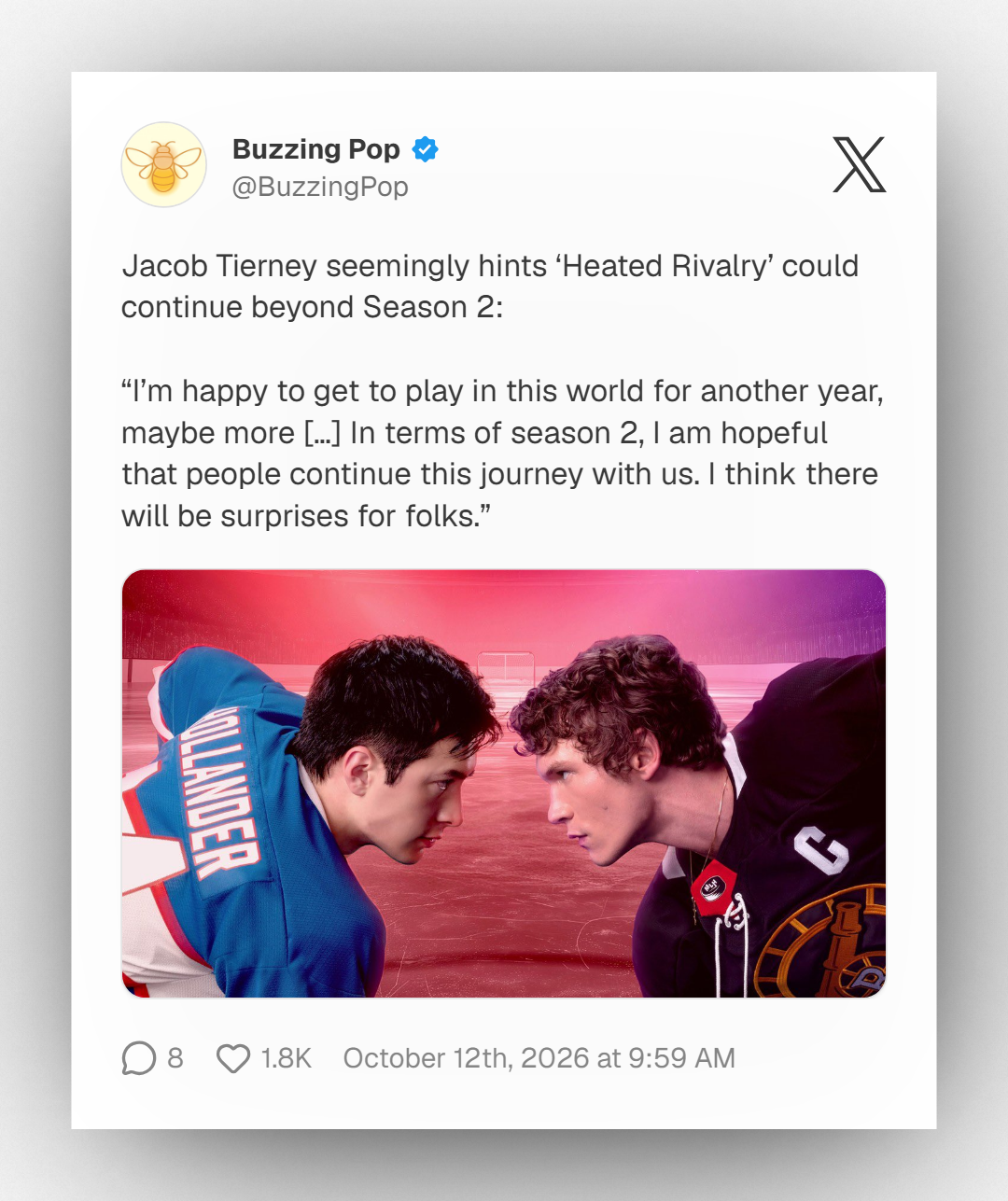
Both kinds of storytelling matter. Queer audiences should be able to enjoy love stories that make them swoon without being told that happiness is frivolous. They should also be able to engage with stories about historical suffering without being accused of dwelling on the past.
The danger lies in treating queer joy and queer pain as mutually exclusive. Celebrating progress does not mean forgetting the people who fought to make it possible, and remembering tragedy does not mean accepting it as the inevitable fate of LGBTQ+ characters.
Elsinore revisits a painful chapter of history, while stories like Heated Rivalry offer audiences a different kind of emotional experience. Neither needs to cancel out the other.
If queer entertainment has room for hockey rivals falling in love, it should also have room for the stories of people who fought to live, love, and work openly when doing so came at a terrible cost.
Andrew Scott’s message is ultimately a simple one: queer people deserve joy, but their history deserves to be remembered, too.
Source: Hollywood Reporter and BFI