
Gay language 101: Before “slay” entered the mainstream and everyone started calling each other “mother,” queer people were already using language as a clever tool for survival, flirtation, and finding their own community.
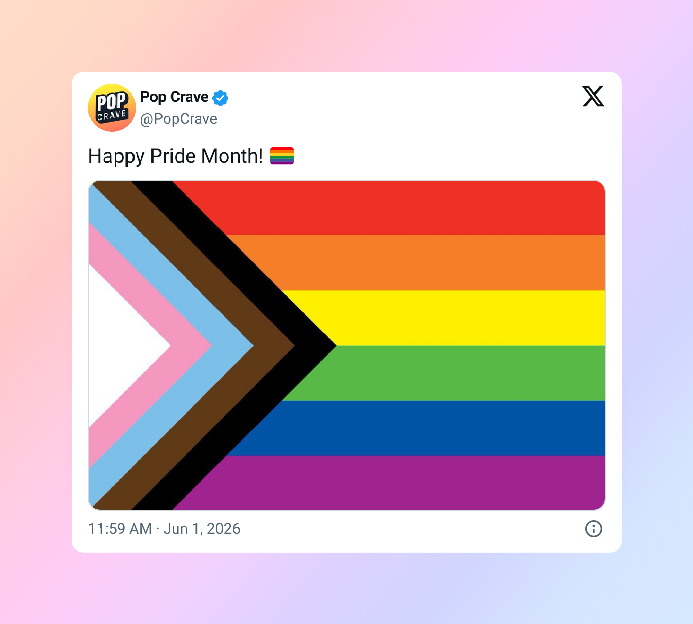
Today, it is relatively easy to spot LGBTQ+ culture in the mainstream. Pride flags fly in public spaces, queer celebrities walk red carpets, and words like “slay” and “serving” regularly appear in social media captions from people who may not even know where those phrases originated.
But before visibility, before social media, and long before people could comfortably say, “I’m gay,” there was something else: coding.
Gay coding was the art of communicating queerness without explicitly saying it. It was a survival tool, a way for LGBTQ+ people to identify one another, build community, and stay safe in societies where being openly queer could lead to discrimination, arrest, violence, or social rejection.
Around the world, entire linguistic systems emerged from this need. While many people now view queer language as colorful, funny, and expressive, its origins are rooted in resilience.
The Secret Language of Survival
The LGBTQ+ community has never spoken just one language. Instead, different cultures developed their own unique forms of coded communication. In the United Kingdom, there was Polari. In the Philippines, there is Bekinese, also known as Beki Language, Beki Lingo, Beki Mon, or Swardspeak. In South Africa, LGBTQ+ communities developed Gayle and IsiNgqumo. In the United States, queer communities built their own vocabulary, phrases, and cultural references that allowed people to identify one another discreetly.
Each version reflected the culture that created it, but they all served a similar purpose: helping queer people find one another in a world that often forced them to remain hidden.
Were You a Friend of Dorothy?
One of the most famous examples of gay coding comes from the phrase “Friend of Dorothy.”
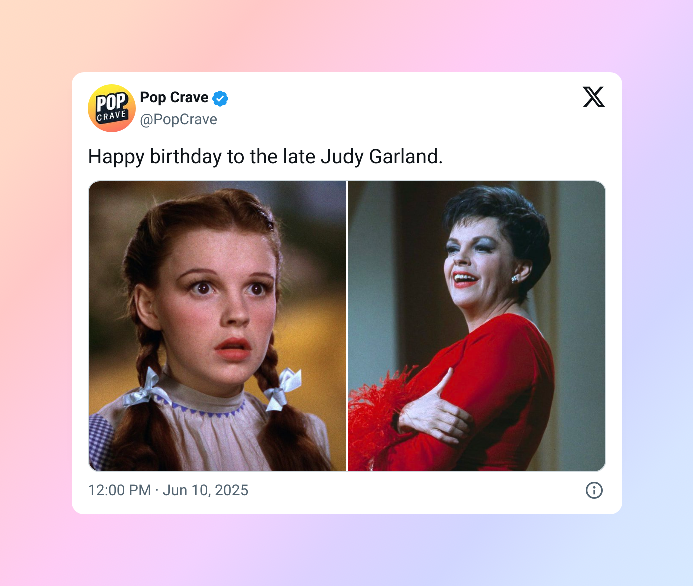
During the 1970s and 1980s, asking someone whether they were a Friend of Dorothy was a subtle way of determining whether they were part of the LGBTQ+ community. The beauty of the phrase was its ambiguity.
If someone understood the reference, they likely knew exactly what you meant. If they responded with “Dorothy who?” then you had your answer.
The origins of the phrase are still debated. Some historians trace it to writer Dorothy Parker, a member of New York’s Algonquin Round Table who welcomed many gay men into her social circles during the 1920s and 1930s. Others point to Dorothy Gale from The Wizard of Oz. The character was portrayed by Judy Garland, whose status as a gay icon became legendary within queer culture.
Either way, the phrase became one of the most recognizable examples of LGBTQ+ coding in modern history.
Polari: Britain’s Fabulous Secret Code
Long before social media and dating apps, many British LGBTQ+ people relied on Polari.
According to Lancaster University, Polari was commonly used between the 1930s and 1970s by gay men, lesbians, theatre performers, sex workers, and their social circles.
@weneedtotalkpod Follow this account for more conversations like this. The secret language that gay men used to stay safe before 1967…
The language borrowed words from Italian, Romani, Cockney rhyming slang, Yiddish, and theatrical jargon, creating a linguistic patchwork that outsiders struggled to understand.
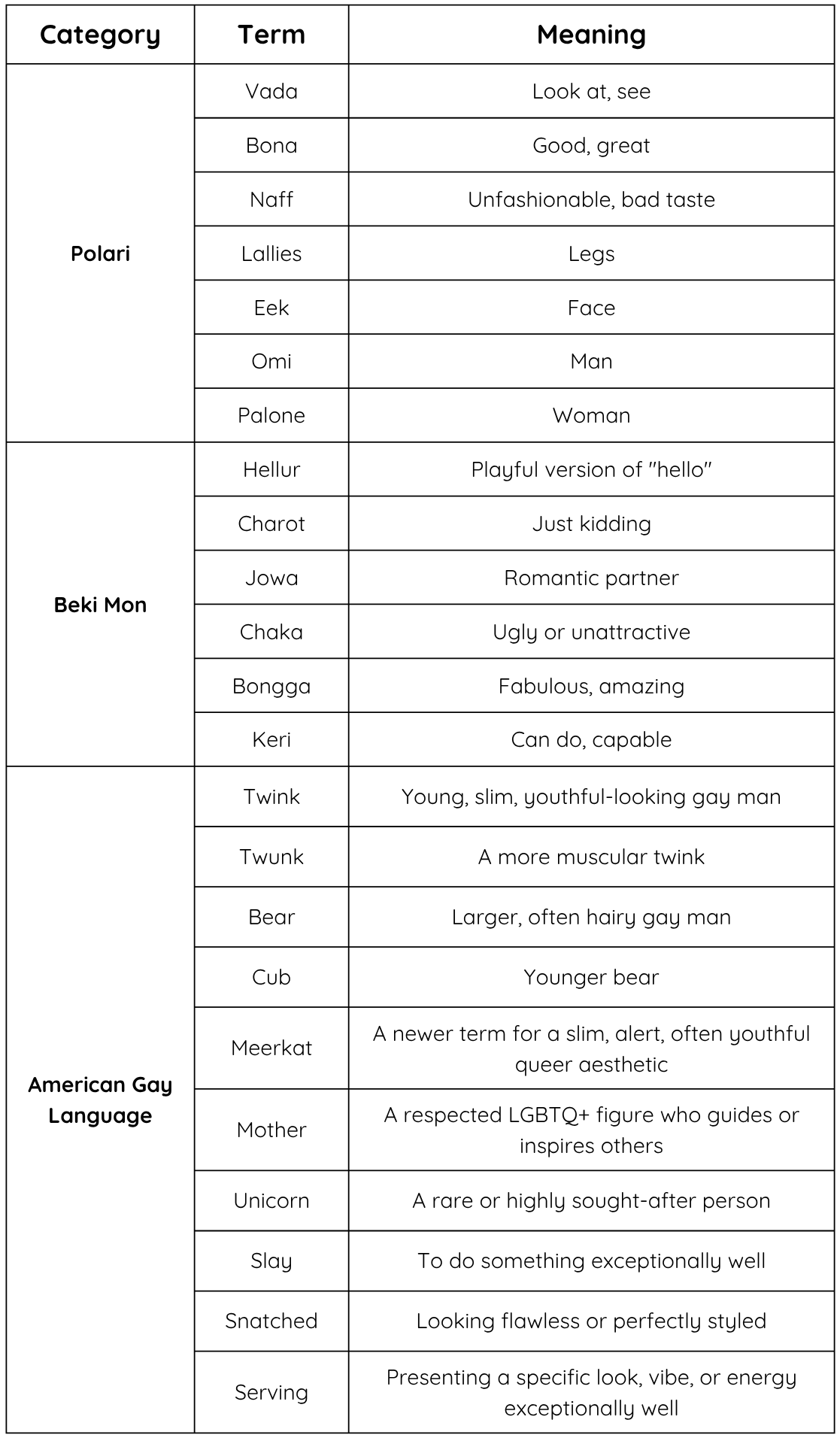
As Lancaster University explains, Polari functioned “as a form of protection and secrecy.” It allowed queer people to discuss relationships, attractions, and even potential romantic interests without drawing attention.
In other words, Polari was part language, part shield.
RELATED: Older Gays Learn New Gay Slang
The Philippines and the Rise of Beki Lingo
If you’ve spent enough time in the Philippines, there’s a good chance you’ve already used gay language without realizing it. Beki Lingo is so deeply woven into Filipino culture that many of its words and expressions have entered mainstream conversation.
Derived from the word “bakla,” Beki language is endlessly creative. New words can be formed through pop culture references, celebrity names, playful word substitutions, syllable switching, or by adding extra flair to existing Filipino and English words.
A simple “hello” can transform into “hellur,” and you have to say it with a certain flourish that makes it known that you are absolutely slaying.
Ordinary words become theatrical. Everyday conversations become performances.
What began as coded communication evolved into one of the most influential linguistic contributions to modern Filipino culture.
From Twinks to Slay: Modern American Gay Language
While many coded systems were originally created for secrecy, modern American gay language often functions as cultural shorthand and identity building.
Terms such as twink, bear, cub, twunk, mother, slay, snatched, serving, and unicorn all carry specific meanings within LGBTQ+ communities. Some describe body types. Others describe personality, status, or style. Many originated in queer spaces before eventually entering mainstream culture.
Today, phrases like “slay” and “serving” are used by celebrities, influencers, and brands worldwide, even though their roots can be traced back to queer communities and ballroom culture.
The irony is that many of the words once used to identify each other quietly are now spoken by millions.
Gay coding may no longer be a necessity for survival in many places, but its legacy remains everywhere. Every “slay,” every “mother,” every playful reinvention of language carries echoes of generations of LGBTQ+ people who found ways to connect, communicate, and celebrate one another when visibility was not an option.
Language changes. Community remains.
While many of these words may sound playful today, they represent something much bigger than slang. They are reminders of how LGBTQ+ communities found ways to connect, flirt, support one another, and build culture when openly expressing their identities was not always safe. Long before rainbow flags became widely visible, queer people were already speaking their existence into being, one coded word at a time.
To help you navigate some of the most famous examples of queer coding, we’ve put together a mini glossary featuring terms from Polari, Beki Lingo, and modern American gay language.