


Giants Pride Night should have been about celebration, visibility, and community. Instead, much of the conversation that followed centered on three players whose altered Pride caps sparked criticism and disappointment among many LGBTQ fans and allies.
Pride Month is a time to honor the history, resilience, and contributions of LGBTQ people. For many, it is also a reminder of how far society has come and how much work still remains. While Pride events are often joyful occasions, they can also reveal ongoing tensions around acceptance and inclusion.
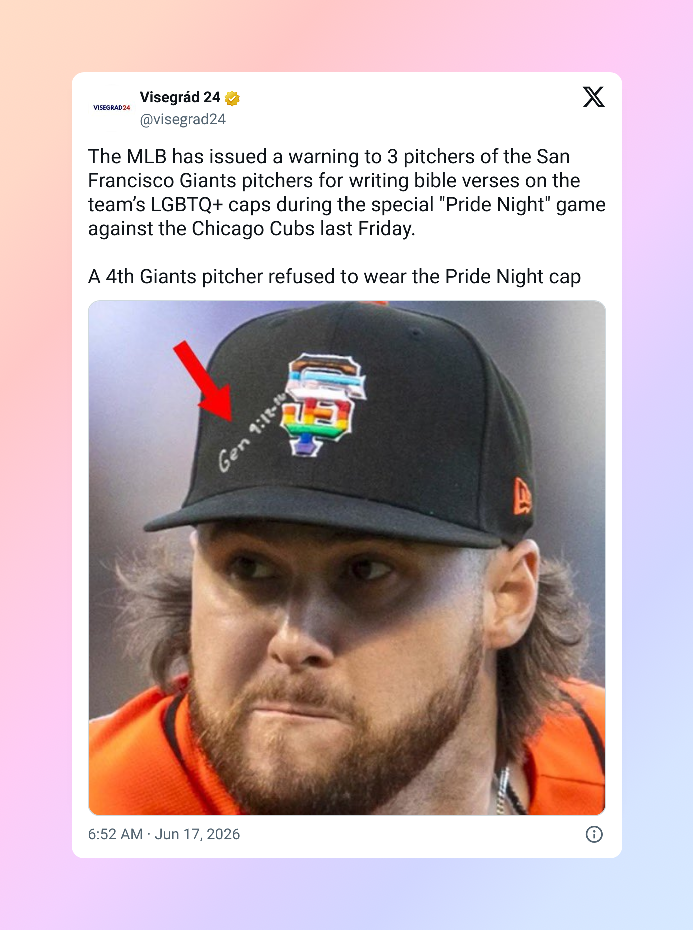
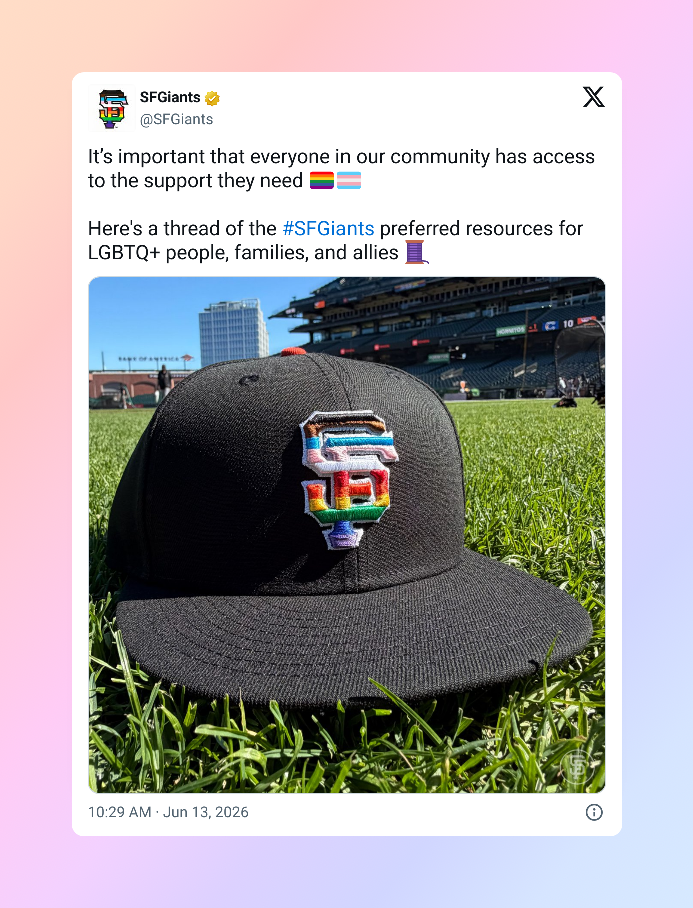
That tension came into focus during a recent San Francisco Giants Pride Night when several pitchers took the field wearing the team’s rainbow-logo Pride caps with handwritten Bible verses added to them. Similarly, two players from the L.A. Dodgers recently refused to wear their Pride caps even after the Dodgers commemorated two important LGBTQ+ icons–Billy Bean and Glenn Burke.
RELATED: Players Not Wearing Pride Uniforms During Pride Night? Why Not? Is This Ok?
The Bible Verse at the Center of the Debate

Giants right-hander Landen Roupp began the game with “Gen 9:12-16” written on his cap, with part of the verse extending into the rainbow “SF” logo. Relievers JT Brubaker and Ryan Walker also wore caps displaying Bible verses.
The passage references Genesis 9:12-16, which describes God’s covenant with humanity after the flood and identifies the rainbow as a sign of that covenant. The verses state that God places the rainbow in the clouds as a reminder of an “everlasting covenant” with every living creature.
For some observers, the players were expressing a personal religious belief. For others, the decision felt like a deliberate response to the symbolism of Pride Night and the rainbow logo itself, like a refusal to correlate the rainbow to Pride. The two representations can coexist, so why can’t the players simply respect that?
MLB Responds
Major League Baseball addressed the matter shortly after the game in a statement given to The Athletic.
Initially, the league stated that the writing on the caps violated uniform regulations and that the players had been warned regarding future violations.
Later, MLB clarified that the warning was not disciplinary and was not related to the content of the message itself.
“To be clear, this routine verbal warning not to wear the hat in future games is not disciplinary and had absolutely nothing to do with the content of the message,” the league said.
MLB further explained that uniform rules prohibit players from adding any written messages to apparel or equipment and noted that similar warnings have been issued in the past for messages such as “Happy Mother’s Day, I Love Mom” and family members’ names.
According to the league, the issue was the presence of unauthorized writing rather than specifying the religious content of the verses.
Why Many LGBTQ Fans Felt Hurt
Regardless of MLB’s explanation, many LGBTQ fans viewed the moment through a different lens.
For decades, religious texts and interpretations have been used by some individuals and organizations to oppose LGBTQ rights, relationships, and identities. Because of that history, even seemingly neutral biblical references can carry emotional weight for members of the community.
The Genesis passage itself does not mention LGBTQ people. However, many critics argued that placing the citation directly on a Pride-themed cap transformed what might otherwise have been a private expression of faith into a public statement during an event specifically designed to celebrate LGBTQ inclusion.
For those fans, the issue was not religion itself. Many LGBTQ people are people of faith. Rather, it was the perception that a night intended to affirm a marginalized community had become a platform for a message that felt exclusionary.
Pride’s Purpose Remains Unchanged
The controversy surrounding the Giants serves as a reminder that Pride Month continues to mean different things to different people.
For LGBTQ communities, however, the purpose remains clear. Pride is about visibility, dignity, belonging, and the freedom to live openly without fear or shame.
While debates surrounding faith, expression, and identity are likely to continue, Pride celebrations remain rooted in a simple idea: every person deserves to be seen, respected, and valued for who they are.
For many fans, that message remains far more important than any controversy surrounding a cap.