


Hasan Piker is asking Americans to look beyond the political noise and consider who actually benefits when marginalized communities become the center of national debate.
The political commentator and left-wing social media personality recently appeared on the BBC’s Americast podcast, where he discussed Donald Trump’s administration, America’s economic struggles, and the political treatment of vulnerable communities. With the US midterm elections approaching, Piker argued that the country’s problems run much deeper than the issues politicians repeatedly put in the spotlight.

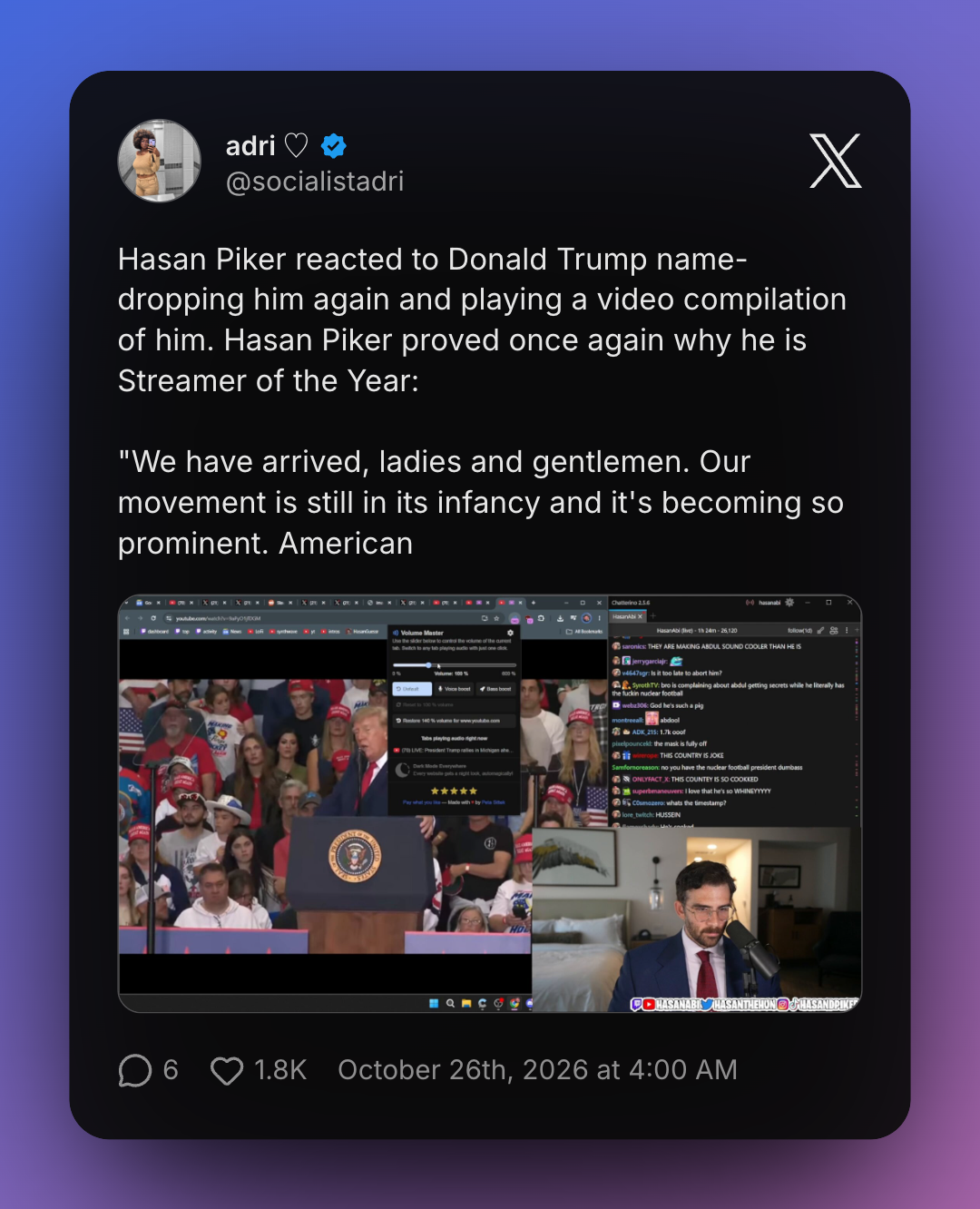
Trump turned Hasan Piker into a giant-screen punchline at his Dallas midterm rally, flashing a photo of the left-wing streamer in nothing but his underwear across the arena. Because apparently, Piker’s politics weren’t the only thing Trump wanted the crowd looking at.
But while the rally turned Piker’s image into a spectacle, the commentator has been focused on what he sees as the bigger issues facing Americans: economic inequality, struggling public services, and politicians directing public anger toward marginalized communities.
Piker described Trump as “chaotic” and argued that his administration ultimately serves the interests of the wealthy. He contrasted that with his own democratic socialist beliefs, calling for an end to American militarism and for more resources to go toward public needs.
He pointed to crumbling infrastructure, homelessness, and the need for better public services, questioning why so much money goes toward military operations overseas while communities at home continue to struggle.
READ: Twitch Streamer’s Underwear Photo Goes Viral
Why Are Trans People Always Part of the Conversation?
One of Piker’s most pointed arguments concerned the way politicians discuss transgender people, Muslims, and undocumented immigrants.
He argued that Trump tapped into genuine public resentment toward established institutions but redirected some of that anger toward marginalized communities that are not responsible for many of the economic problems Americans face.
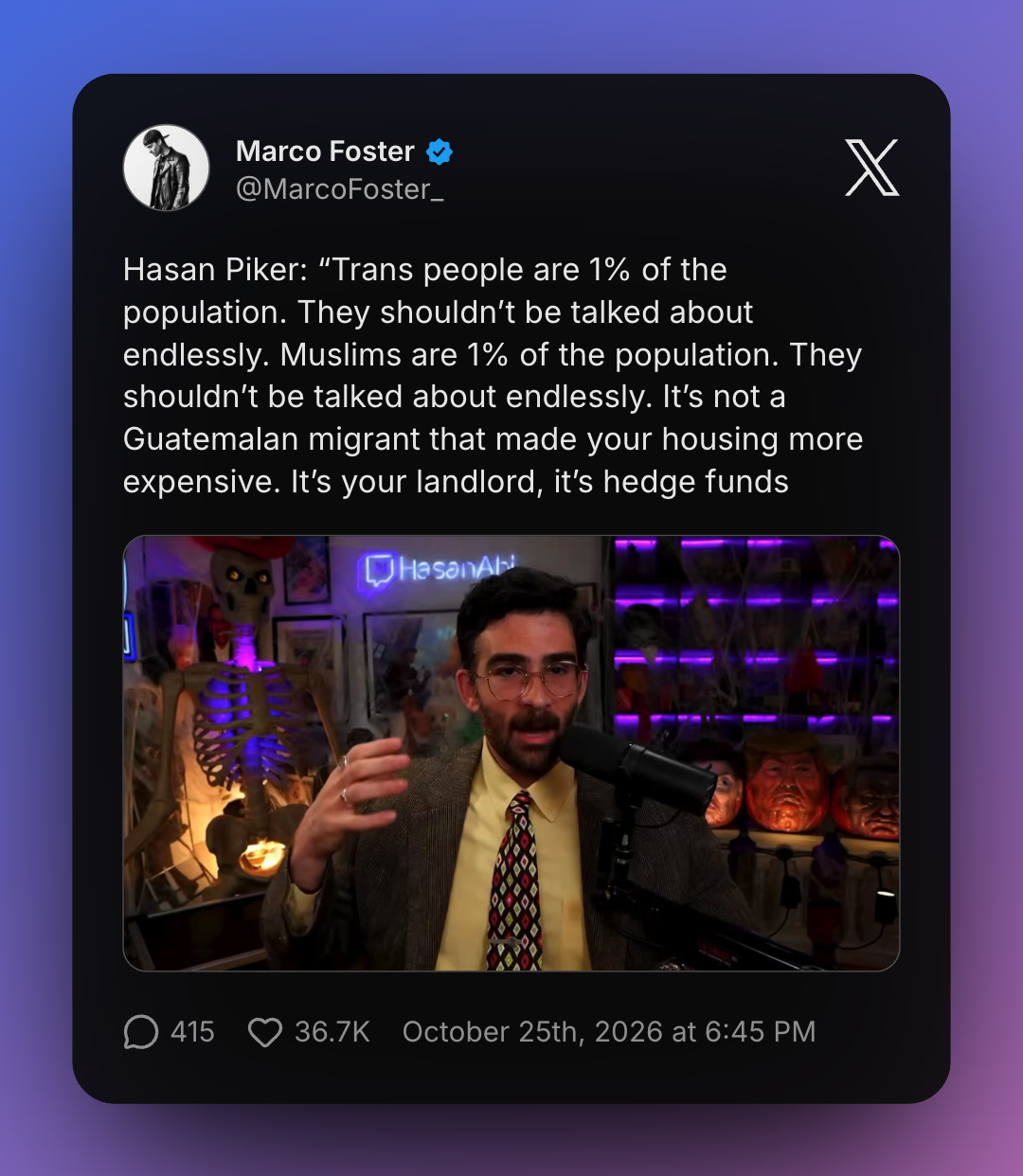
“It’s not a Guatemalan migrant that trekked thousands of miles to come to the United States of America that made your housing more expensive,” Piker said during the interview. He pointed instead to landlords and investment firms buying homes and contributing to housing affordability concerns.
He made a similar argument about transgender people, questioning why they receive so much political attention when they make up a small proportion of the population and have relatively little political power.
His broader point is that blaming vulnerable groups can distract from difficult questions about housing, energy costs, public spending, and economic inequality.
LGBTQ People Shouldn’t Have to Be Political Scapegoats
For LGBTQ people, this conversation hits close to home. Transgender people have increasingly found themselves at the center of political arguments over healthcare, education, sports, and public life. These debates affect real people, not just talking points on a campaign stage.
Piker’s argument is not that one commentator has all the answers, or that every concern raised by voters is insincere. Rather, he is asking why politicians keep directing so much attention toward vulnerable communities when the economic pressures affecting millions of people have much deeper causes.
People deserve affordable housing, reliable utilities, functioning public services, and the freedom to live without being turned into political targets.
Whether someone agrees with Piker’s democratic socialist politics or not, his interview raises a question worth asking beyond election season: are political leaders addressing the problems people face every day, or giving them someone else to blame?
For LGBTQ Americans, that distinction matters. Being part of a political debate is one thing. Being treated as the explanation for problems you did not cause is another.