


For weeks, Pietro Graza has been stuck inside Hotel Bamy in Malabo, Equatorial Guinea, after ICE deported him there despite his legal protection from being returned to Brazil. The hotel is not a prison, but Graza has been unable to leave — and now he has lost the phone that allowed him to stay connected to the outside world.
RELATED: Passenger Allegedly Goes on Homophobic, Racist Tirade
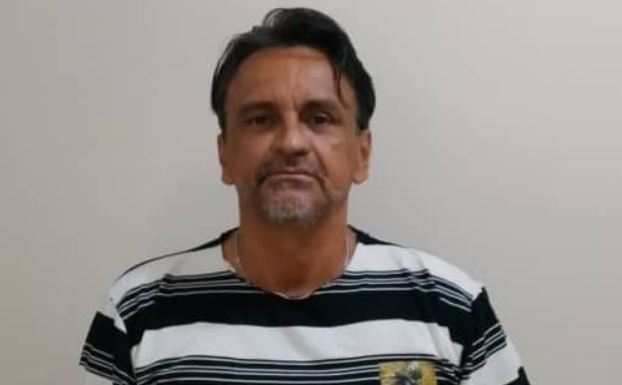
Graza, a gay Brazilian man, had been fighting to remain in the United States because he feared torture if he was returned to Brazil. An immigration judge eventually granted him protection under the Convention Against Torture. Yet instead of being allowed to remain in the U.S., he was deported to a country where he has no ties and has never lived.
And now, even his lawyer can’t reach him.
ICE and a life already marked by danger
Graza’s fear of returning to Brazil isn’t hypothetical. Before leaving the country, he says he was targeted by police partly because he is gay. Around 2014, Graza was running a small nutritional supplement store while also working from his background in teaching and his interest in fitness. According to Graza, local police operating protection rackets demanded that he contribute to a so-called security fund. He refused.
RELATED: LGBTQ+ Nightlife Under Watch: Who Invited the Cops?
He says officers then threatened him and told him he needed additional protection because he was gay. A cousin who was also a police officer warned him that authorities could fabricate a case against him. Then, weeks later, two men on a motorcycle shot Graza outside his home.
He survived, but the attack left him in a coma, without a kidney and with limited use of much of his right arm. He underwent multiple surgeries and says he eventually recovered around 90 percent of his mobility.
Graza says the shooting was never properly investigated and that police erased evidence connected to the attack. He also says a deputy demanded the equivalent of about $4,000 to make a steroid-related case disappear. He refused. That history is why going back to Brazil remained so frightening for him.
“Because when I return to Brazil, the police will identify me,” he said. “They will know that I returned. They will know that I’m alive.”
The legal victory that didn’t mean freedom
Graza and his then-partner had traveled to the United States periodically for years before the shooting, including trips to Florida. After recovering from the attack, Graza dealt with depression and panic attacks and eventually applied for a student visa.
His life in the U.S. became complicated. After discovering that his partner had been unfaithful, Graza eventually tried to establish a life of his own. He struggled to afford medication for his kidney and worsening mental health, fell into a severe depressive period and began using drugs. He was eventually caught with methamphetamines, and his visa expired. After serving a short sentence, he was taken into ICE custody.
His immigration case continued for nearly two years across two detention centers. He was moved from Baker County Jail near Jacksonville, Florida, to Eloy Detention Center in Arizona in the summer of 2025.
At Eloy, lawyers with the University of Miami asylum clinic worked on his case, using Brazilian court and police records as part of the evidence. Then came the ruling Graza had been waiting for.
On April 16, 2026, an immigration judge ruled in his favor and granted him protection under the Convention Against Torture, or CAT. That protection, however, did not mean immediate freedom.
“ICE asked for three months to continue keeping me detained because they wanted to find a country to send me to,” he said.
Officials later asked Graza to sign a document agreeing to be sent to Liberia. Following his lawyers’ instructions, he refused. Within days, he was sent anyway.
36 hours between countries
Graza says several dozen people were forced onto the flight to Liberia. Three men — from Mexico, Cuba and Ethiopia — refused to board, according to his account. He says officers used a restraint method he described as similar to a WRAP, which has been criticized for the pain and risk of asphyxiation it can cause.
“When we saw what they did to those three people, nobody else wanted to resist anymore, because it was so horrible, so violent,” he said. “How can someone do that? This goes against all human rights.”
The journey lasted 36 hours, and Graza says he remained shackled throughout the flight.
“It was a situation of terror, because inside the plane we remained handcuffed,” he said. “It lasted 36 hours, and it was extremely uncomfortable. You really felt like human garbage.”
When the plane landed in Liberia, Graza and several others refused to leave. A bystander recorded a confrontation that was later reported by The New York Times. The group was moved onto the tarmac while officials negotiated with them and pressured them to accept resettlement in another country.
“We were terrified,” Graza said.
Graza says those who continued resisting were eventually put back on the plane. He says ICE told them they were being returned to the United States. Instead, the plane landed in Malabo, Equatorial Guinea.
Trapped thousands of miles from home
Graza says the group was still restrained when they arrived. Hooded officers pulled them from the aircraft and forced them into vehicles.
“We were handcuffed by our feet and hands,” Graza said. “Even so, the police with machine guns grabbed us and threw us into the cars, one person holding each of us. We were completely helpless. This was around midnight, behind the airport, everything dark. Don’t you understand how terrifying that is? You just wanted to cry because of the desperation. The women were screaming. It was the worst scene I have ever witnessed in my life.”
The group was taken to Hotel Bamy, a semi-abandoned luxury hotel in Malabo.
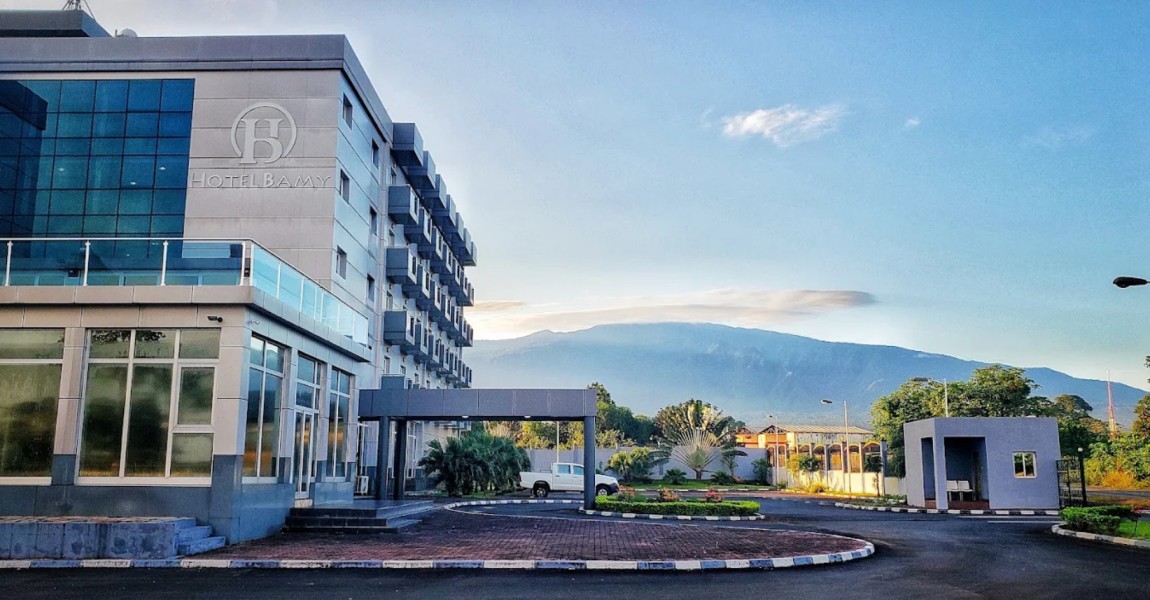
Graza has no connection to Equatorial Guinea, and neither do the other people held there. Around a dozen men and women have been left in legal limbo at the hotel.
The broader practice is part of what advocates describe as “third-country deportations.” When the U.S. cannot send someone directly back to their home country because of legal protections or other barriers, ICE can instead seek another country willing to receive them. That can create another layer of uncertainty for people who fear persecution at home, including LGBTQ+ people.
Equatorial Guinea does not criminalize homosexuality, but the U.S. State Department reported in 2023 that security forces had subjected LGBTQI+ people to violence, including rape and other sexual violence, within the military and in jails and prisons.
Attorneys representing people sent to Hotel Bamy have raised concerns about what could happen to LGBTQ+ deportees in countries where they may face discrimination, detention or violence.
Kate O’Donnell, an attorney with Tucson-based Green Evans-Schroeder, represents Graza as well as Ahmed Soliman, a gay Egyptian man from Tucson who was also sent to Hotel Bamy. O’Donnell said the men face “de facto criminalization” and potential “terrible violence” because of their sexual identities.
Then the phones were taken away
For Graza, his phone had become much more than a piece of technology. It was his connection to his attorneys, journalists and the outside world. On September 8, armed police arrived at his room and forced him to hand it over.

Two nights earlier, police had reportedly pointed assault rifles at two men during a dispute involving confiscated phones. According to Reuters, one guard yelled, “Shoot him!”
Graza managed to send one final voice message using a borrowed phone.
“Several armed police officers came to my room this morning, around 8 o’clock, to take my phone because of that interview I gave on Sunday. The worst part is that my life is at risk, because my phone contains the contact details of various journalists who have interviewed me,” Graza said.

He has been unreachable since. The day after the phones were confiscated, Soliman was arrested. His attorney said they did not know what charges had been brought or where he was being held. They also did not know whether Graza, Soliman or the others had been beaten.
A person on the ground reportedly told Soliman’s attorney that some people at the hotel had cuts and bruises. Messages sent to Graza through WhatsApp since September 9 have gone unread.
For someone who spent years fighting not to be sent somewhere he feared he could be killed or tortured, being thousands of miles from Brazil was supposed to be a form of protection. Instead, Graza now finds himself stranded in a country he never chose, with his access to the outside world suddenly cut off.
And for now, nobody knows when he will be able to speak for himself again.