

Online dating is already a labyrinth of half-finished bios, questionable opening messages, and mixed signals—but in rare and extreme situations, it can also become dangerous. While most matches turn into harmless conversations, awkward first meetings, or the occasional pleasant surprise, a recent case in Missouri serves as a stark reminder that digital interactions can escalate into real-world harm. It’s not about scaring people off dating apps—trust us, gay people aren’t giving up Tinder, Grindr, Jack’d, or Hinge anytime soon—it’s about staying aware, alert, and emotionally anchored in a world where the swipe of a finger can set off unpredictable reactions.
RELATED: How One Man’s Obsession Turned a Dating App into a Nightmare
When online dating becomes dangerous–rejection is normal. Violence is not.
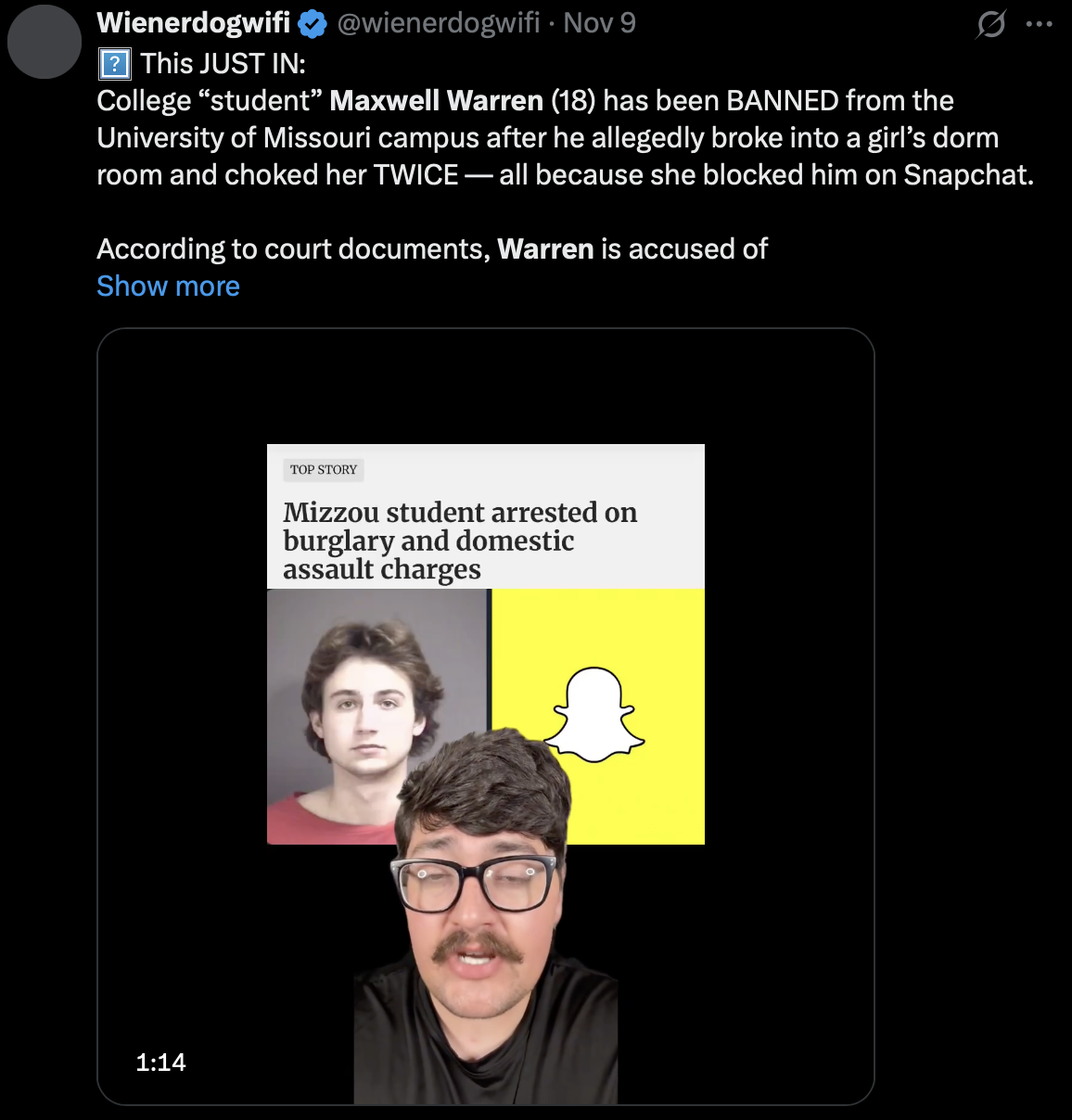
An 18-year-old University of Missouri student named Maxwell Warren was charged with multiple serious offenses—including first-degree burglary and several degrees of domestic assault—after a violent confrontation that allegedly began because the victim blocked him on Snapchat.
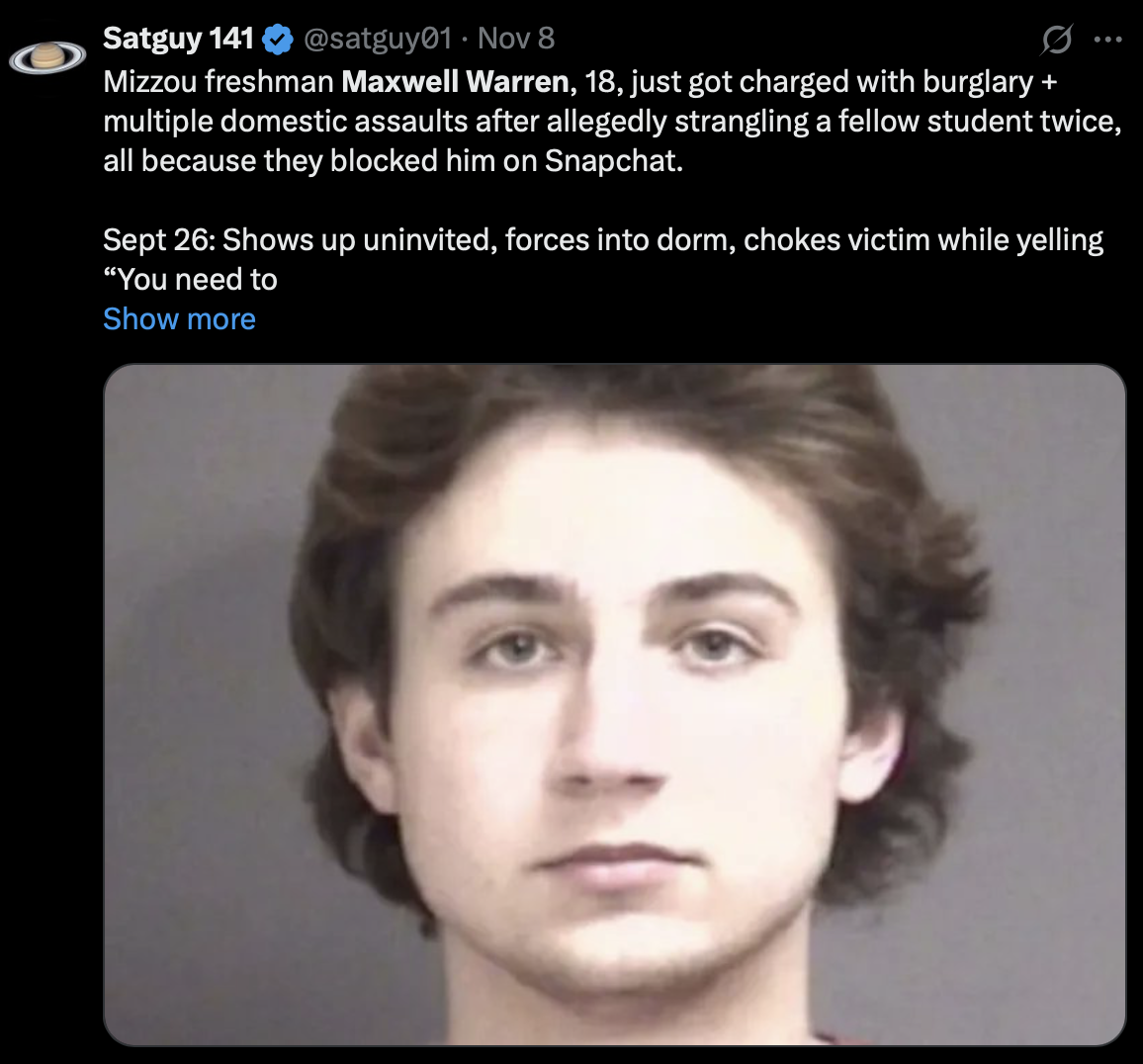
According to police documents summarized in reports by People Magazine, Warren reportedly went to the student’s dorm room on September 26 after the block occurred. When the victim opened the door slightly, Warren allegedly forced it open, shoved them backward, and choked them, reportedly shouting something to the effect of, “What do you think you’re doing? Add me back right now.” Authorities later documented markings on the victim’s neck that resembled a handprint.
What’s chilling is not just the act itself, but how the situation continued. The victim reportedly unblocked Warren after the incident—a response not uncommon in abusive or emotionally manipulative dynamics. Two days later, Warren allegedly messaged the victim on Instagram, referencing the assault in a disturbingly casual tone, admitting that he’d lost control and expressing guilt, followed by an apology like “You deserve better.” But the remorse didn’t last.
Later conversations captured in the probable cause statement show Warren allegedly responding to the victim’s reminder about the choking with a chilling admission that he would “do it again,” along with profanity and threats suggesting further violence.
A month after the first assault, the pattern allegedly continued. On October 29, when the victim rejected Warren’s advances, he reportedly strangled them again—this time until they briefly lost consciousness. That same day, police say he also pushed another person to the ground in a separate incident on campus.
The school has since banned Warren from university grounds while the investigation continues. He has pleaded not guilty, and hearings are scheduled.
While this incident is an extreme outlier, it highlights a core truth: online dating can create an illusion of intimacy, entitlement, or emotional escalation long before two people even meet in person. For LGBTQ+ users—who often rely on apps because offline dating can be limited or stigmatized—it’s important to recognize that while online dating is empowering and liberating, it comes with responsibilities and precautions.
HOW TO STAY SAFE IN THE ONLINE DATING WORLD
1. Don’t ignore red flags—digital or real
If someone reacts disproportionately to being ignored, blocked, or rejected—even online—that’s early-stage volatility. Entitlement, obsession, or intense anger are not personality quirks; they are warnings.
2. Verify identity before meeting
Ask for social media, a video call, or at least a real-time photo. Not as a vibe check—more as due diligence.
3. Keep first meetings in public spaces
Coffee shops, malls, restaurants, hotel lobbies—these settings naturally limit escalation and there are witnesses.
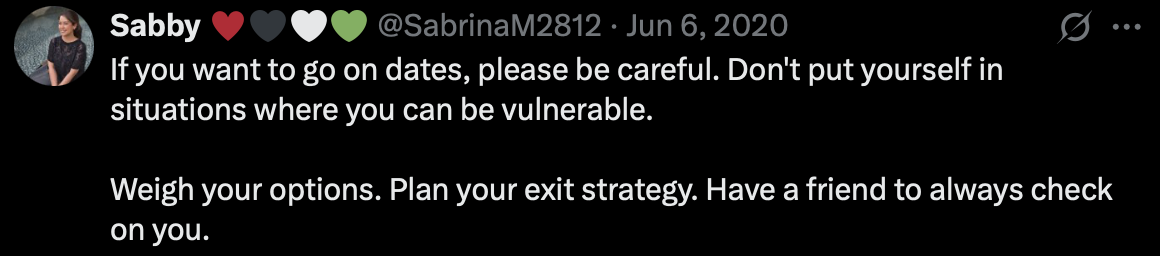
4. Share your location with trusted friends
Many gay and queer men already do this, but make it a rule, not a habit. Even better if someone knows who you’re meeting and where.
5. Do not tolerate manipulation disguised as vulnerability
Over-apologizing, guilt-tripping, or referencing past violence casually can indicate a dangerous mindset. Emotional turbulence isn’t romantic—it’s destabilizing.
6. Block freely, and don’t explain yourself
You owe no one access to your digital presence. If someone can’t handle boundaries online, they’re likely worse offline.
7. If an encounter feels off, leave immediately
Your intuition is worth listening to. Politeness should never cost your safety.
REFERENCE: People