


We don’t vote for someone just because they’re gay, so should we automatically write off a candidate just because they’re Republican? With elections coming up, it’s worth asking what actually makes someone deserving of our vote. Because, sorry, but a Pride photo and a few nice words about the gays aren’t enough to earn anyone an ally badge. And no, dancing to YMCA does not automatically make you an ally.
When a Republican Gets a Rainbow Endorsement
Let’s talk about Republican Rep. Brian Fitzpatrick of Pennsylvania. The American Unity Fund, an organization working to advance LGBTQ+ equality within conservative politics, endorsed him for reelection, recognizing his record on LGBTQ+ rights. Fitzpatrick has supported marriage equality and nondiscrimination protections, even while serving in a party where those positions aren’t exactly everyone’s cup of tea.
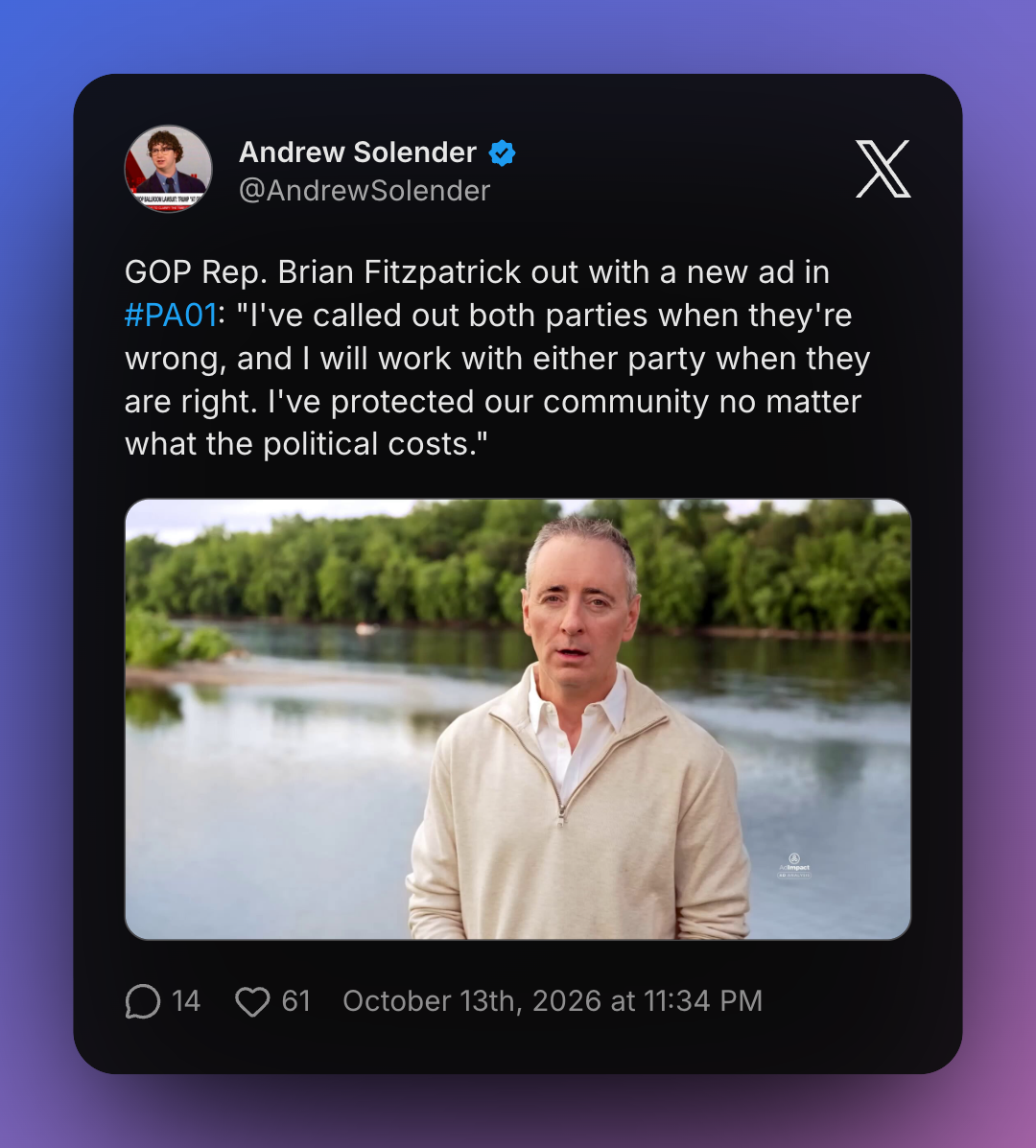
And honestly, that’s worth acknowledging. LGBTQ+ equality shouldn’t be a Democrat-only issue, and we shouldn’t automatically dismiss a politician who supports our rights just because there’s an R next to their name.
But before we start handing out rainbow cookies, there’s a bigger picture to consider.
READ: The Republican Convention Is Getting a Very Gay Undercover Operation
The Republican Party Has an LGBTQ Problem

Here’s where things get complicated. According to Gallup, Republican support for legal same-sex marriage fell to 41% in 2025, down from 55% in 2021 and 2022. By 2026, another Gallup survey put that figure at just 37%. The political divide over marriage equality has become increasingly difficult to ignore.
And we’re not just talking about marriage. Republican-led states have pushed restrictions affecting transgender people’s access to healthcare, bathrooms, school sports, and protections in educational settings. A January 2026 report from UCLA’s Williams Institute found that 53% of transgender youth in the United States live in states with at least one restrictive law or policy affecting their rights.
These policies aren’t just talking points for politicians to throw around during campaign season. They can affect whether someone gets appropriate healthcare, feels safe at school, or gets to live openly without worrying about their rights being taken away.
READ: Could You Date a MAGA Supporter? Do You Consider It a Red Flag?
Vote for the Person, But Don’t Ignore the Party
So, can a Republican be an LGBTQ+ ally? Absolutely. But the more important question is what that support looks like when it actually counts.
Does the candidate vote for protections when they’re on the table? Do they speak up when members of our community are targeted, including transgender people? And are they willing to stand by those principles when doing so might cost them politically?
We also have to look at the bigger picture. A politician might support certain LGBTQ+ rights while backing a party whose policies put other members of our community at risk. Both things can be true, and pretending otherwise doesn’t help anyone.
At the end of the day, our vote isn’t a participation trophy for politicians who say something nice about us. It’s a decision about who gets the power to shape our lives.
Don’t vote for someone just because they’re gay, and don’t automatically rule someone out because they’re Republican. Look at their record, their policies, and what they actually do when it matters.
Because being an ally isn’t about what looks good on a campaign website. It’s about what you’re willing to stand up for when the stakes are real.