


Ban may be a small word, but it has become a major part of the fight over drag performances in Texas. Now, a federal judge has once again ruled against the state’s controversial Senate Bill 12, and there’s a particularly fabulous Dolly Parton connection woven into the case.
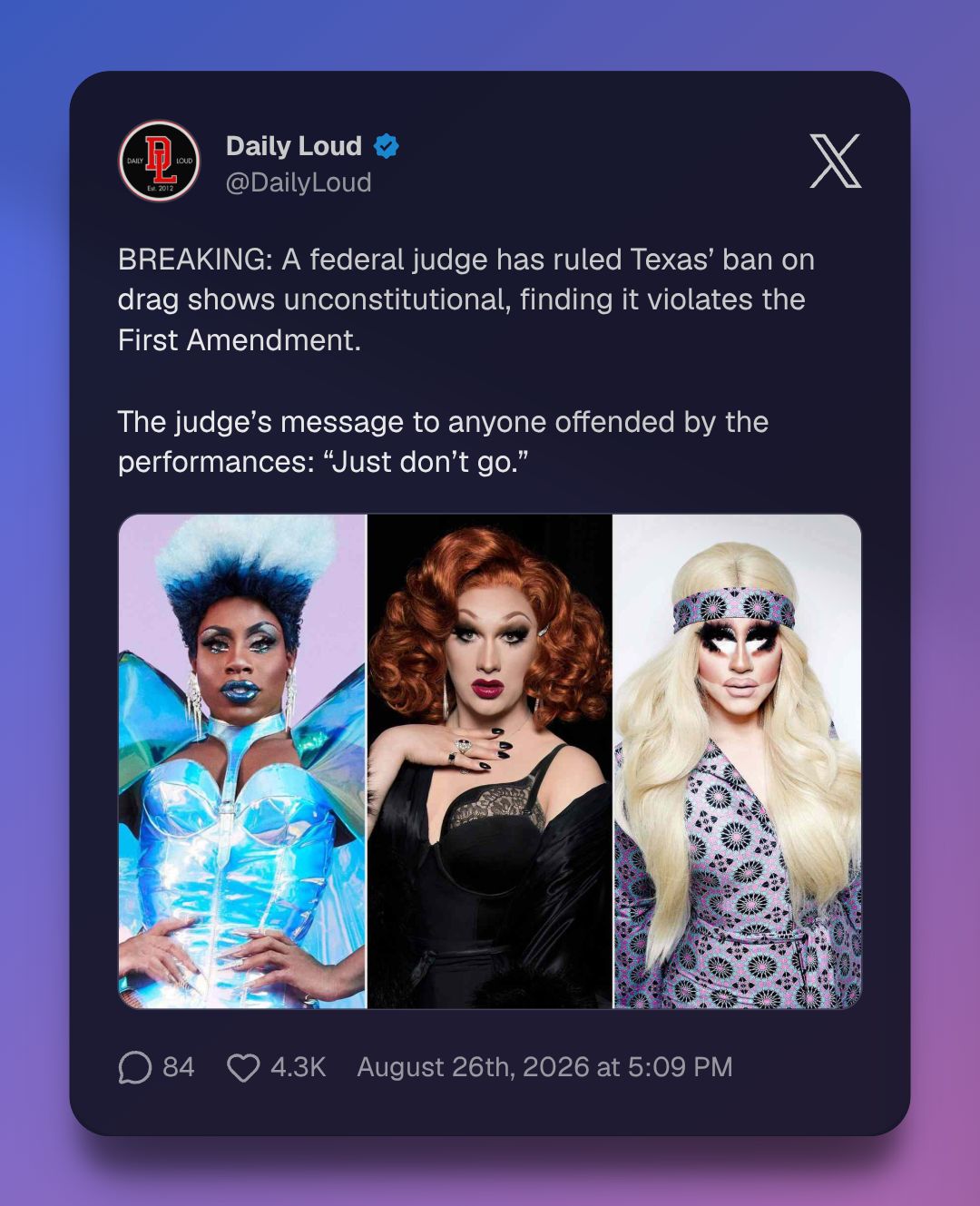
On August 25, U.S. District Judge David Hittner ruled that Texas cannot enforce SB 12, finding the law unconstitutional because of the way it restricts protected expression. The decision came after years of legal back-and-forth surrounding legislation that Texas lawmakers said was intended to regulate sexually-oriented performances accessible to minors.
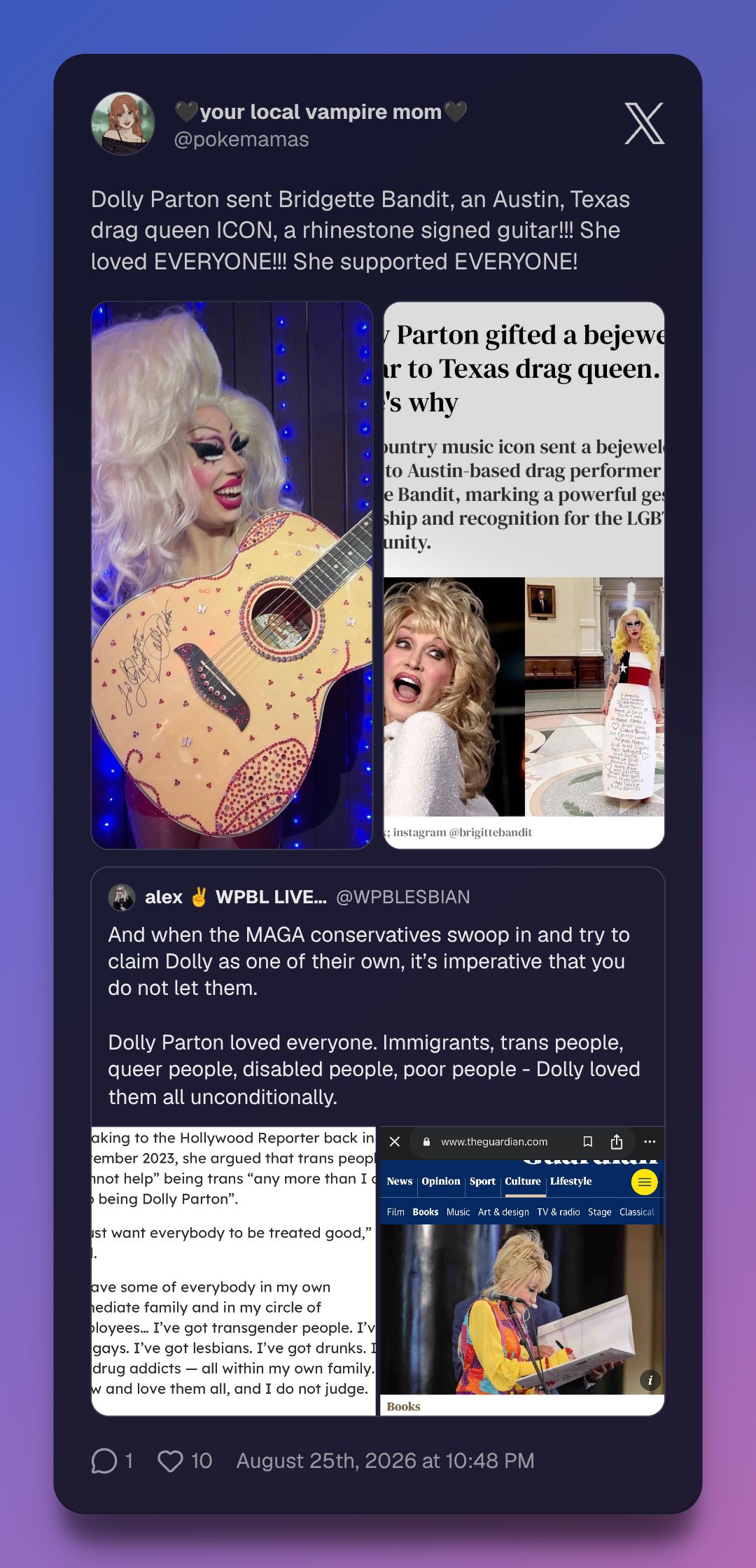
But this isn’t simply another courtroom story about drag. One of the plaintiffs challenging the law is Austin performer Brigitte Bandit, a drag artist particularly known for portraying Dolly Parton.
And that connection turned out to be remarkably relevant.
Enter the Dolly Drag Connection
Bandit has been an outspoken critic of Texas’ attempts to regulate drag performances. She was among the performers and LGBTQ+ advocates who challenged SB 12 after it became law.
Her Dolly connection goes beyond simply impersonating the country superstar. In 2023, Parton, who very recently passed away at the age of 80 after a battle with cancer, gave Bandit a rhinestone-studded guitar after learning about her activism. The gift became a memorable link between the legendary singer and the Texas performer fighting for the right to keep performing.
That relationship became even more significant when Hittner considered what the Texas law could potentially cover.

READ: Dolly Parton Dies at 80, Leaving a Legacy That Will Always Love Us
Could Dolly Have Been Caught by the Law?
The answer, according to the judge’s reasoning, is uncomfortably complicated.
SB 12 did not simply say “no drag.” Instead, it established restrictions around performances considered sexually oriented, using language that Hittner found insufficiently precise. The drag ban law carried serious consequences, including potential fines for businesses and criminal penalties for certain performers.
The problem was determining exactly where the line between acceptable entertainment and punishable conduct would fall.
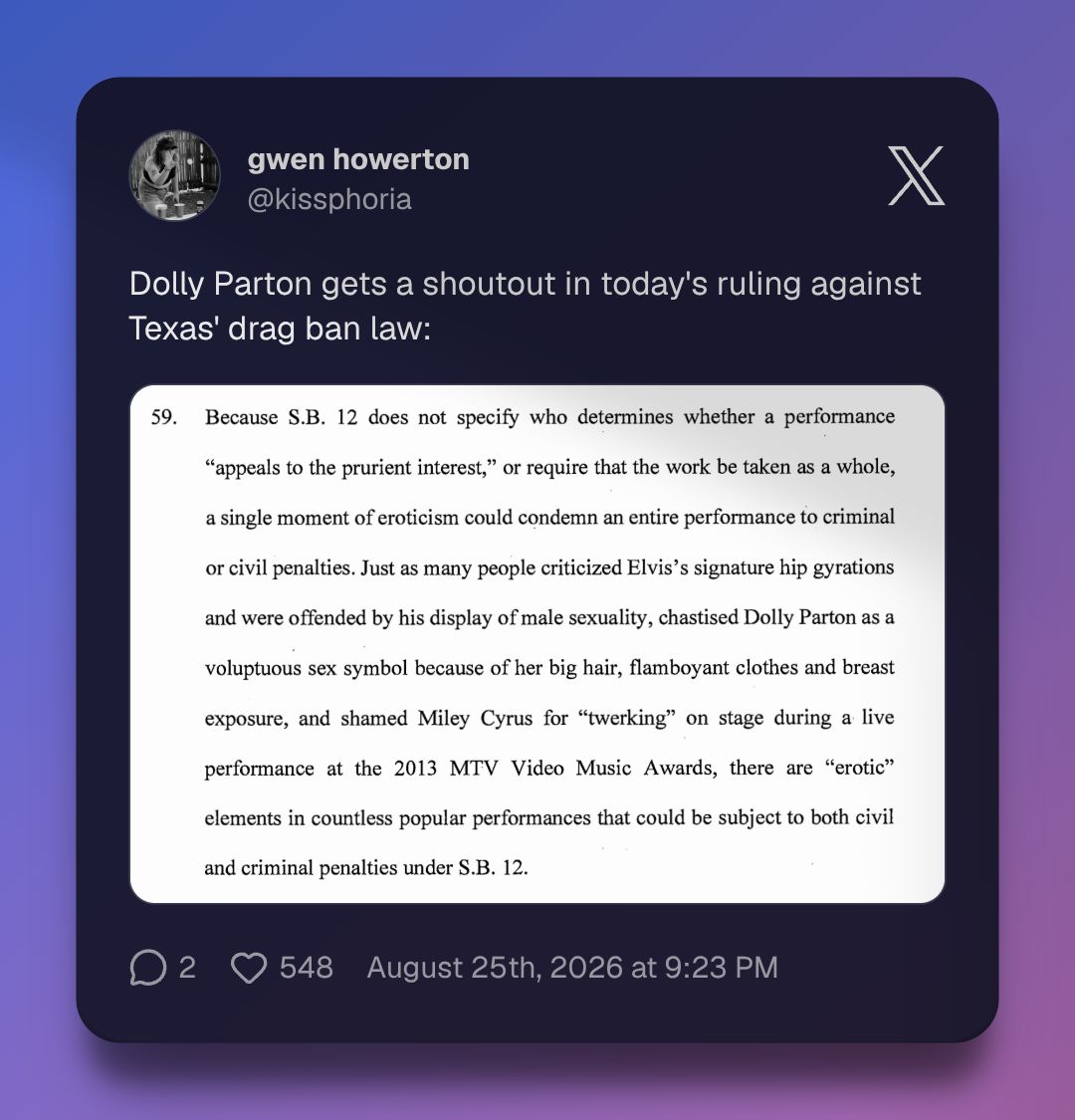
Hittner used well-known performers, including Parton, to illustrate that problem. A performer does not have to be a drag queen for an audience member to perceive something as provocative or erotic. Costumes, choreography and stage personas can all contain elements that different people interpret differently.
And if those subjective interpretations can trigger legal penalties, the potential reach of the law becomes enormous.
That’s precisely what concerned the judge.
READ: Drag Ban Timeline: What Just Happened in Florida and What’s Next?
Drag Wasn’t the Only Thing at Risk
One of the most interesting aspects of the ruling is that Hittner’s concern extended well beyond drag shows.
The court found that the law’s broad wording could potentially affect other forms of entertainment and public performance. Critics of SB 12 have argued that the legislation could reach protected artistic expression because of its unclear standards.
That’s why the First Amendment became such a central part of the case.
Hittner had already ruled against SB 12 in 2023, but the 5th U.S. Circuit Court of Appeals later vacated that decision and returned the case to him for further consideration. The law subsequently took effect while the legal battle continued.
Now, Hittner has rejected it again.
A Win, But Not Necessarily the Final Word
For the moment, Texas cannot enforce SB 12. Texas Attorney General Ken Paxton has indicated that the state plans to challenge the ruling, meaning this particular legal drama could have another act.
Still, there’s something wonderfully fitting about the Dolly Parton connection.
A drag performer who made Parton part of her art became one of the people challenging a law that could have restricted that very expression. Then the judge evaluating the law used Parton’s own famously glamorous stage persona to demonstrate why the legislation’s boundaries were so difficult to define.
And perhaps the most straightforward takeaway from Hittner’s ruling is also the easiest one to understand: if someone doesn’t like a performance, they don’t have to watch it.
For drag performers in Texas, that’s one less ban standing between them and the stage.