


The USA political scene is serving confusion, controversy, and just enough accidental camp to keep the group chat busy. From Donald Trump getting unusually interested in a Republican senator’s backside to two transgender leaders walking away from Ohio Democrats, this week’s political roundup has us asking: who is actually showing up for the LGBTQ+ community?
Trump Says He Looked at a Republican Senator’s Ass
Make America Great Again? More like make America gay again? President Donald Trump had the internet talking after delivering an unexpected compliment about Ohio Senator Jon Husted during a campaign rally in Youngstown on October 12.
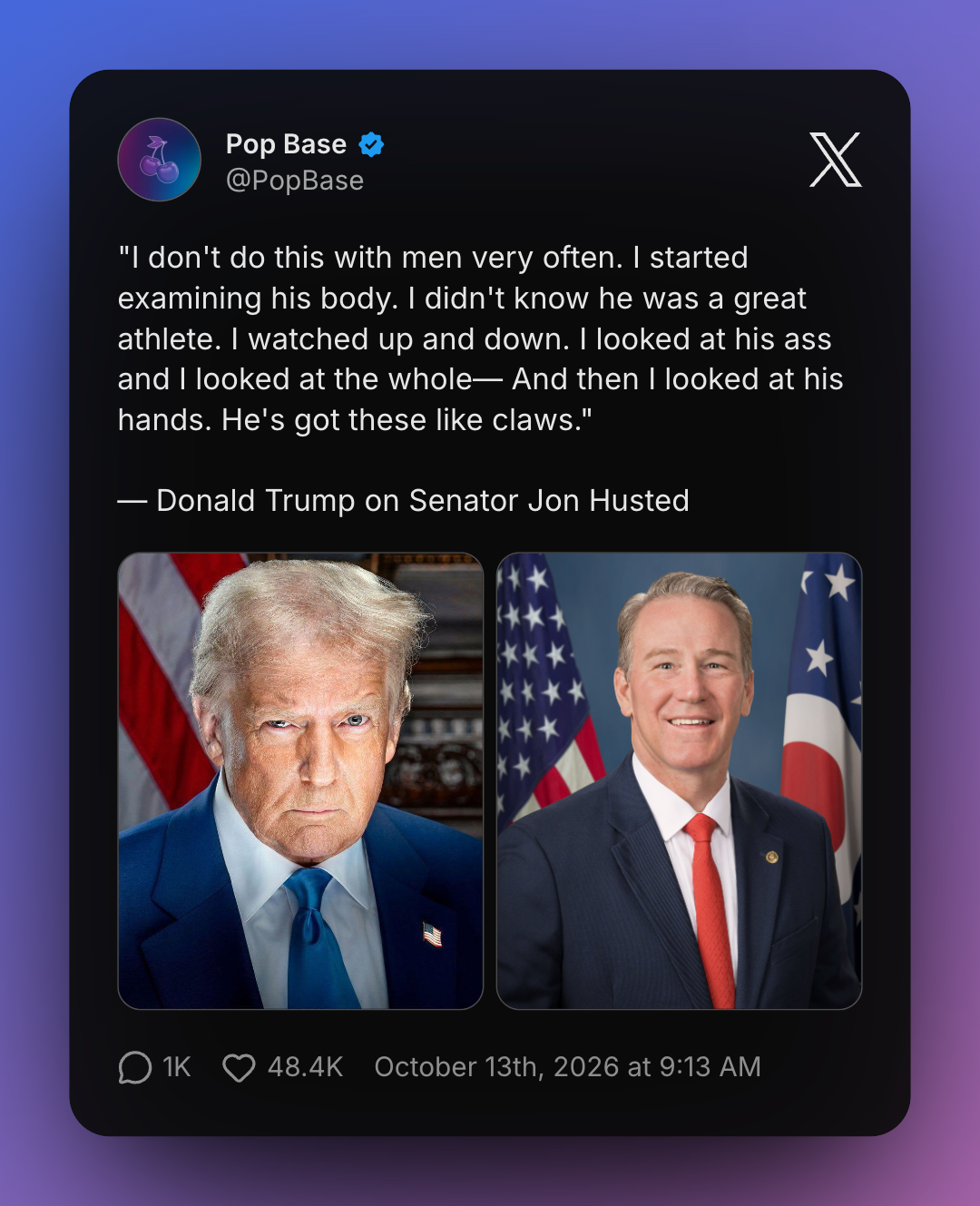
Trump was there to rally support for Husted and Republican gubernatorial candidate Vivek Ramaswamy ahead of the midterm elections. While praising Husted, however, the president revealed that he had taken a closer look at the senator’s physique after learning about his football background at the University of Dayton, where Husted earned All-American recognition.
“I don’t do this with men very often,” Trump told the crowd before describing how he examined Husted’s body and declaring, “I looked at his ass.”
Trump on Jon Husted: “I don’t do this with men very often. I started examining his body, because I didn’t know he was a great athlete … I looked at his ass” https://t.co/VD8jJpireB
— Aaron Rupar (@atrupar) October 12, 2026
Well, that’s certainly one way to endorse a candidate. Somewhere, a gay sports bar just felt a disturbance in the Force.
To be fair, Trump was attempting to praise Husted’s athletic credentials. Still, the moment is particularly amusing coming from a president whose political movement has frequently positioned itself against LGBTQ+ inclusion.
And that’s not the only awkward moment making headlines. Trump has also mocked the enthusiasm of his own supporters, suggesting he could say practically anything and still receive applause. If your own audience is becoming the punchline, perhaps it’s time to rethink the material.
Trump: I could say the stupidest things and you’d clap https://t.co/9LLyA30UzI
— Acyn (@Acyn) October 10, 2026
READ: Chris Gallant Refuses to Be Shamed: ‘It Has No Bearing on My Ability to Serve”
Two Trans Leaders Quit Ohio Democrats’ Pride Caucus
Meanwhile, the situation in Ohio is considerably less funny.
Two transgender members of the Ohio Democratic Party’s Pride Caucus Steering Committee, Ciara Keeton and Ari Childrey, resigned within 24 hours of each other amid allegations that party leadership was restricting the caucus’s ability to speak openly about LGBTQ+ issues.
Keeton resigned on October 4, just eight days after joining the steering committee. She told The Buckeye Flame she had initially wanted to help support the LGBTQ+ community and increase transgender representation in the room. Keeton’s resignation came amid tensions over how the party handled Acton’s candidacy. She said the Pride Caucus was prevented from circulating a message by two trans elected officials who backed Acton while also raising concerns about her earlier remarks on transgender issues.
According to Keeton, party leadership argued that trying to unify LGBTQ+ support for Acton so close to the election would be an unwelcome distraction.
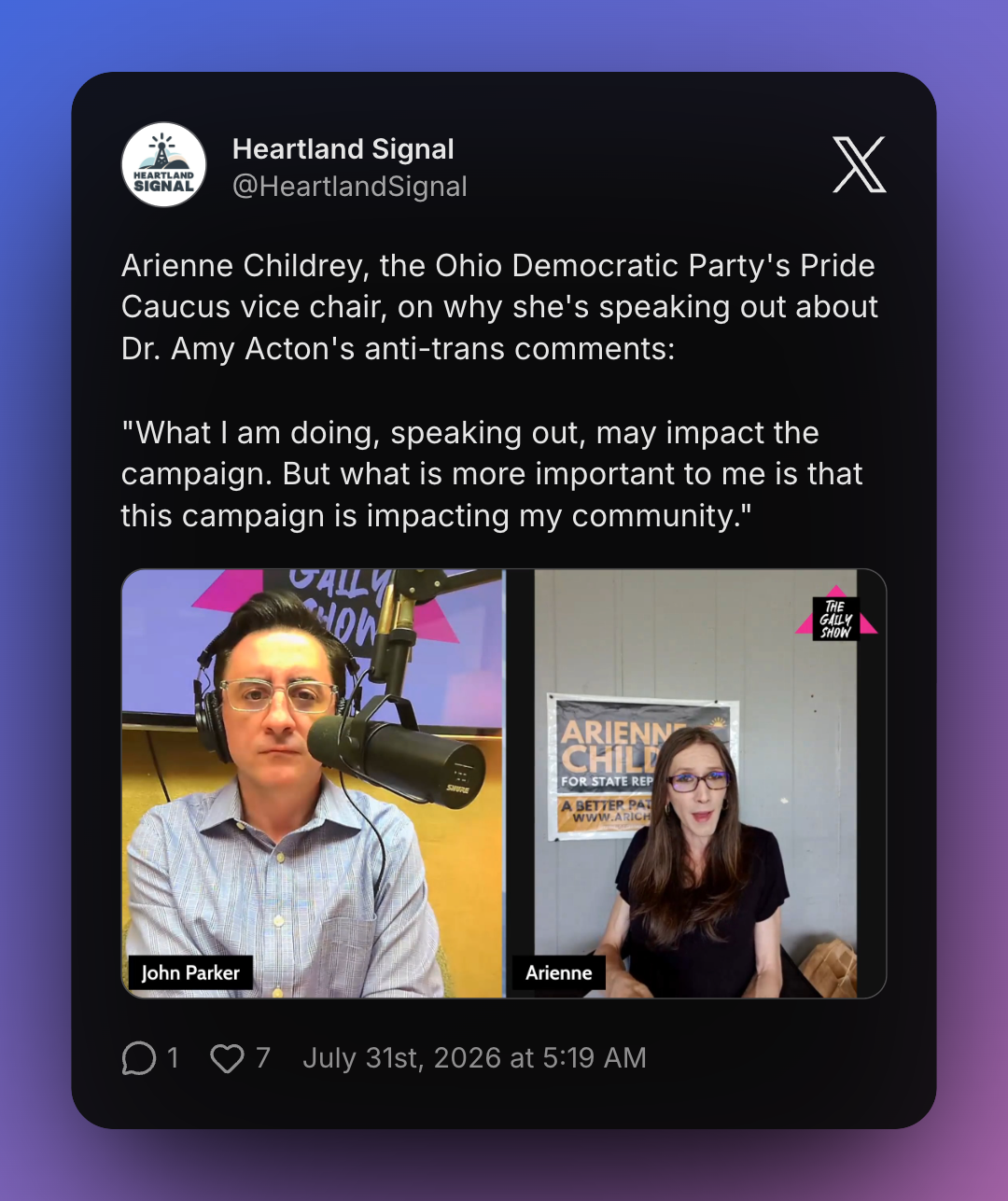
Childrey, the caucus’s transgender vice chair, followed suit with her own resignation. In an open letter, she accused party leadership of treating the caucus as a political sales team rather than a body meant to represent queer people within the party.
“For party leadership, the caucus is simply a recruitment and sales team,” Childrey wrote.
Her frustration highlights a difficult question for LGBTQ+ voters: what happens when the party they support asks them to put electoral unity ahead of speaking up about harm to their own community?
READ: Voters Care More About their Christmas Budget than Anti-Trans Politics
The USA Needs More Than Political Theater
Here’s the thing: a politician making a cheeky comment about another man’s butt might give us a laugh, but it doesn’t automatically make him an LGBTQ+ ally. And a party calling itself inclusive doesn’t mean much if queer members feel silenced when they raise difficult questions.
The Ohio resignations are a reminder that representation isn’t just about getting LGBTQ+ people into political spaces. It’s also about whether those people have the freedom to challenge the people in charge.
With the USA’s midterm elections approaching, both stories deserve attention. One gave us an unexpected anatomy review. The other raised serious questions about who gets heard when queer rights become politically inconvenient.
We’ll take the laughs where we can get them. But when it comes to LGBTQ+ rights, we’d much rather see politicians put their actions where their campaign slogans are.