

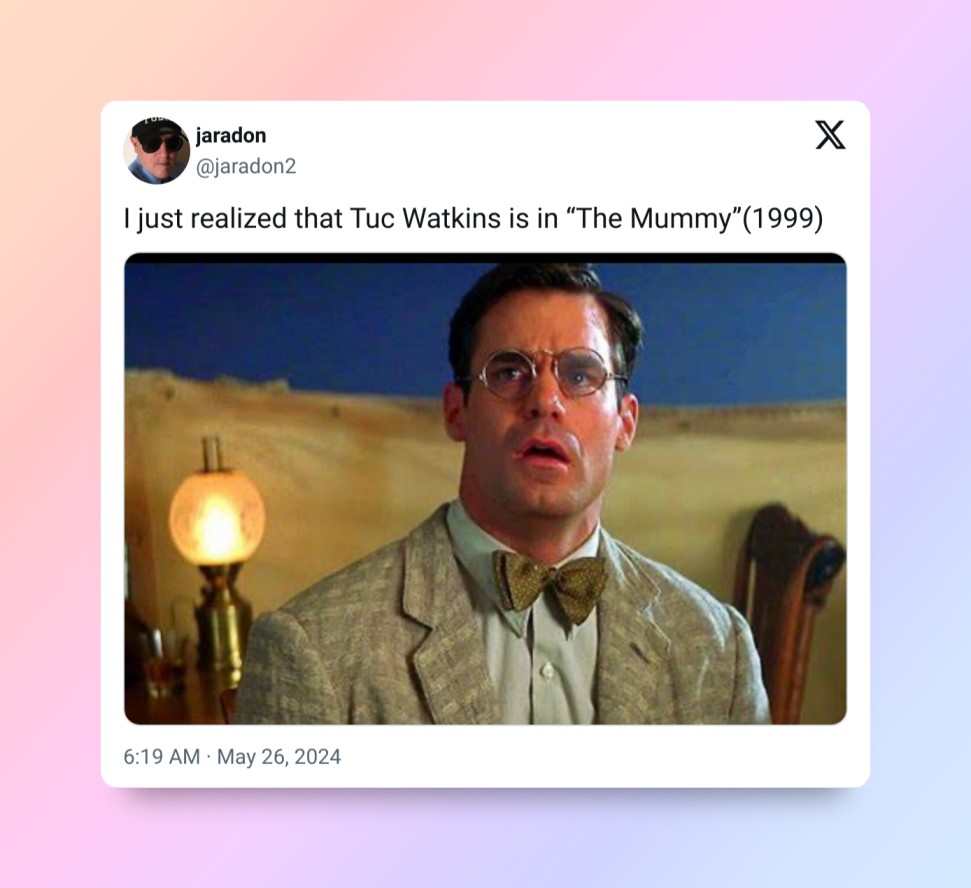
When actor Tuc Watkins sat down with his eight-year-old twins four years ago to share some of his work, he probably didn’t expect them to get a crash course in horror cinema. But there they were, watching The Mummy (1999) when his character Bernard Burns met a gruesome fate — having his eyes ripped out by an undead monster. Predictably, his children weren’t impressed. “They both, at the same time, just started bawling,” Watkins deadpans. “I was fumbling for the remote to turn it off. To this day, they still haven’t gone back to The Mummy.”
RELATED: Troye Sivan Knows Exactly How to Set the Mood–You’ll Need Vodka
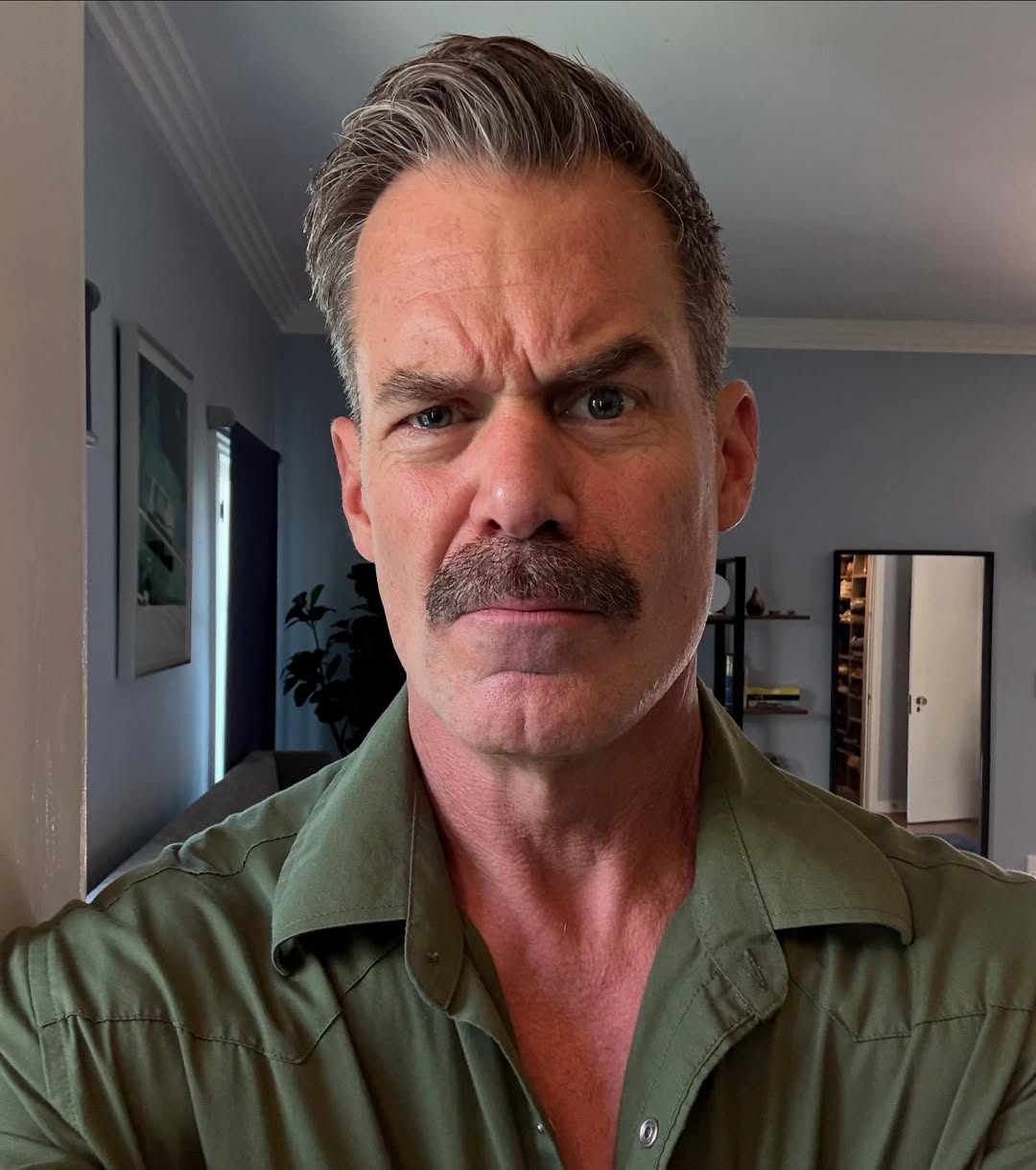
While this gruesome scene might be a far cry from family-friendly entertainment, it’s just one of many offbeat moments in Watkins’ decades-long career. A veteran actor with a career spanning soaps like One Life to Live and sitcoms like Desperate Housewives, Watkins has made a name for himself in both lighthearted roles and dramatic ones. And in a recent interview with PinkNews, he spoke candidly about his experiences in Hollywood, fatherhood, and the love story that changed everything.
RELATED: Joe Locke Says “I Felt Like an Imposter” About Heartstopper
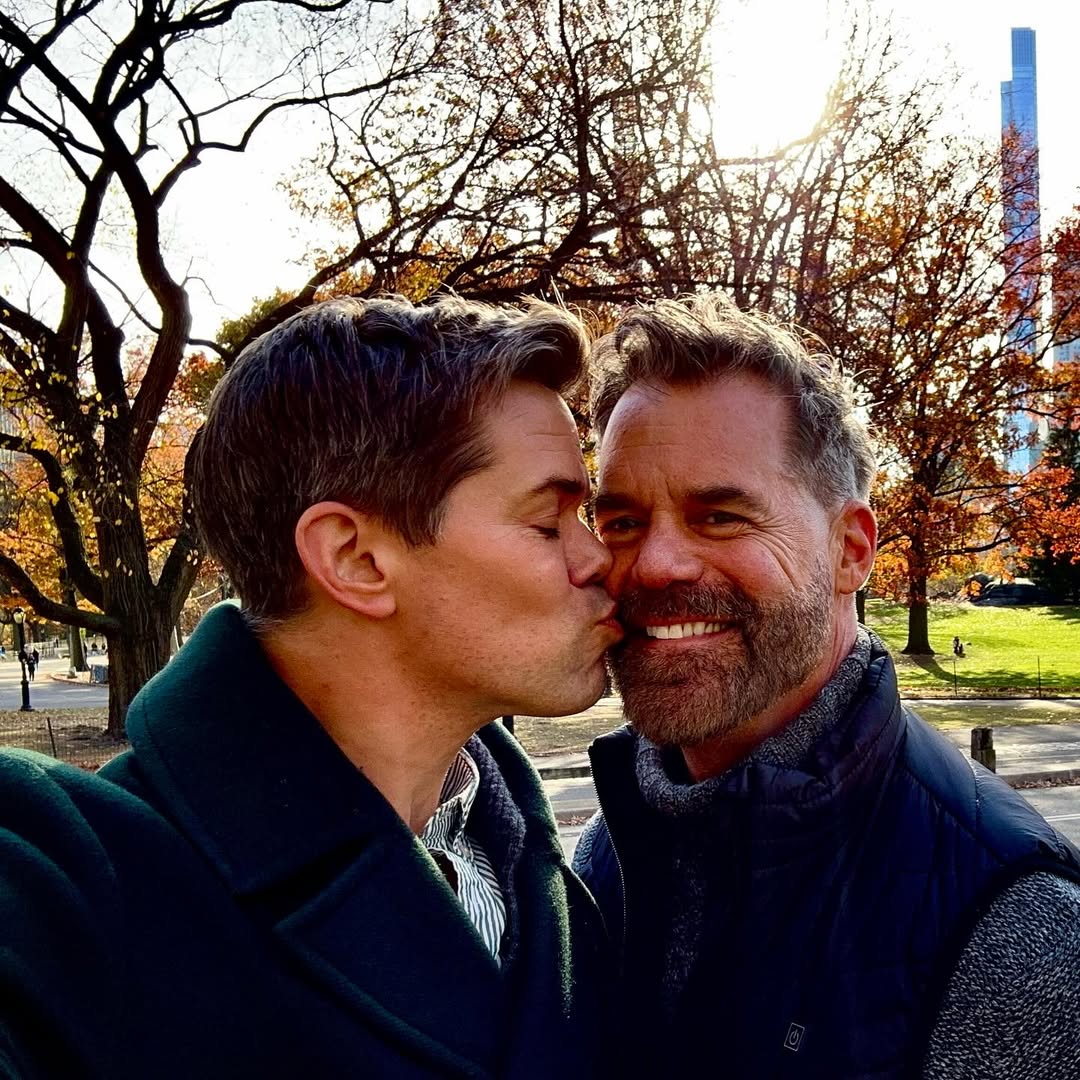
Now 59, Watkins’ journey as a father and as an openly gay actor is one of growth, exploration, and a little bit of luck. After all, not many people can say they met the love of their life while performing on Broadway — but that’s exactly what happened when he met actor Andrew Rannells in 2018 during the revival of The Boys in the Band. They played a couple in crisis onstage and quickly became a couple in real life.
“We dated briefly, before reuniting while filming the Netflix adaptation of The Boys in the Band,” Watkins recalls, smiling. “I’m really happy in my relationship. I love my partner. My kids love my partner. I feel very fortunate to be where I am right now.”
And really, who can blame him? In an industry where relationships can be fleeting and far from ordinary, Watkins has found a relationship that feels right. But his story doesn’t just end with love — it also includes a dash of reality. Before meeting Rannells, he waded through a sea of less-than-ideal dating experiences, many of which included hopelessly mismatched online dates.
“I went on the same date with eight different guys,” Watkins laughs. “A lap around Runyon Canyon in Los Angeles and a cup of coffee. None of them were the person I thought they were going to be.” But after some soul-searching and a healthy dose of patience, Watkins ended up with the kind of romance we all dream of. His story isn’t just about finding someone special; it’s about growing up and evolving both personally and professionally.
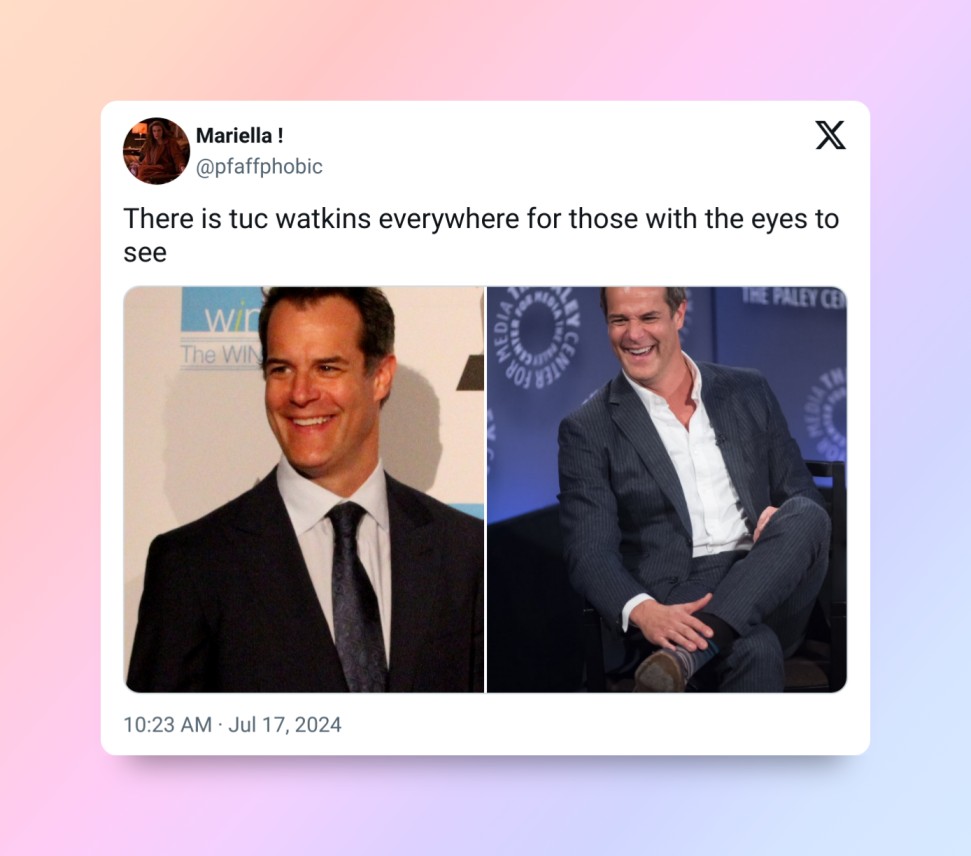
Speaking of growth, Watkins is no stranger to playing gay characters. In fact, he’s been doing it since the ’90s, long before it was fashionable (or even safe) to take on those roles. “I’ve been playing gay characters since the ‘90s when agents told you:
‘Don’t do that,’” he recalls. “Honestly, if I had been offered more straight roles that were exciting, I would have done them. A lot of the roles that I was offered were gay characters that straight people didn’t want to play.”
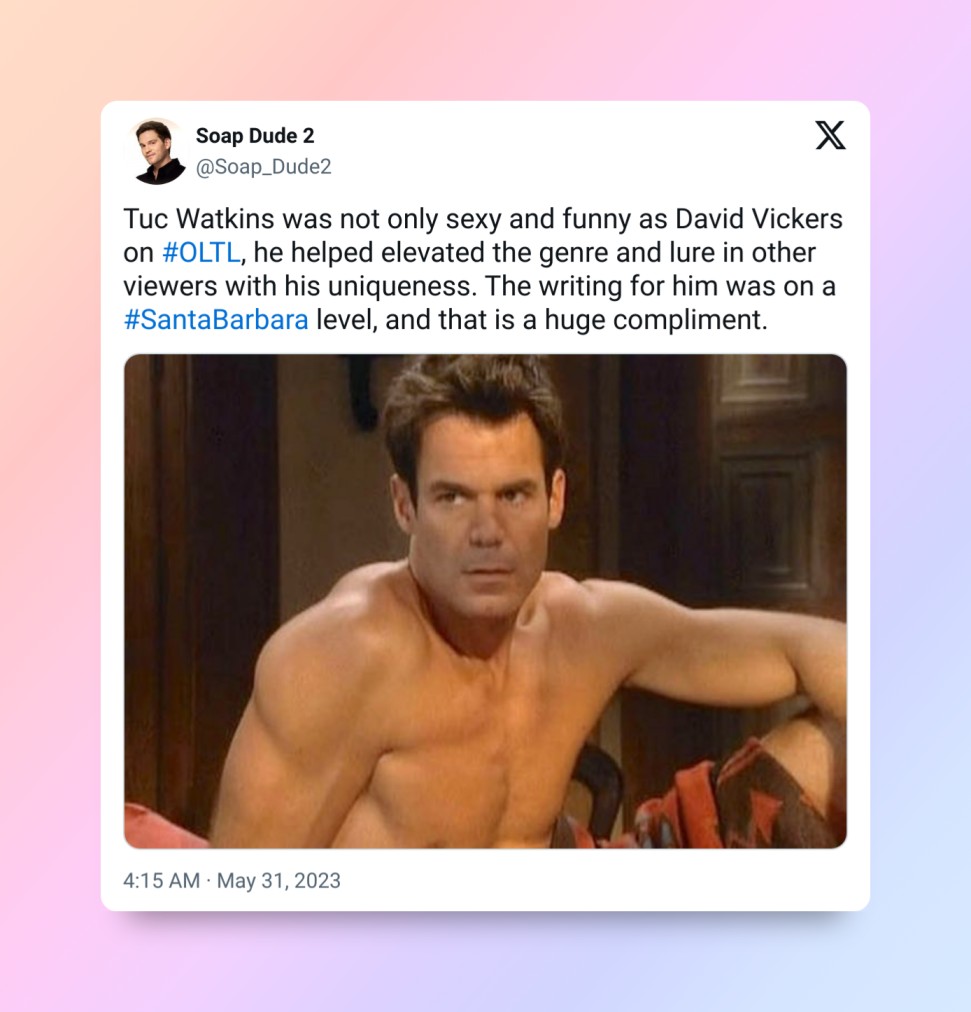
Back in those early days, many gay characters were defined by tragedy — AIDS, discrimination, and heartache. But by the time Desperate Housewives came around, the narrative had shifted. His character Bob Hunter, one half of the first openly gay couple on the show, and his husband Lee (Kevin Rahm) were, according to creator Marc Cherry, “just there.” The couple didn’t face dramatic obstacles — they were just two guys living their lives. As Cherry put it, “Not much changes when a gay couple moves into a suburban neighborhood.” Watkins was thrilled. “It just goes to show you that things don’t fall apart or your world doesn’t get shifted just because gay people happen to live around you.”
By the time Watkins joined The Boys in the Band revival in 2018, the industry had shifted significantly. The cast was stacked with openly gay actors like Jim Parsons, Matt Bomer, and Zachary Quinto, and Watkins was thrilled to see how far things had come. “It felt empowering to star alongside other out actors,” he says. “The needle had definitely been moved forward.”
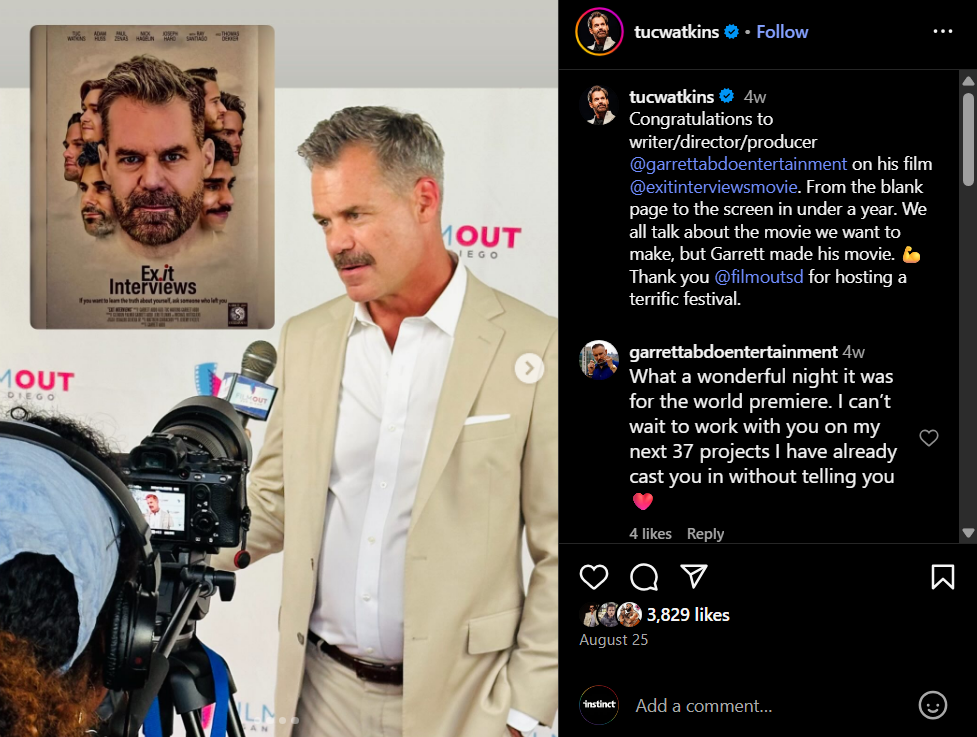
But there’s more to Watkins’ story than just professional triumphs. He’s also a devoted father. His twins, now nearing their teenage years, are a major focus of his life, and he talks openly about the challenges and joys of raising them. Watkins doesn’t shy away from tough conversations — like explaining surrogacy to his kids before they could fully grasp it, or navigating sensitive topics like sex and identity with them as they get older. He reflects on one such conversation, sharing how his daughter once told her classmates that her mom was dead to avoid explaining her complicated family structure.
“It just takes too long to explain the story, so I just tell people she’s dead,” she said. Watkins laughs. “Kids are so blunt, but I love it. It makes things easier when you lean into those moments.”
Balancing parenthood with a career in Hollywood isn’t always easy, but Watkins has learned to manage. After moving back to Kansas for support in his early days as a dad, he’s now found a rhythm that works for him. He doesn’t stress about missing work while being there for his kids. In fact, with Rannells often in the picture, and family members willing to step in, it sounds like a pretty ideal situation. “I don’t find it difficult,” he admits. “I used to have fear of: ‘I won’t be able to do this project or that project. I’m duty bound. I need to do right by my kids.’ But I found that I can do that and still entertain things that come my way.”
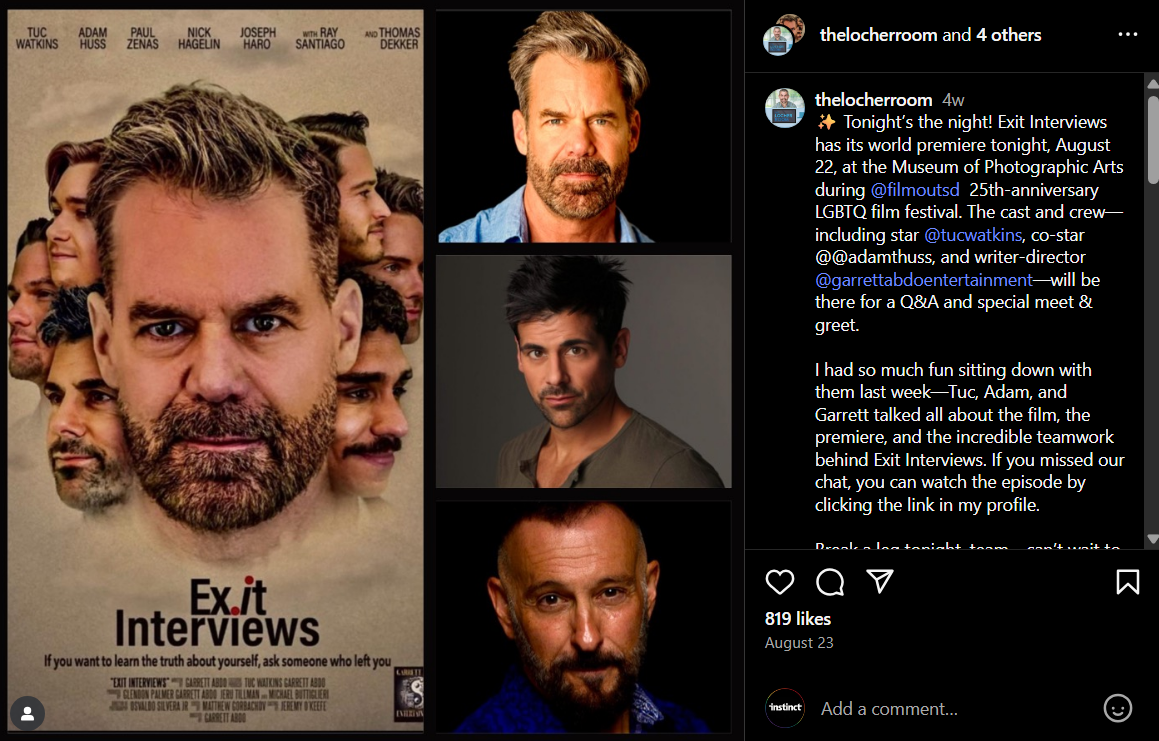
Now, as Watkins continues to land roles that challenge him (like his turn in the new film Exit Interviews, in which he plays a gay, lovelorn writer), he’s also tackling a more personal kind of transformation — one that involves embracing vulnerability. In the film, his character interviews all of his exes to gain closure, a process that Watkins confesses he would never have the courage to do in real life. “I would want to be understood rather than trying to understand,” he admits. But as the film’s narrative explores the messiness of modern relationships, Watkins is certainly no stranger to the bumps in the road.
“There’s nothing worse than an actor who has kids who encourages their children to watch their work,” Watkins jokes. But his legacy is one of honest portrayals of real, complex gay characters — ones that can both entertain and educate, and that leave audiences with more than just a happy ending.
As Watkins continues to evolve, so too does the landscape of LGBTQ+ storytelling. Yet, even with all the progress, the fight for gay rights is far from over, and Watkins knows that. “I’ve made a habit of talking about these hot topics with my kids,” he says. “I always talk to them about things like that before they can even sort of comprehend them.”
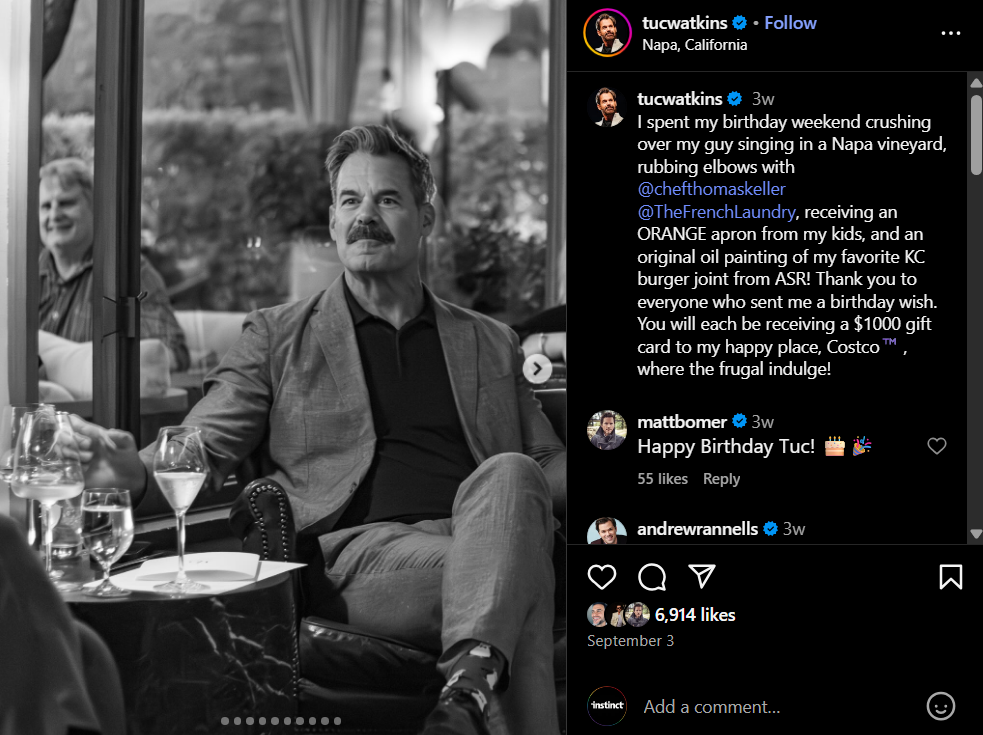
And it’s this forward-thinking attitude — both as a father and as an actor — that makes Tuc Watkins one of the most genuine, compelling figures in Hollywood today. A career that started with bloody, eye-popping monster scenes has since evolved into a rich, meaningful narrative about love, family, and the importance of staying true to oneself. We’d all be lucky to find a love story as fulfilling as his own.
Source: PinkNews