


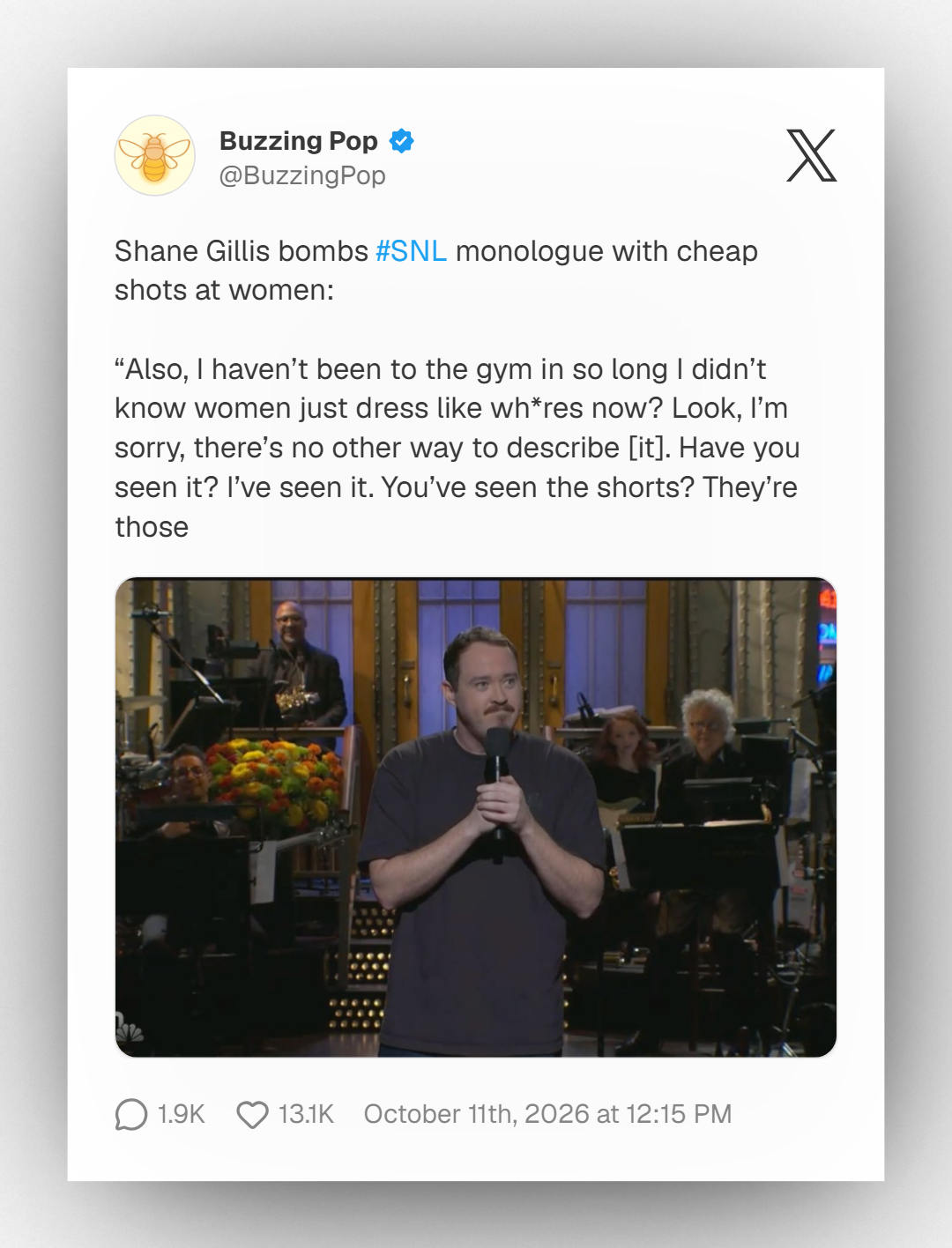
Dan Levy is calling out Shane Gillis after the comedian used his Saturday Night Live monologue to complain about women’s workout clothes, delivering a series of jokes about their appearance and accusing them of dressing like “wh*res.”
RELATED: Andrew Tate Faces Shocking Horse and Eel Pornography Allegations
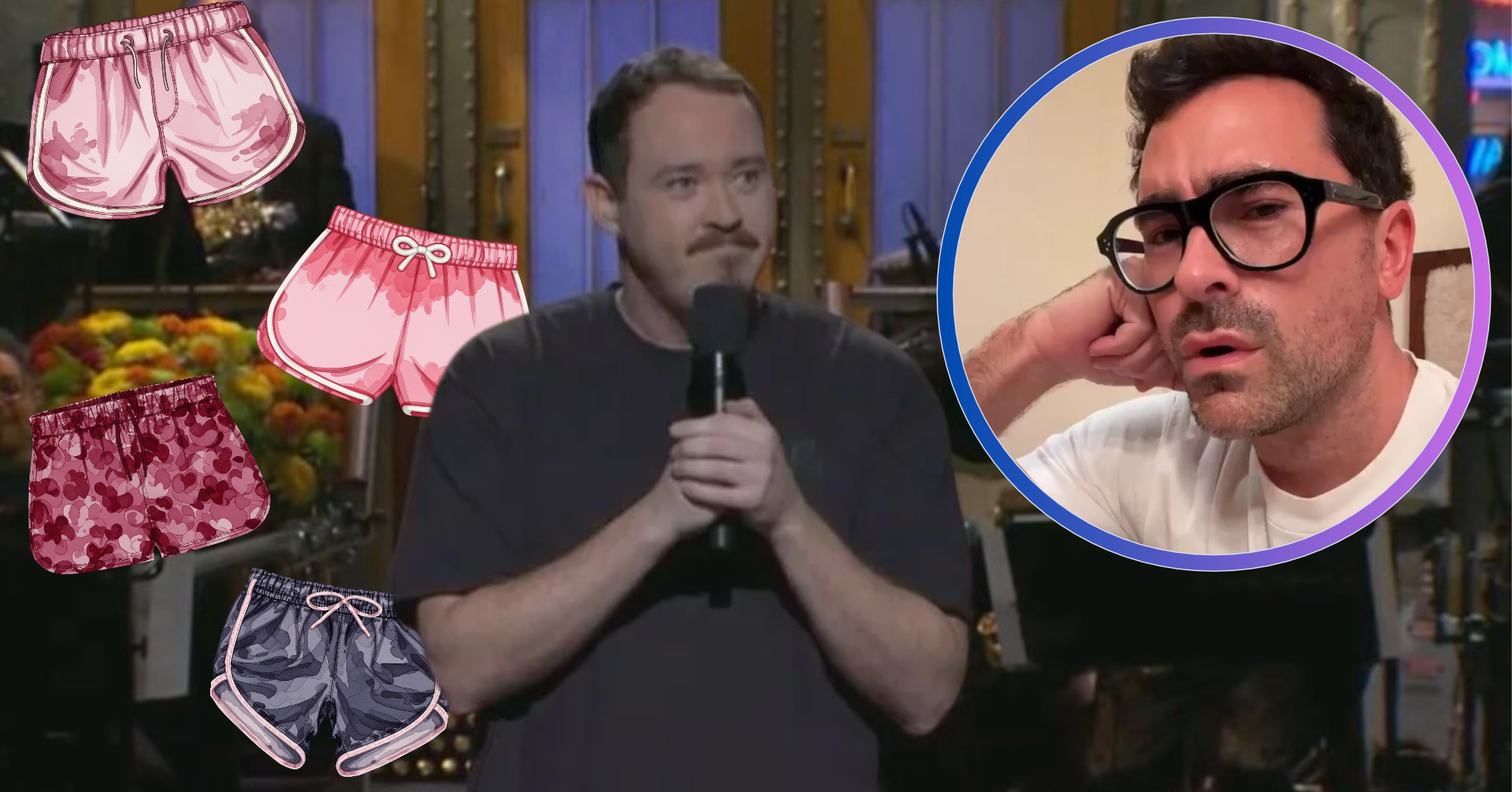
Gillis described the shorts as “neon, like, artificial vape-colored” and joked about men being told not to look at women wearing them because they might be caught in the background of TikToks. His routine turned women’s gym attire into a punchline, with the comedian framing their clothing as a problem for men who happen to be nearby.
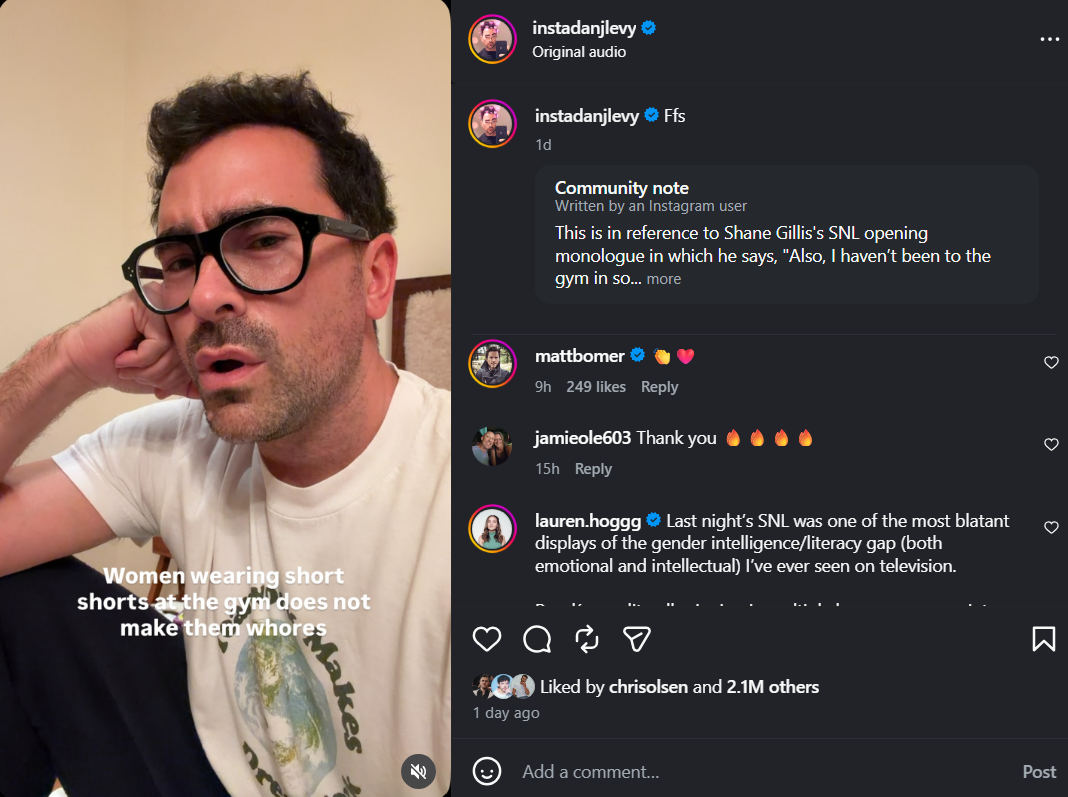
The Schitt’s Creek star wasn’t laughing. Levy took to Instagram to challenge Gillis’s remarks, arguing that women wearing short shorts doesn’t make them deserving of insults. And honestly, if a pair of workout shorts can derail a man’s entire comedy routine, perhaps the shorts aren’t the problem.
RELATED: Andrew Scott Backs ‘Heated Rivalry’ but Says Gay History Matters
Dan Levy Has a Message for the Gym Shorts Police
Gillis’s monologue took aim at women wearing neon shorts and other tight-fitting activewear, repeatedly calling them “wh*res.” Levy wasn’t having it.
Dan Levy calls on men to stand up for women following comedian Shane Gillis’ comments about them dressing like “wh*res” at the gym: “Men need to be defending women more. This is not a women’s issue, this is an everybody issue. Because the more that men objectify women in the media, the more that other men see them as objects and treat them as objects. They are not objects. They are superior human beings to men. And I’m sorry if this gets me in trouble with the internet, but f**k.”
— Buzzing Pop (@BuzzingPop) October 12, 2026
“Women wearing short shorts to the gym does not make them wh*res,” he said in a video captioned “Ffs,” adding, “It makes the men calling them wh*res, misogynists.”
It’s a refreshingly straightforward rebuttal to a familiar double standard. Women get judged for showing too much skin, showing too little skin, dressing for attention, or supposedly dressing for nobody’s attention at all. Apparently, the public has appointed itself an unpaid fashion police force, and the uniform is hypocrisy.
Levy also pointed out that men’s bodies are hardly hidden behind a universal code of modesty at the gym.
“I’ve seen more men’s nipples at the gym than I’ve ever seen women showing their bodies off,” he said.
Touché. The gym is full of people sweating, stretching, lifting, and occasionally checking their reflection between sets. Nobody needs to turn a stranger’s leggings into a referendum on her character.
And if we’re being honest, most people are too busy trying to survive their own workout to care what anyone else is wearing. The person struggling through the final set of squats probably has bigger concerns than the moral implications of somebody else’s shorts.
When the Joke Stops Being Just a Joke
Levy’s criticism wasn’t limited to whether Gillis’s material was funny. He also connected the objectification of women in entertainment to the way men perceive and treat women outside the television studio.
“Men need to be defending women more,” Levy said.
“The more that men objectify women in the media, the more that other men seem them as objects and treat them as objects. They are not objects, they are superior human beings then men.”
He also argued that the “complacency” surrounding this kind of rhetoric contributes to an environment in which women are sexually assaulted.

That’s a much bigger conversation than whether a monologue deserves a laugh track. Comedy can challenge social norms, expose absurdity, and make uncomfortable subjects easier to discuss. But when the punchline depends on shaming women for their bodies, it’s fair to ask who’s actually being exposed as ridiculous.
Levy acknowledged that his comments might get him “in trouble with the internet.” The video went on to receive almost 20 million views and counting.
The reaction makes sense. People can disagree about comedy, but a television platform doesn’t magically turn an insult into social commentary. Sometimes a joke is provocative because it reveals an uncomfortable truth. Other times, it just gives an old prejudice a microphone.
The Girls Have Entered the Chat
Levy isn’t the first person to challenge misogyny in entertainment, but he deserves credit for refusing to treat the moment as something everyone should simply laugh off.
And yes, we love a man who understands that supporting women doesn’t require a complicated instruction manual. You don’t have to be a woman to recognize a double standard, and you certainly don’t need to turn somebody else’s body into a punchline to prove you can do comedy.
For gay audiences, there’s another reason to appreciate the moment. Plenty of us know what it’s like to have other people scrutinize our bodies, clothes, or identities as though existing in public means agreeing to a running commentary. That doesn’t make every experience identical, but it does make the principle familiar: nobody owes the world a particular appearance to deserve basic respect.
Levy’s willingness to speak up is a reminder that allyship isn’t just about posting the right message when everyone agrees. Sometimes it means calling out a joke when a big television stage is telling the audience it’s perfectly acceptable.
As for Saturday Night Live, the question isn’t whether every comedian should play it safe. It’s whether the show wants to keep giving stale stereotypes prime-time real estate when there’s so much better comedy to be made.

Women can wear the shorts. Men can wear the shorts. Everyone can wear whatever gets them through leg day.
And if somebody still can’t handle it, perhaps the next SNL monologue should be about the shocking social consequences of minding your own business. Now that might be a fresh bit.