


Dolly Parton had plenty of famous friends, but one of the most meaningful names in her orbit belonged to a man the tabloids once tried to turn into a scandal.
RELATED: Dolly Parton Dies at 80: Remembering a True LGBTQ+ Icon and Ally
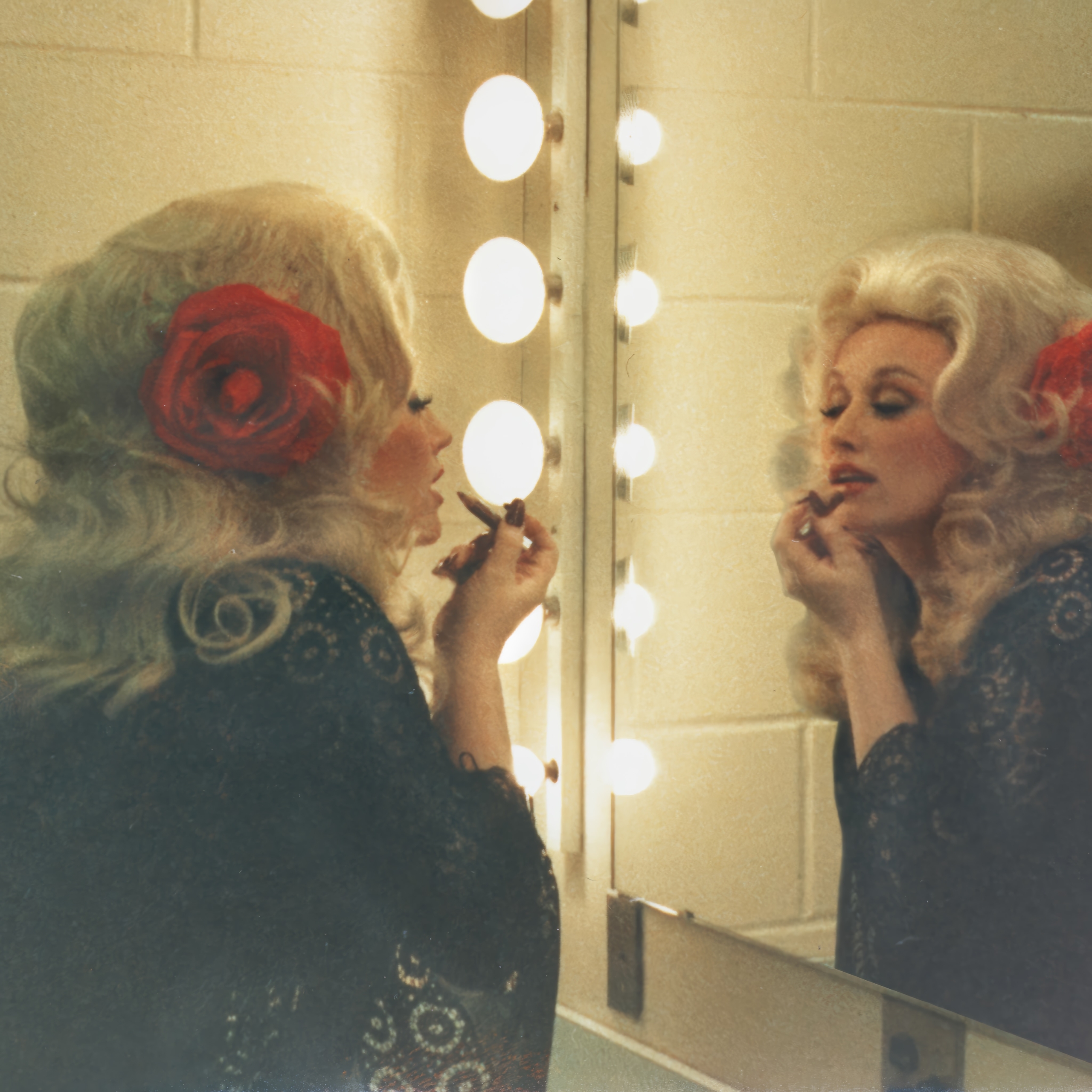
His name was Jason Pirro, a transgender man who worked with Parton for more than three decades, first as her chauffeur and later in a personal-assistant role. Long before corporations discovered rainbow logos and celebrities learned how to say “ally” without looking terrified, Parton simply knew Pirro was trans — and kept calling him.
Honestly, that may be the most Dolly Parton thing imaginable.
RELATED: Texas Drag Ban Is Struck Down Again
As LGBTQ+ fans continue mourning Parton following her death at 80, Pirro’s story has resurfaced as another piece of her long relationship with the queer community.
When a tabloid tried to make Jason Pirro a scandal
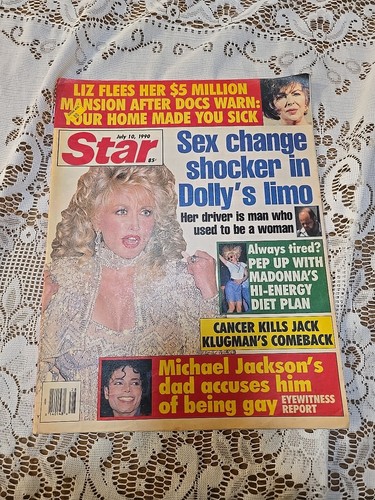
The public got a glimpse of Pirro’s connection to Parton in 1990, when the tabloid Star published a story about him. The language was, to put it generously, extremely 1990. A surviving cover described the story as “Sex change shocker in Dolly’s limo,” with a subheadline identifying Parton’s driver as “a man who used to be a woman.”
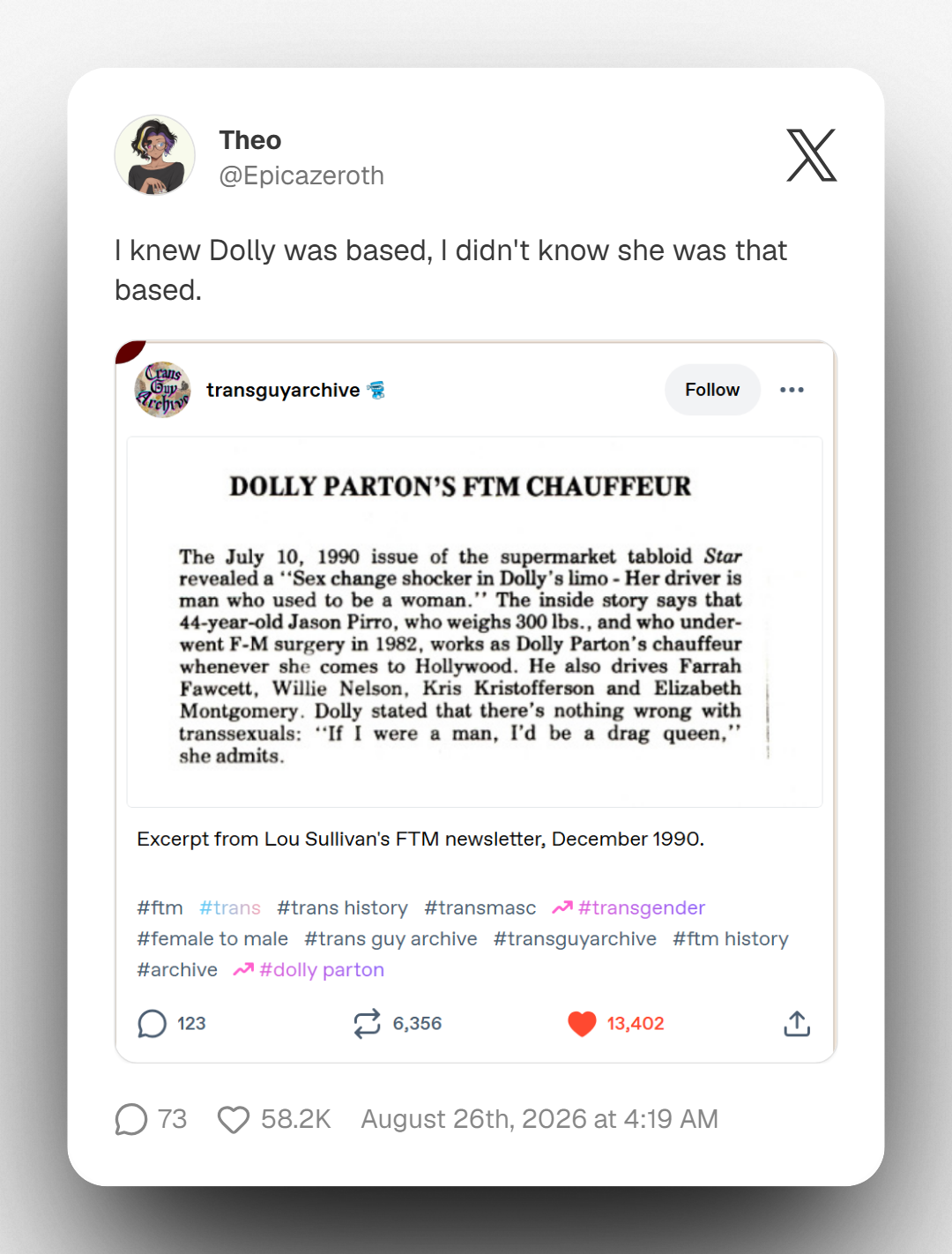
Today, the headline reads less like journalism and more like a historical artifact from an era when simply existing as a trans person could apparently qualify as breaking news. But Pirro’s own words told a very different story.
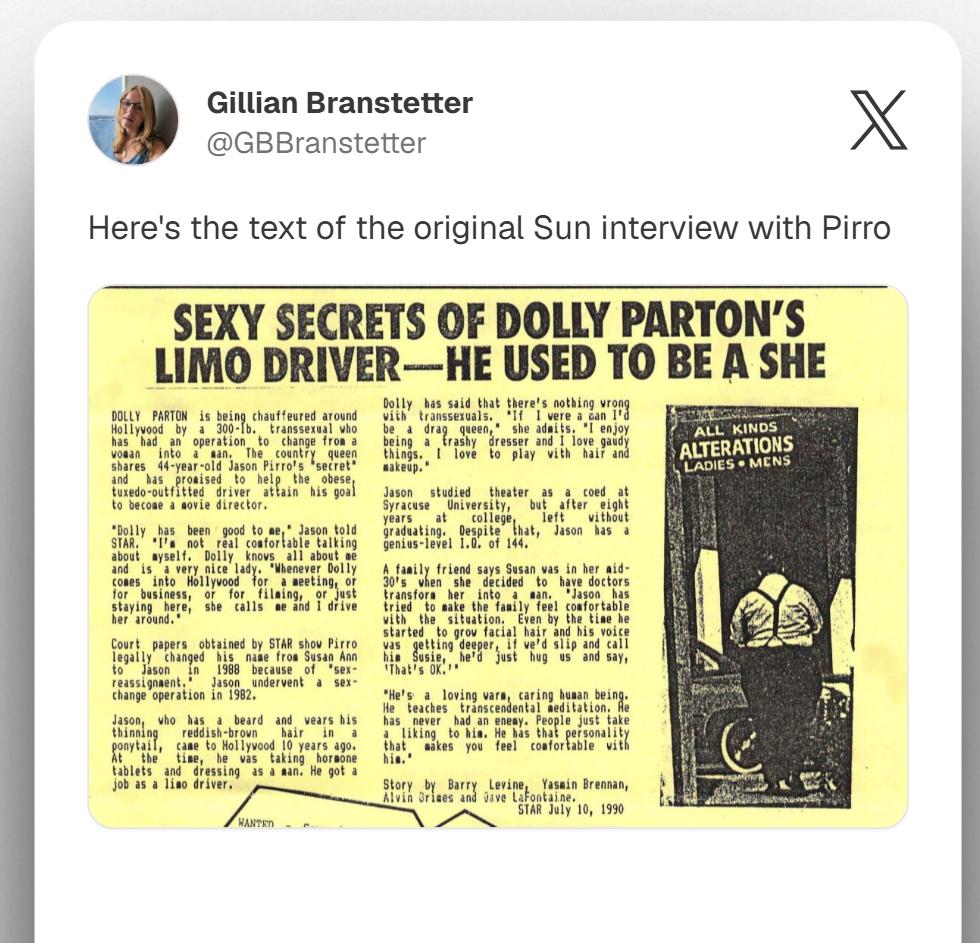
“Dolly has been good to me,” Pirro told Star at the time. “Dolly knows all about me and is a very nice lady. Whenever Dolly comes into Hollywood for a meeting, or for business, or for filming, or just staying here, she calls me and I drive her around.”
The interview was subsequently highlighted by Twenty Minutes, a transgender newsletter from the era, preserving Pirro’s account of his relationship with Parton. The Digital Transgender Archive still houses the newsletter today.
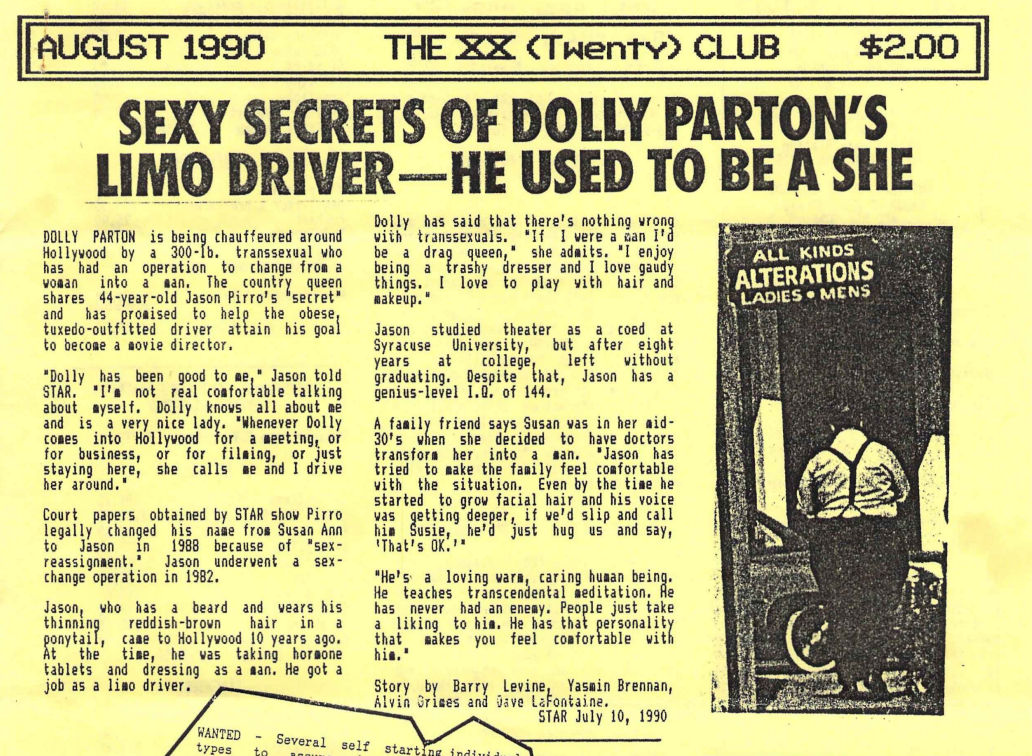
And that distinction matters. The tabloid wanted a “shocker.” Pirro described a boss and friend who knew who he was and treated him well.
Dolly didn’t just hire him. She remembered him.
The relationship could easily have disappeared into the enormous archive of people who pass through a celebrity’s life. It didn’t.
Parton mentioned Pirro by name several times in her 1994 memoir, Dolly: My Life and Other Unfinished Business. She included him among the people receiving her special thanks and brought him up again while answering a question about transgender people and gender-affirming surgery.
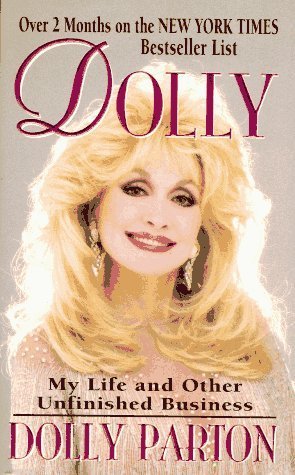
“Well, I’ve always said that if I hadn’t been a woman, I would have been a drag queen,” she said.
Then came the part that now feels especially poignant:
“All I know about sex-change operations I’ve learned from my good friend Jason…”
Not “my former employee Jason.” Not “that driver from years ago.”
My good friend Jason.
That wording is doing a lot of work.
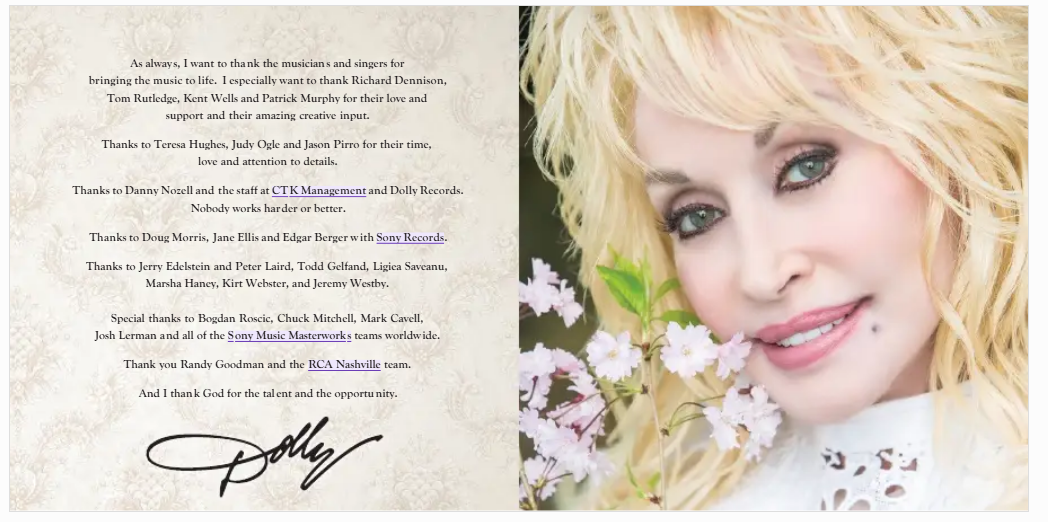
Pirro’s name surfaced again decades later. Parton thanked him in the liner notes of her 2016 album Pure & Simple for his “time, love, and attention to details.” He also contributed to Parton’s 2023 book Behind the Seams, a celebration of her career and famously extravagant wardrobe.
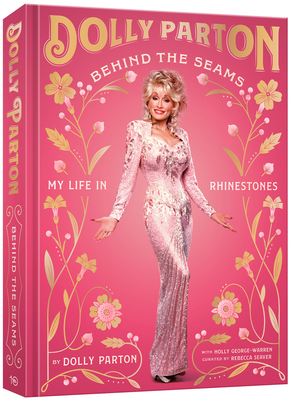
Three decades is a long time to keep someone in your life. It is an even longer time to keep publicly acknowledging them.
Dolly’s philosophy was basically: Let people live, darling.
Pirro’s story also fits into something much bigger about Parton’s approach to LGBTQ+ people. She was rarely interested in turning acceptance into a graduate thesis. Her politics could be frustratingly broad and folksy, but when it came to people she loved, Parton repeatedly returned to the same basic principle: treat them like human beings.
When North Carolina’s controversial bathroom bill became a national flashpoint in 2016, Parton was asked about transgender people and where they should be allowed to use the bathroom.
“I think everybody should be treated with respect. I hope that everybody gets a chance to be who and what they are,” she said at the time. “I just know if I have to pee, I’m gonna pee. I don’t care where it’s going to be.”
It is difficult to imagine a more Dolly answer.
The bathroom debate had become a political battlefield. Dolly essentially responded: “I have to pee, you have to pee, let’s not make this weird.”
Years later, as Tennessee moved against transgender people, Parton again emphasized the people around her rather than the political theater.
“Well, what I always say, ‘I just want everybody to be treated good,’” she told The Hollywood Reporter. “I try not to get into the politics of everything. I try to get into the human element of it. I have some of everybody in my own immediate family and in my circle of employees. I’ve got transgender people. I’ve got gays. I’ve got lesbians. I’ve got drunks. I’ve got drug addicts — all within my own family. I know and love them all, and I do not judge.”
There is something wonderfully chaotic about that list. Trans people. Gay people. Lesbians. Drunks. Drug addicts.
Dolly basically said: “I have the full extended family package, and none of you are getting kicked out.”
Jason Pirro never had to become “the trans employee”
One of the most striking things about Pirro’s story is what apparently didn’t happen. He didn’t become a public spokesperson for Parton. He didn’t spend the next 30 years explaining his transition in interviews. He wasn’t turned into a marketing campaign about how progressive his employer was.
He worked. He drove Dolly around Hollywood. He remained part of her professional life. And, apparently, he remained her friend. Them reported that it reached out to Pirro for comment but had not heard back. That absence feels important.
For decades, trans people have been asked to educate everyone else about their existence, defend their identities, explain their bodies and patiently answer questions that would make most cis people sprint out of the room.
Pirro’s surviving comments don’t suggest that he wanted to become a spokesperson. They suggest something much simpler: he wanted to live his life. And Dolly let him.
The Dolly Parton legacy is bigger than rhinestones
Parton’s death has understandably sent fans back through her career looking for the moments that explain why she became such a beloved figure among LGBTQ+ people. Her campy glamour, enormous hair, unabashed femininity and refusal to take herself too seriously certainly helped. But Jason Pirro offers something more intimate. It is one thing for a celebrity to make a supportive statement.
It is another thing to know a transgender person personally, employ him in 1990, remain close to him for decades, mention him by name in your memoir, thank him publicly years later and continue working with him into the 2020s. That is not a rainbow-themed photo opportunity. That is a relationship.
And perhaps that is why Pirro’s story feels particularly moving now. At a time when trans people are constantly being treated as political arguments, his history with Parton reminds us of something considerably less complicated.
He was a person. Dolly knew him. Dolly liked him. Dolly trusted him. And for more than 30 years, she kept him in her life.
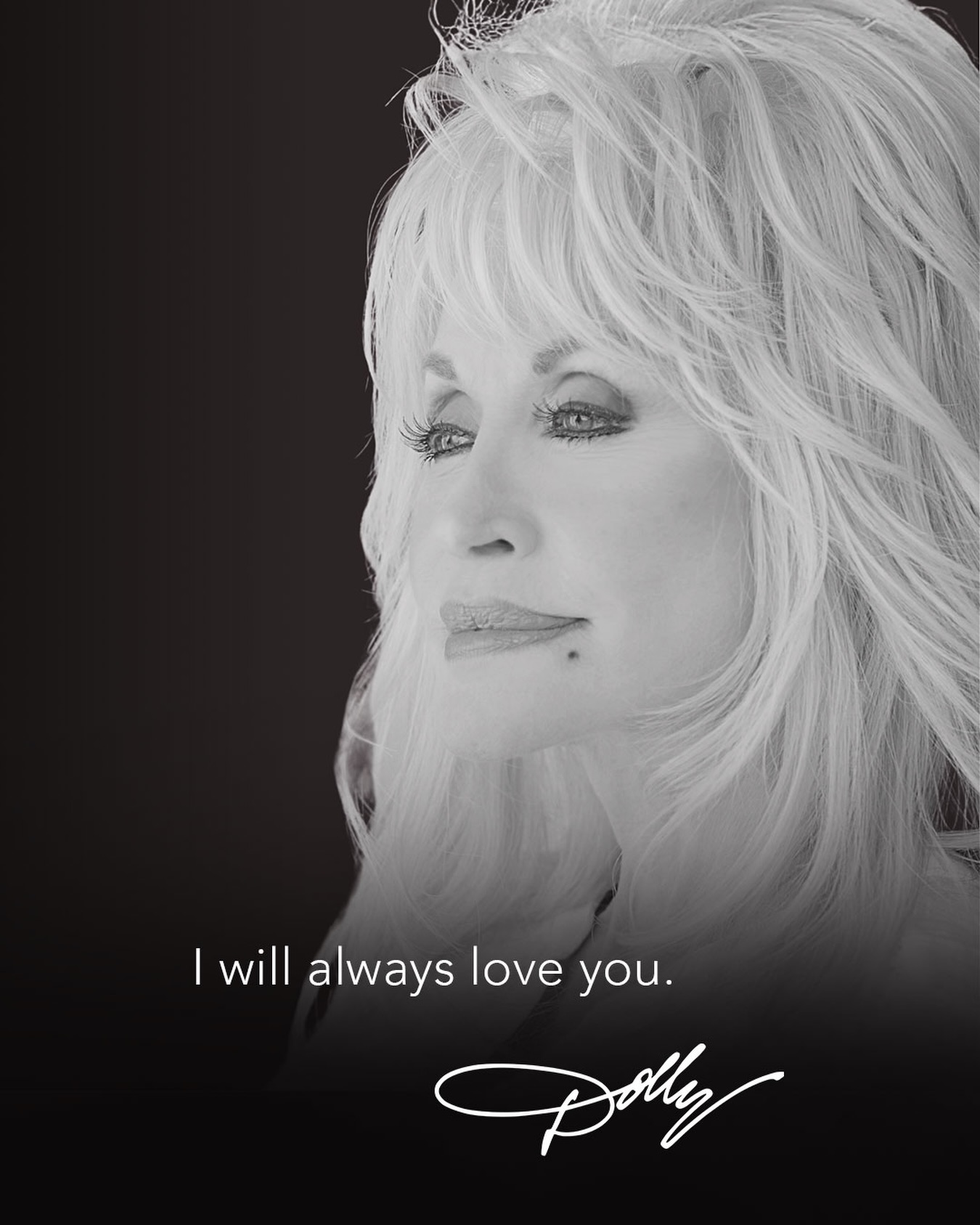
For a woman who spent her career singing about love, heartbreak, survival and finding your people, that might be one of the most fitting pieces of her legacy of all.
Source: Them and Socialite Life