


For decades, the standard gay bars entry process has been beautifully simple: show your ID, get a wristband, immediately spot someone you had a crush on in 2019, and proceed to make questionable decisions on the dance floor.
RELATED: Need to Use the Bathroom? Idaho’s Anti-Trans Bathroom Law Explained
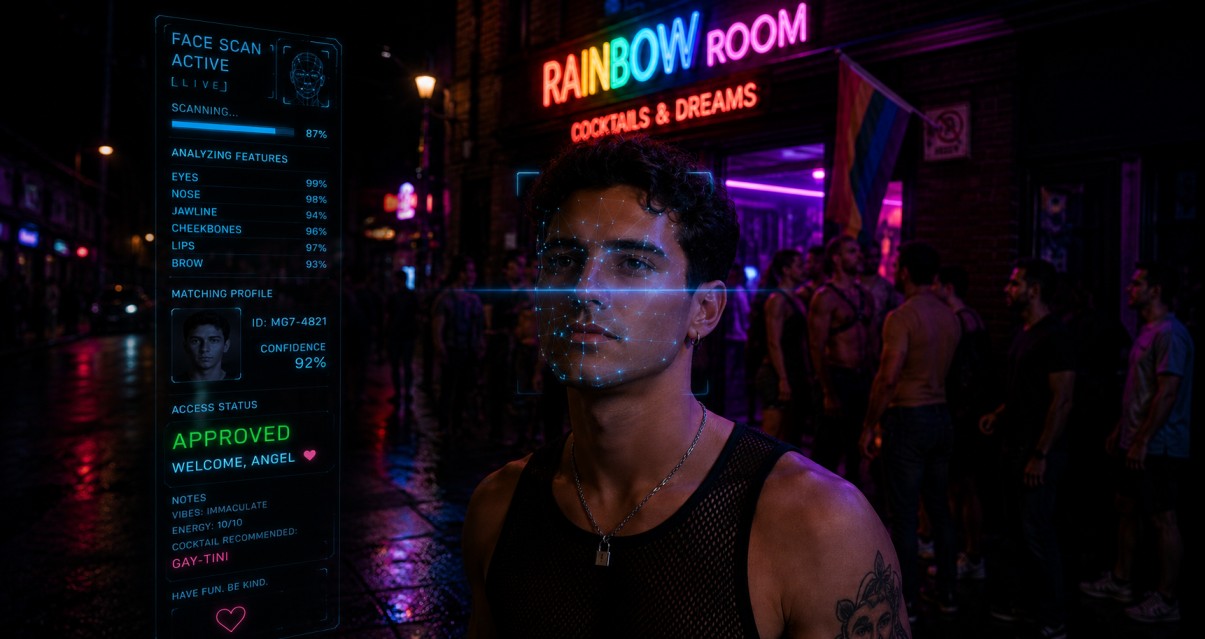
Now? Some bars apparently want your face too. And not in the flattering “the bartender remembers my drink order” kind of way.
Patrons in San Francisco’s Castro district are discovering that getting into certain gay bars may involve facial scanning technology that feels less nightlife and more airport security with a vodka soda. Naturally, people have questions.
You’re Just Trying to Order a Drink, Not Join a Database
According to reporting by San Francisco Gazeteer, several Castro bars, including Mix, Badlands, and Toad Hall, have implemented facial scanning technology from a company called PatronScan.
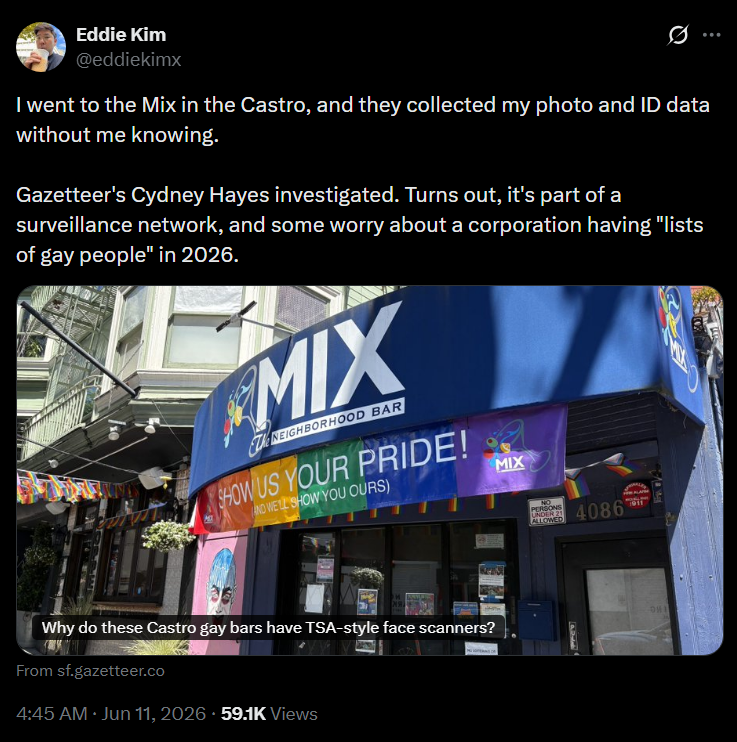
The system reportedly appeared at Mix following a violent incident involving an angry patron last year. One Reddit user claimed the episode led to the adoption of The Guard+, a product marketed as a way to identify fake IDs and keep tabs on disruptive guests. Reasonable enough, right?
RELATED: The Pentagon’s “Gay Bomb”: History’s Most Expensive Shower Thought
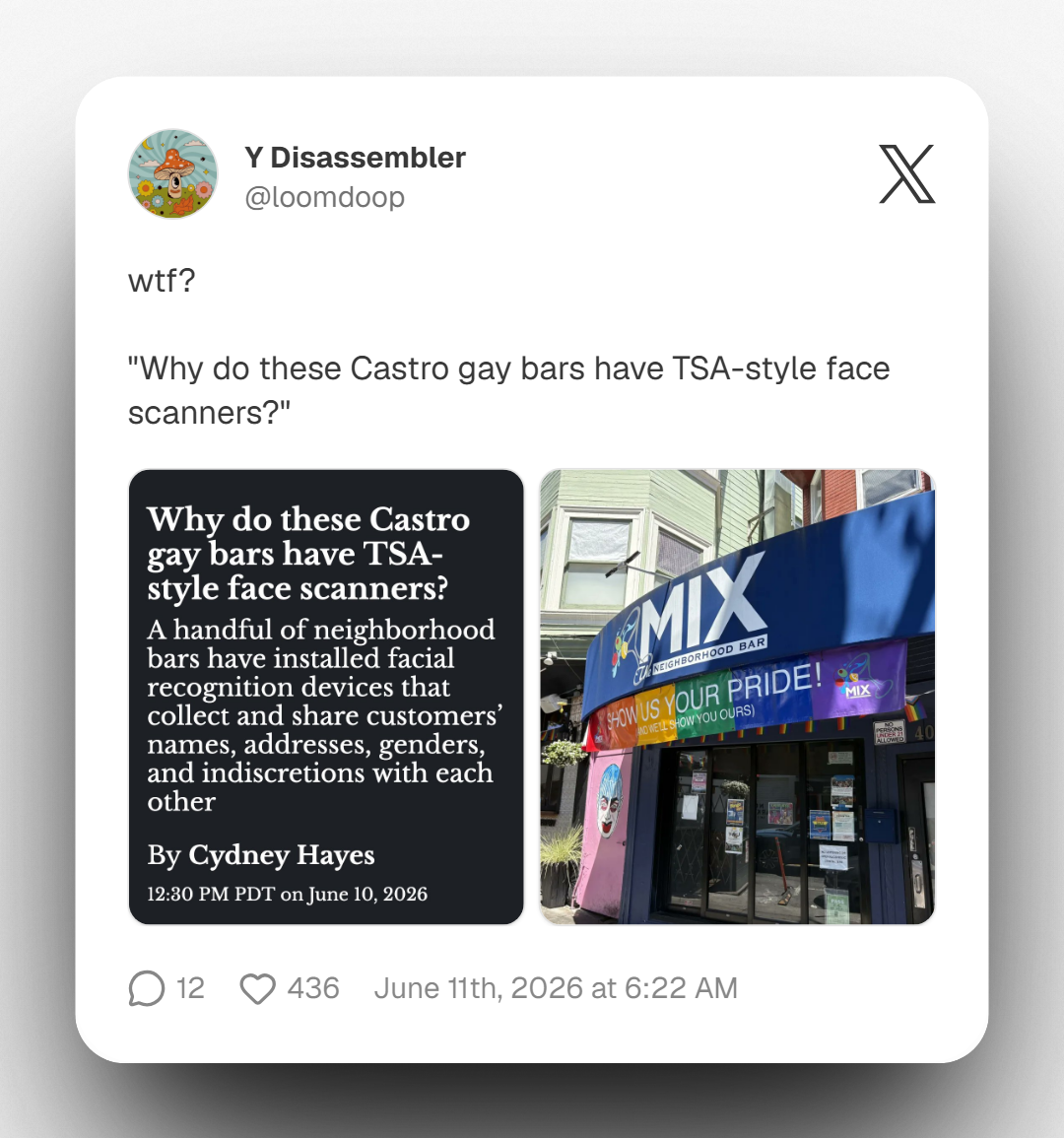
Why do these Castro gay bars have TSA-style face scanners?
byu/eddiekimx insanfrancisco
Well, here’s where things take a sharp turn into Black Mirror territory. The scanners reportedly collect information including names, addresses, genders, and even details about how patrons behave inside the venue. That information can then be shared across a network of connected systems operating in nearby bars.
In theory, the goal is to help venues identify people who have caused problems elsewhere. In practice, plenty of customers are learning that a casual night out could involve being logged into a system they didn’t know existed.
According to the report, the information is allegedly deleted after 30 days unless someone displays what the company considers “bad behavior.” If that happens, the data remains in the database.
Which raises a very important question: What exactly qualifies as bad behavior in a gay bar?
Starting drama in the bathroom line? Fine. Throwing a drink? Sure. Singing every word of a breakup anthem while making intense eye contact with your ex? That’s cultural expression.
The Vibes Get Worse the More You Read About What’s Happening in These Bars
The discovery has unsettled many patrons for one simple reason: gay bars aren’t just bars. They’re social spaces. Community spaces. Sometimes they’re dating apps with better lighting. For generations, they’ve also offered something increasingly rare: a place where LGBTQ+ people can gather without feeling like they’re being monitored.
According to San Francisco Gazeteer, many patrons would only discover the extent of the data collection if they stopped to read the fine print displayed near the scanning kiosks.
And the company behind the technology isn’t exactly free from controversy. PatronScan has reportedly faced several legal battles over what critics describe as an invasive surveillance model. One class-action lawsuit even referred to the technology as “Orwellian.” You know things have gotten weird when the phrase “Orwellian facial recognition system” enters the same conversation as drag brunch.
Nobody Wants a List of Gay People
The concern becomes even more complicated because we’re talking about LGBTQ+ venues.
“It’s really not great to have lists of gay people,” one interviewee noted.
Hard to argue with that.
The line lands with particular force at a moment when LGBTQ+ rights are increasingly under political attack across the globe. A database containing information about queer patrons may sound harmless when everything is functioning normally. History has repeatedly shown that “normally” can change pretty fast.
One particularly surprising detail is that Mix itself is gay-owned, which has left some patrons wondering whether the security benefits are worth the privacy risks. And to be fair, bar owners aren’t trying to cast the next season of Big Brother. Fake IDs, aggressive customers, and safety concerns are real issues. A technological solution may seem more effective than relying entirely on staff and bouncers. But plenty of people are asking whether the cure is becoming creepier than the disease.
What Happens When Surveillance Comes to Happy Hour?
Even many straight people get uncomfortable when they hear that bars are scanning faces and building databases. For LGBTQ+ communities, the concern runs deeper.
Just last year, facial recognition technology became a flashpoint in the debate surrounding Budapest Pride, raising fears that attendees could be identified, outed, and penalized for doing something that should be completely unremarkable: attending Pride.
That’s obviously a far more extreme scenario than what’s currently happening in San Francisco. But it’s also a reminder that surveillance technology has a habit of expanding beyond its original purpose. Today it’s being sold as a security feature. Tomorrow? Who knows.
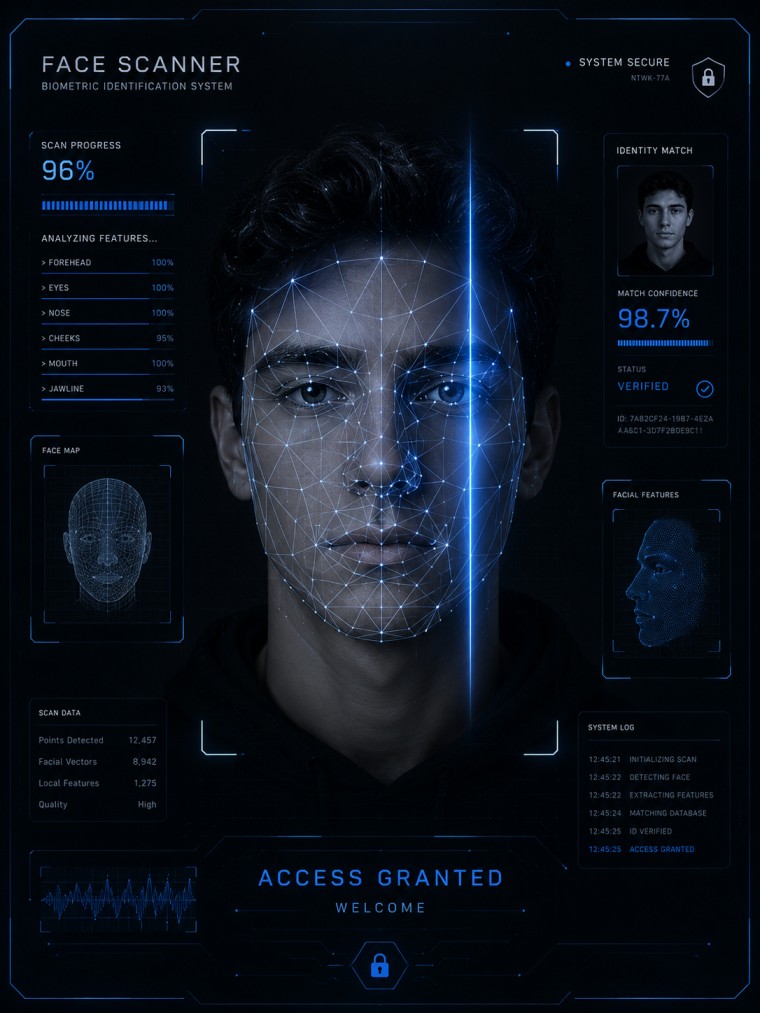
That’s why so many patrons are looking at these scanners and asking a perfectly reasonable question: When did getting into a gay bar start feeling like you’re applying for security clearance?
Because most people showed up hoping for a cocktail, a dance floor, and maybe a little harmless flirting. Not a facial recognition profile.
I’d skip a bar or club gay or straight that does this. And if they are doing so without informing you there is a HUGE lawsuit waiting to happen.
I don’t even like them scanning my ID, so I will absolutely avoid any bars with this type of scanner. Bars have always been able to identify problem customers and keep them out without scanning everyone who comes through the door. The only way to put a stop to this — and prevent the spread — is for bar patrons to stop patronizing these bars until the scanners are removed.
If a bar needs that kind of security system then maybe it isn’t a bar that you want to go to.
But really, who doesn’t think that data is being sold to other companies to form better profile for more targeted algorithms? I hate living in the worst timeline.