


Virginia is making marriage equality harder to take away, while the U.S. Supreme Court is considering whether religious schools should be allowed to participate in publicly funded education programs while refusing to enroll children from LGBTQ+ families.
RELATED: Chris Pappas Wins Senate Race. His Husband Gets the Sweetest Shoutout
America is having one of those moments when you genuinely have to ask whether everyone’s living in the same country. In Virginia, voters have decided that marriage equality deserves a permanent place in the state’s constitution. Meanwhile, the U.S. Supreme Court is considering whether religious schools should be allowed to participate in publicly funded education programs while refusing to enroll children from LGBTQ+ families.
So, one side is making room for LGBTQ+ families. The other is debating whether those same families should be welcome in classrooms receiving public support. What a contrast.
Virginia’s election result is a welcome reminder that progress is possible, even when the political climate makes it feel like every right needs its own legal defense team. But the Supreme Court case is an uncomfortable reminder that being legally recognized doesn’t necessarily mean being welcomed everywhere.
Virginia Isn’t Leaving Marriage Equality to Chance
Let’s start with the good news, because gay people could certainly use some.
RELATED: Taiwan Mayor Shows Up for Pride, but the Crowd Has Other Plans

Virginia voters approved a constitutional amendment removing the state’s dormant ban on same-sex marriage and affirming that two adults can marry regardless of sex, gender, or race. Approximately 56% of voters supported the measure, according to unofficial election results.
Yes, same-sex marriage has been legal nationwide since the Supreme Court’s 2015 ruling in Obergefell v. Hodges. But Virginia’s constitution still contained language prohibiting it. That contradiction was allowed to linger for years, and lawmakers wanted it gone.
The push gained urgency after the Supreme Court overturned Roe v. Wade in 2022. That decision demonstrated how quickly established federal protections could disappear, prompting concerns about whether marriage equality might eventually face a similar challenge.
Virginia has now taken steps to put its support for marriage equality directly into its own constitution. The amendment is scheduled to take effect January 1, 2027, following completion of the election process.
Narissa Rahaman, executive director of Equality Virginia, celebrated the result by recognizing the generations of people who fought to make it happen.
“Tonight’s victory belongs to generations of Virginians who organized, advocated and fought for equality, often without knowing whether they would live to see this day,” Rahaman said.
And this wasn’t the only significant decision on the ballot. Voters also approved constitutional protections for reproductive rights and automatic restoration of voting rights for people with felony convictions who have completed their sentences.
There is, however, one complication. Conservative advocates have already launched a legal challenge against the marriage amendment, meaning the celebration may eventually have to continue in court.
Still, Virginia voters have made their position clear. Marriage equality belongs in the state’s constitution, not in some political waiting room.
Meanwhile, the Supreme Court Is Entertaining a Very Different Idea of Inclusion
Now for the less celebratory part.
The Supreme Court heard arguments in St. Mary Catholic Parish v. Roy, a case involving Catholic preschools seeking access to Colorado’s publicly funded universal preschool program.
The schools want to participate in the program and receive public funding without having to follow its nondiscrimination requirements. Those rules prohibit participating institutions from excluding children based on characteristics including sexual orientation and gender identity.
At issue is whether religious schools can receive the same public benefits as other providers while maintaining admissions policies that require families to agree with Catholic teachings on marriage, sexuality, and gender.
The case has drawn support from the Trump administration, which is arguing that Colorado’s requirements violate the schools’ religious freedom.
And judging by Tuesday’s arguments, the conservative justices appear receptive to their claims.
Justice Brett Kavanaugh questioned why Colorado couldn’t find a compromise that would allow religious schools to participate while respecting their beliefs. He even described the dispute as a “would-be solution in search of a problem.”
But Justice Sonia Sotomayor wasn’t buying the argument that a child’s presence could somehow justify exclusion.
“What you’re basically saying is, ‘We can exclude people merely because the exposure to them would cause us harm’ — that’s really what you’re saying,” Sotomayor told the Trump administration’s attorney, Sarah Harris.
Harris argued that the schools were exercising their religious beliefs by requiring parents to agree with their teachings.
The distinction matters because Colorado isn’t banning religious schools from participating simply because they are religious. The state says any provider accepting public funding must follow the same enrollment protections.
And that’s where the question gets particularly uncomfortable: If a school wants access to taxpayer money, should it also be able to decide that certain children and families don’t qualify for equal treatment?
When Does Religious Freedom Become Someone Else’s Problem?
This isn’t the first time the Supreme Court has found itself navigating the collision between religious freedom and LGBTQ+ equality.
The conservative majority has repeatedly expanded religious institutions’ access to public education funding. Its 2022 ruling involving Maine, for instance, prevented the state from excluding religious schools from a tuition assistance program simply because they provided religious instruction.
Colorado’s nondiscrimination requirements are now being challenged against that legal backdrop.
The conservative justices appeared concerned that states could use such requirements to push religious institutions out of public funding programs.
Justice Amy Coney Barrett questioned whether states could effectively exclude schools with opposing religious beliefs by imposing requirements they knew those institutions couldn’t accept.
The liberal justices, meanwhile, seemed particularly concerned about where the court might draw the line if it sides with the religious schools.
Justice Elena Kagan raised the possibility that similar arguments could eventually be used to challenge the presence of gay and transgender students in public school classrooms.
“It’s going to be pretty easy for religious groups or religious individuals to come forward and say this would be a substantial burden on my religious beliefs,” Kagan said. “With respect to public schools alone, these inquiries could go on forever.”
That’s a pretty significant concern. The dispute might involve Catholic preschools today, but the implications could extend much further if religious objections become grounds for exemptions from generally applicable nondiscrimination protections.
The court’s history with Colorado also attracted attention. Justice Samuel Alito brought up previous disputes involving the state’s conversion therapy ban and the case of a baker who refused to make a wedding cake for a same-sex couple.
Colorado’s attorney, Helen Norton, pushed back against suggestions that the state was targeting religious institutions, arguing that there was no religious hostility behind its preschool policy.
A final decision is expected by the end of June 2027.
Gay Families Shouldn’t Have to Keep Proving They Belong
Here’s the uncomfortable irony in all of this: Marriage equality recognizes that same-sex couples and their families deserve the same legal dignity as everyone else. Yet the Supreme Court is now considering whether religious schools can receive public funding while maintaining admissions policies that exclude their children.
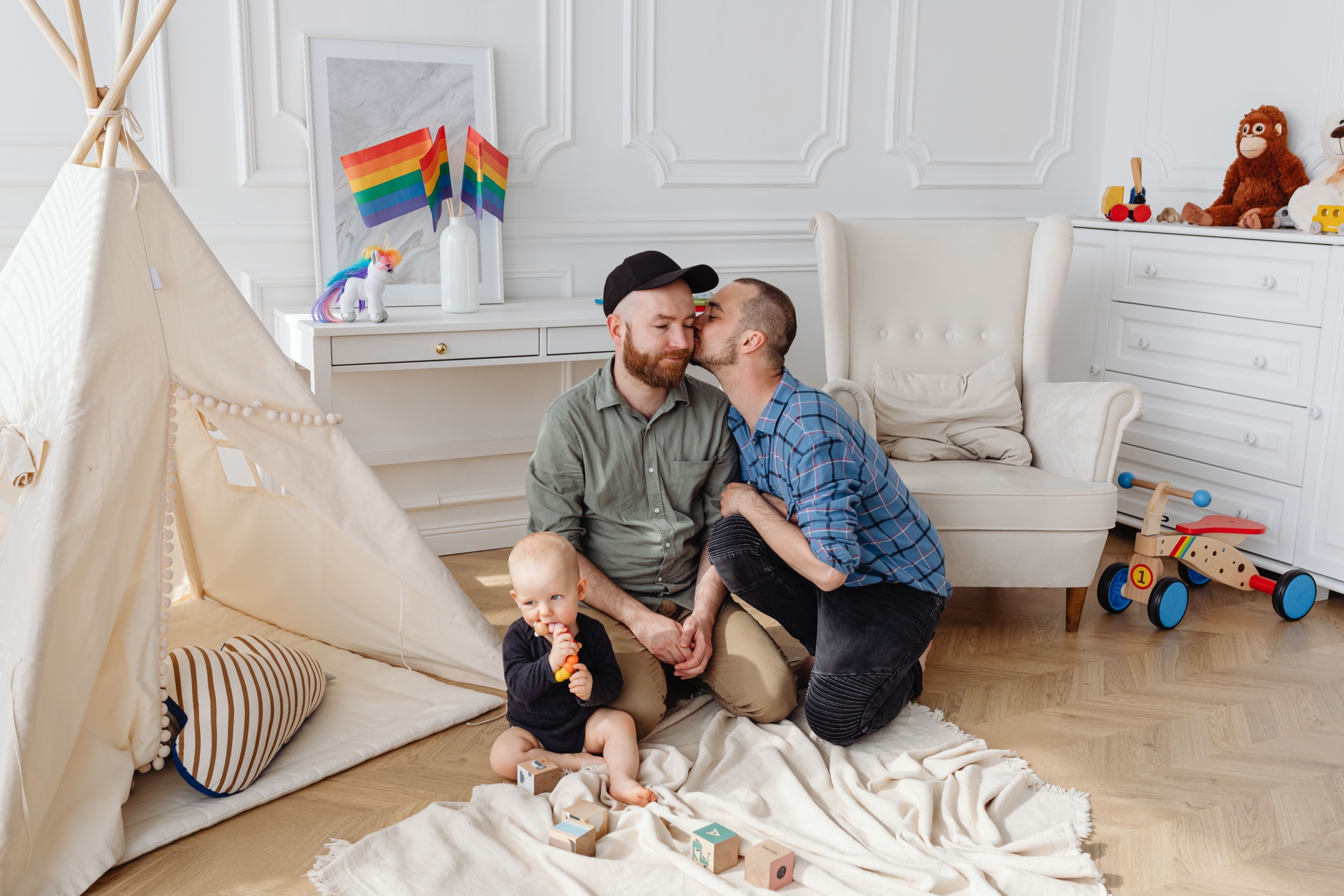
A marriage certificate shouldn’t come with an asterisk. Neither should a child’s opportunity to receive an education.
Virginia’s vote is worth celebrating because it puts another layer of protection around a right that generations of LGBTQ+ people fought to secure. But the Colorado case shows why those protections, and the fight for equal treatment beyond marriage, still matter.
Religious freedom deserves protection. So does the principle that children shouldn’t be treated as less deserving of educational opportunities because of who their parents love.
America can apparently manage both a marriage equality victory and a potentially consequential religious exemption case in the same week. We’d really prefer it learned to stop treating those two things as competing ideas.
Source: CTV News and Virginia Mercury