



Your dating life is personal, but Grindr’s use of artificial intelligence (AI) raises an important question: how much of your personal information are you comfortable letting a dating app use to develop its technology?
Investigative journalist Rowan Farrow has been looking into how companies collect information to train AI, including what happens to the photos, profile details, and activity patterns people share on dating apps. If you’ve ever wondered what happens to your information after you upload a thirst trap or tap through dozens of profiles, it’s worth taking a closer look.
Grindr is training its AI on your photos, your age, and your taps by default, without asking. I looked into the company’s record with user data, and where they put the off switch. https://t.co/qKlDtXwNEi
— Ronan Farrow (@RonanFarrow) October 13, 2026
Meet gAI, Grindr’s Artificial Intelligence
Grindr calls its AI technology gAI, pronounced “gay-eye.” According to the company, it can help personalize the user experience, summarize chats, recommend profiles, and support platform safety.
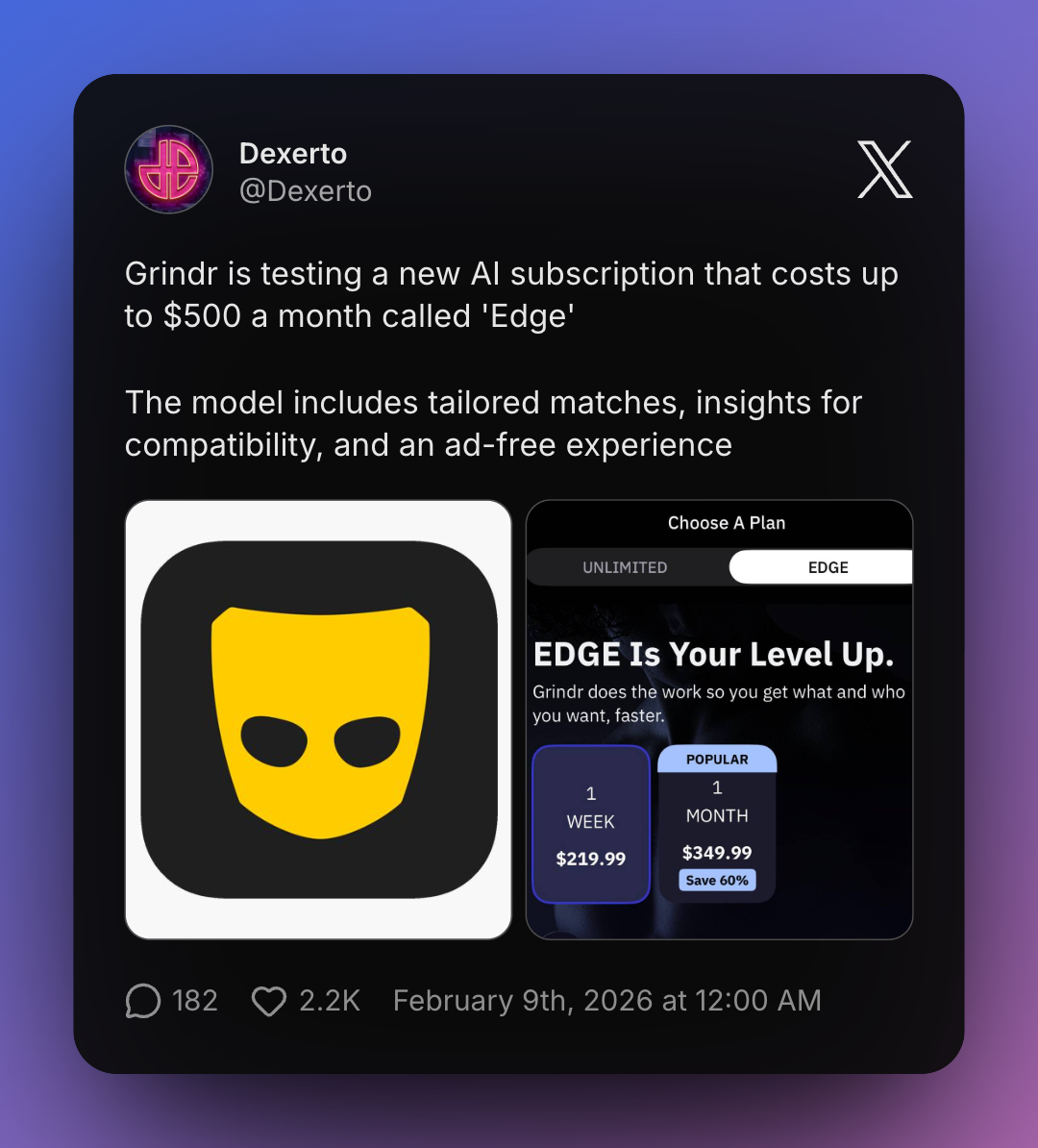
The company has also introduced EDGE, an experimental premium subscription built around AI-powered features. But before we get into what these tools can do, there’s an important distinction to understand: training AI and using AI are not the same thing.
Training AI means using data to help a system learn patterns so it can perform tasks or make predictions. Think of it as studying examples to get better at recognizing patterns. Using AI, on the other hand, means applying that technology to do something, such as summarize a conversation or recommend a profile.
An app can use information to train its AI, process information to deliver a feature, or do both. That’s why knowing which data is used for what matters.
READ: Why Is Grindr Paying £26 Million to Settle a UK Privacy Lawsuit?
What Information Can Be Used?
According to the Grindr’s AI privacy guidance, certain information, including photos, age, display name, and activity patterns (such as your taps), may be used to train its AI by default unless you opt out.
More sensitive information is treated differently. The company says sexual preferences and chat data require separate, explicit permission for AI training. It also says it does not use HIV status, last-tested dates, testing reminders, health practices, certain health-related profile tags, or vaccination status for AI training or AI-powered features.
Here’s the catch: opting out of AI training on Grindr doesn’t necessarily mean the app stops processing all your information. Some data may still be needed to provide services or features, depending on your settings and the company’s policies. Training data helps improve a system; feature-related processing helps it perform a task for you. Those are separate uses, so it’s important to check the specific controls available.
And no, this doesn’t automatically mean your private conversations are being posted online. The concern is understanding how your information may be collected and used behind the scenes.
Why Its Privacy History Matters
These questions are particularly important given the app’s history. Grindr faced legal claims alleging that sensitive user information, including sexual orientation and HIV-related data, had been shared with advertising companies without proper consent. The company has disputed allegations concerning its practices and has said its privacy program has since undergone changes.
For LGBTQ+ users, the stakes can be especially high. Information about someone’s sexuality or health can expose them to stigma, discrimination, or unwanted disclosure if mishandled.
How to Review Your AI Settings
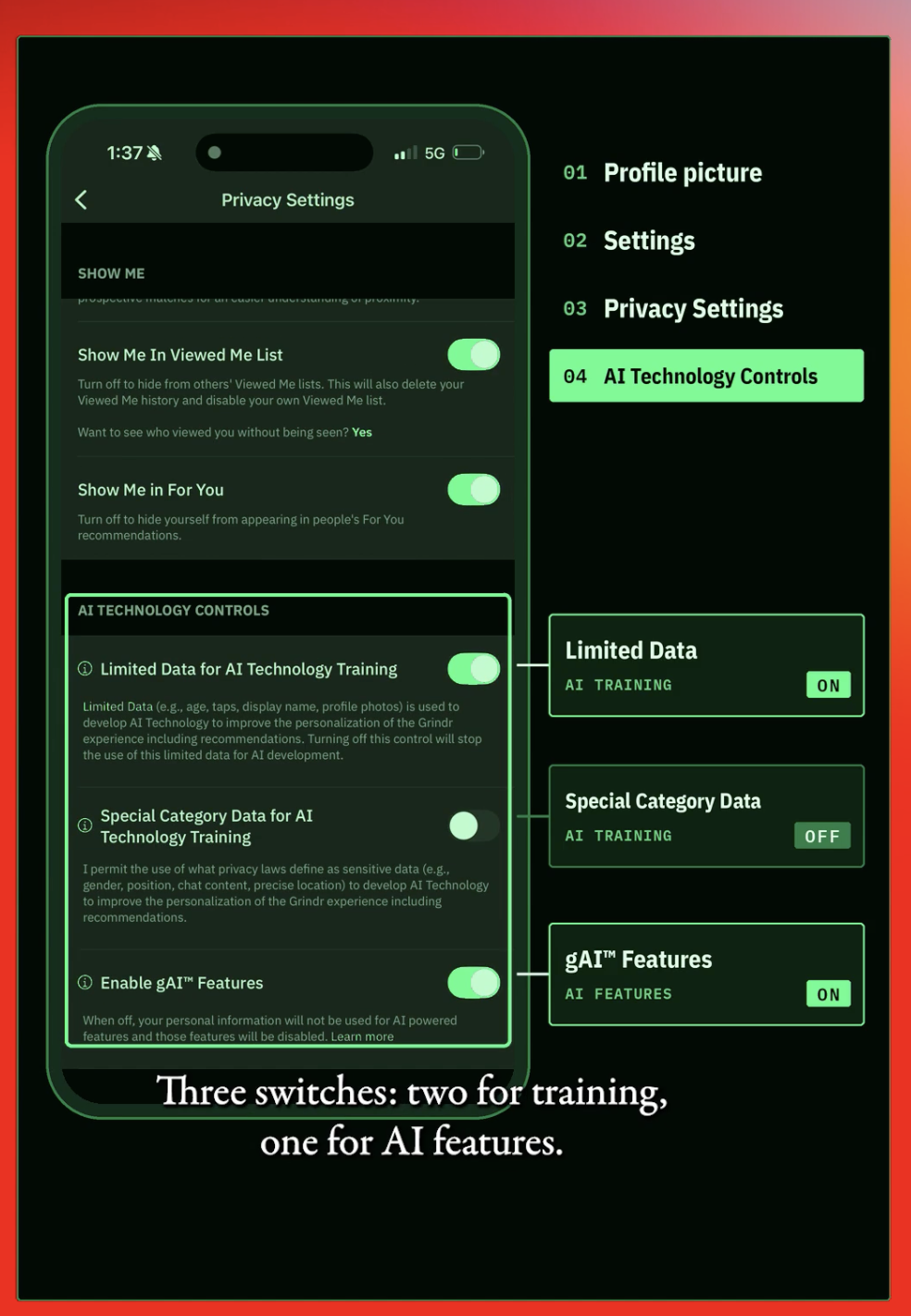
Want to check your options? Open the app’s Privacy Settings and look for AI Technology Controls and Enable gAI™ Features. The company says users can opt out of AI training through these controls. Review the available options carefully, since turning off AI training and disabling AI-powered features may address different uses of your data.
Farrow’s broader message is a useful reminder: don’t assume the default settings match your preferences. Review what you’re agreeing to, share only what you’re comfortable sharing, and remember that opting out of AI use doesn’t eliminate every privacy or security risk.
Dating should be about finding a connection, not worrying about where your personal information might end up. Before your next tap, take a minute to check your settings. Your love life is yours, and your data deserves boundaries, too.